


When you're trying to pick the right baby bottle nipple, the most important thing to focus on is the flow rate. It’s all about how fast the milk comes out, not necessarily the physical size of the nipple itself. Newborns do best with a slow flow to closely mimic the pace of breastfeeding, while older, more experienced eaters can handle a faster flow.
Why Nipple Size Is a Big Deal for Your Little One

Walking down the baby aisle and seeing a wall of bottle nipples can be completely overwhelming. But here's the good news: getting the size right is one of the easiest ways to make sure feeding time is happy and comfortable for your little one. It’s less about following a strict age chart and more about matching the nipple's flow to your baby's unique feeding style and developmental stage.
Think of it like this: you wouldn't use a firehose to water a delicate seedling. Too much pressure would be messy and damaging, while just a trickle would be frustrating and not get the job done. The right nipple size puts your baby in control of the feeding pace, which is a game-changer for their development and your peace of mind.
The Impact of a Proper Fit
The right nipple does so much more than just get milk from point A to point B. It helps create a calm, enjoyable experience for both of you. Finding that "just right" fit can:
- Reduce Gas and Colic: When the flow is too fast, babies often gulp down air along with their milk, which can lead to a gassy, fussy, and uncomfortable baby.
- Prevent Feeding Frustration: On the flip side, if the flow is too slow, your baby might work so hard for so little milk that they get tired and irritable, sometimes giving up before they’re full. You can learn more by checking out our guide on how to tell if your baby is getting enough breast milk.
- Support Healthy Oral Development: A well-fitting nipple promotes a good latch and strengthens your baby's sucking muscles without causing them to become exhausted.
The goal is to create a feeding experience that feels as natural as possible. A baby who is comfortable and in control will be a happier eater, turning mealtime into a positive bonding opportunity rather than a stressful event.
It’s clear that parents are catching on to how important this is. The global market for baby nipples was valued at around USD 2.78 billion in 2024 and is expected to grow to USD 4.51 billion by 2033. This isn't just a trend; it's a reflection of more parents needing reliable bottle-feeding solutions and a growing demand for thoughtful designs, like those with anti-colic features.
Getting the Flow and Shape Just Right
Beyond the simple measurement of a nipple, two other factors play a huge role in whether your baby takes to a bottle: the flow rate and the shape of the nipple itself. Think of it like finding the perfect pair of shoes—the size is the starting point, but the fit and feel are what truly matter for comfort.
The flow rate is just what it sounds like: it’s the speed at which milk comes out of the nipple. Brands offer a whole range of flow rates because as your baby grows, their feeding skills get stronger and they need a faster flow to keep up.
Matching the Speed to Your Baby's Needs
Choosing the right flow is a bit like shifting gears on a bike. You want enough momentum to move forward smoothly, but not so much that you lose control. Too slow, and your baby gets frustrated; too fast, and they can't keep up.
Here’s a quick look at the typical options you'll find:
- Slow Flow (or Newborn): This is where most babies start. The tiny opening makes your baby work a little for their milk, which is a great way to mimic the effort of breastfeeding. It's the go-to for newborns and breastfed babies who are also being bottle-fed.
- Medium Flow: Once your baby hits the 3-month mark or so, they usually become much more efficient eaters. A medium flow gives them a slightly faster stream so they don't get frustrated trying to pull milk from a slow-flow nipple.
- Fast Flow: This is for the seasoned pros, typically babies 6 months and older. They have a strong suck and need a quicker flow to get a full meal without getting tired or bored.
- Variable Flow: These clever nipples often have a Y-cut or X-cut opening. The flow actually changes depending on how hard your baby sucks. They're also perfect for thicker liquids, like formula mixed with a bit of rice cereal.
For moms who use breastfeeding aids, like nipple shields, paying attention to flow rate is especially important. A baby who is used to a certain pace at the breast will likely do better with a bottle nipple that feels similar. We cover this topic in more detail in our guide to the best nipple shields for breastfeeding.
Finding a Shape That Feels Natural
Just as critical as the flow is the actual shape of the nipple. The design can make or break your baby's latch and determine how comfortable they are during a feeding. While brands get creative, most designs fall into a few main categories.
A nipple's shape is all about encouraging a good latch. The right one will feel natural in your baby’s mouth, helping them latch on deeply and effectively every time they eat.
Here are the most common shapes you'll come across:
- Standard Nipples: These have that classic, narrow, bell-like shape. They've been around forever, are usually the most affordable, and are easy to find. This traditional design is still incredibly popular, accounting for a market value of around USD 525 million in 2024.
- Orthodontic Nipples: You'll notice these have a unique look—the top is angled and the bottom is flat. The idea is to fit the natural contours of a baby's palate and support healthy jaw development.
- Wide-Neck or Breast-Like Nipples: With a much broader base and a soft, pliable feel, these are designed to look and feel more like a mother’s breast. This makes them a fantastic choice for babies who go back and forth between breast and bottle.
How to Pick the Right Nipple for Your Baby
The secret to finding the perfect nipple size isn't printed on the packaging—it’s all about the subtle cues your baby gives you during every feeding. While age guidelines are a decent starting point, your baby’s unique feeding style and comfort level are what truly matter. Learning to read these signals turns you into a feeding detective, perfectly tuned into exactly what your little one needs.
Think of it like this: your baby is the expert on what feels right. Your job is to observe and adjust. If a feeding feels like a struggle for either of you, it’s often a sign that the nipple's flow rate isn't quite working.
This decision tree infographic breaks down the process by focusing on your baby's primary feeding style.

As you can see, breastfed babies typically do best starting with a slower flow to mimic nursing. On the flip side, experienced bottle-fed babies often need a faster flow to keep them from getting frustrated.
Signs the Nipple Flow is Too Slow
When the flow is too slow, your baby has to work overtime for every single drop of milk. This can be completely exhausting and incredibly frustrating for a hungry infant. Instead of a peaceful meal, feeding time becomes a battle of wills.
Keep an eye out for these clear indicators:
- Getting Fussy or Irritable: If your baby starts the feeding eagerly but quickly gets agitated, fussy, or starts crying, the slow flow might be the culprit.
- Taking Forever to Finish: A typical bottle feeding shouldn't take more than 15-20 minutes. If feedings are consistently dragging on past the 30-minute mark, your baby is likely working way too hard.
- Collapsing the Nipple: A strong baby trying to get more milk might suck so hard that the nipple flattens in on itself. This is a classic sign they're not getting enough, fast enough.
- Falling Asleep Mid-Feed: While a full tummy can make a baby sleepy, conking out early in the feeding suggests they're simply too tired from the effort to continue.
Signs the Nipple Flow is Too Fast
On the other hand, a flow that’s too fast can feel overwhelming and even a little scary for your baby. It’s like trying to drink from a fire hose—they just can't keep up, leading to a stressful and messy experience for everyone.
Here are the tell-tale signs of a flow rate that needs to be dialed back:
- Gagging, Sputtering, or Coughing: These are immediate red flags that milk is shooting into your baby's mouth faster than they can comfortably swallow.
- Milk Dribbling from the Mouth: A little bit of leakage is totally normal, but if milk is consistently spilling from the corners of their mouth, the flow is just too strong.
- Pulling Away from the Bottle: A baby might turn their head away or push the bottle out to try and get a break from the rapid flow. It's their way of saying, "Whoa, too much!"
- Gulping Loudly or Swallowing Hard: This noise means they are struggling to manage the volume of milk, which can also cause them to swallow a lot of extra air.
To help you troubleshoot, here’s a quick comparison of the signs you’ll see when the flow rate is off versus when it’s just right.
Is the Nipple Flow Rate Right for Your Baby?
| Signs of a Flow Too Slow | Signs of a Flow Too Fast | Signs of a 'Just Right' Flow |
|---|---|---|
| Feeding takes 30+ minutes. | Gulping, choking, or coughing. | Feeding lasts a relaxed 15-20 minutes. |
| Baby gets fussy or frustrated. | Milk spills from the mouth. | Baby is calm and contented. |
| Bites or tugs at the nipple. | Pulls away from the bottle. | Rhythmic suck-swallow-breathe pattern. |
| Collapses the nipple while sucking. | Seems overwhelmed or stressed. | Minimal milk dribbles. |
| Falls asleep early in the feeding. | Gassy or fussy after eating. | Easily finishes the bottle. |
Ultimately, a baby who is comfortable and in control is the best sign that you've found a good match.
The perfect fit results in a calm, rhythmic feeding where your baby is in complete control. They should be able to suck, swallow, and breathe at a steady, relaxed pace without showing any signs of distress or frustration.
Finding the right nipple can sometimes feel like solving a puzzle, but it’s a huge part of a positive feeding journey. Pairing the perfect nipple with one of the top-rated baby bottles can make a world of difference, especially in reducing common issues like colic and gas.
Remember that certain situations call for special attention. Premature babies or infants with health conditions like reflux often need a very slow, controlled flow rate to feed safely and comfortably. If you ever have concerns about your baby's specific feeding needs, it’s always best to check in with your pediatrician.
Solving Common Feeding Problems with the Right Nipple
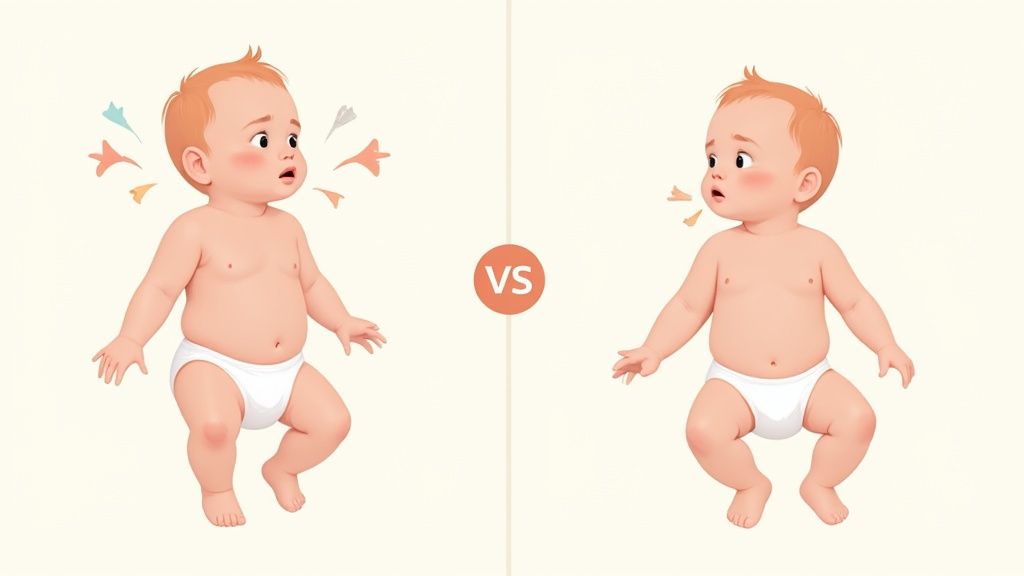
So many common feeding frustrations trace right back to the bottle nipple. A fussy baby, endless gas, or outright bottle refusal can feel like huge, complex problems. But often, the fix is as simple as finding the right nipple. It’s all about getting the right tool for the job to make feeding a calmer, easier experience for both of you.
When you can pinpoint the specific issue, you can choose a nipple designed to solve it. This simple, targeted approach can quickly turn stressful feedings back into the peaceful, bonding moments you and your baby deserve.
Tackling Gas and Colic
Is your baby constantly gassy, fussy, or clearly uncomfortable after a bottle? Chances are, they're swallowing too much air. This is a classic sign that the nipple’s flow is too fast for them, or its design isn't keeping air out of their tummy.
This is where an anti-colic nipple can be a game-changer. These are specifically engineered with clever venting systems—think tiny valves or channels—that let air flow into the bottle as milk flows out. This prevents a vacuum from building up and, most importantly, keeps air from mixing with the milk. The result? Less air in your baby's belly, which means a much happier, more comfortable little one after every meal.
Easing Nipple Confusion
For moms who are also breastfeeding, going back and forth between breast and bottle can be tricky. A very real issue is "nipple confusion," where a baby struggles to switch because the bottle feels completely alien compared to mom. If you're in this boat, the shape of the nipple is absolutely critical.
A wide-neck, breast-like nipple can make all the difference here. These are designed with a soft, pliable base that mimics the feel and shape of a mother’s breast. This encourages the same wide, deep latch your baby uses when nursing, making the bottle feel much more familiar and natural. If you're navigating this, you can learn more in our guide on understanding and addressing latching difficulties.
A successful feeding experience hinges on your baby feeling secure and comfortable. Choosing a nipple that mirrors the natural mechanics of breastfeeding can be the key to helping your little one accept a bottle without issue.
The need for these kinds of thoughtful feeding solutions is massive. To put it in perspective, around 5 billion disposable baby bottle nipples are made each year to meet the demand for convenient, hygienic options. The market is only expected to grow, which just goes to show how vital the right nipple is to families everywhere.
When It Is Time to Switch Nipple Sizes
Figuring out when to change your baby’s nipple size can feel like one more parenting puzzle. While most brands put age recommendations on the package—suggesting a switch around three and six months, for example—those are just starting points. The real expert is your baby.
The best way to know if it's time for a change is to watch how your little one behaves during feeding. They'll give you all the clues you need to keep mealtimes happy and frustration-free.
Reading the Signs Your Baby Is Ready
Has feeding time suddenly turned into a struggle? The goal is a relaxed, efficient feed that leaves your baby content, not worn out. If that's not what's happening, a nipple-size change might be in order.
Here are the biggest signs that your baby is ready for a faster flow:
- Longer Feeding Times: Is a feed that used to take 15-20 minutes now dragging on for 30 minutes or more? This often means your baby is working way too hard to get the milk they need.
- Visible Frustration: If your baby starts fussing, getting agitated, or pulling at the bottle nipple, they're trying to tell you the milk just isn't coming out fast enough.
- Collapsing the Nipple: A sure-fire sign they're ready for the next size up is when they suck so hard that the nipple flattens out.
- Falling Asleep Early: A baby who consistently drifts off before finishing their bottle might just be exhausted from the sheer effort of eating.
There is no race to the fastest flow. The right time to switch baby nipple sizes is whenever your baby shows they are ready. Some babies, especially those who also breastfeed, may happily use a slow-flow nipple for their entire bottle-feeding journey.
Making a Smooth Transition
When you do introduce a faster-flow nipple, keep a close eye on your baby's reaction. You're looking for a comfortable pace. If they start gagging, sputtering, or letting a lot of milk dribble out of their mouth, they're probably feeling overwhelmed.
If that happens, don't worry. It's perfectly fine to go back to the previous size for a bit. Just try again in a week or two.
Ultimately, choosing the right baby nipple sizes is all about paying attention and responding to what your baby needs. Let them lead the way, and you'll make sure every feeding is a positive experience for both of you.
Common Questions About Baby Nipple Sizes
Let’s be honest, even when you think you have bottle feeding figured out, new questions always pop up. It’s completely normal. Specific situations can leave you scratching your head, wondering if you’re making the right call. This is your quick-reference guide for those moments.
Think of this as your go-to for the "what ifs." From mixing bottle brands to knowing exactly when it's time for a new nipple, these answers are here to clear up confusion and help you feel confident that every feeding is a good one.
Can I Use a Different Brand's Nipple on My Bottle?
This is a tempting shortcut, but it's almost always best to stick with the same brand for both your bottles and nipples. They’re designed as a matched set, a complete system that guarantees a perfect seal. This is especially important for bottles with anti-colic vents, which need that precise fit to work correctly.
When you mix and match, you’re inviting leaks—and a messy feeding for you and your baby. More importantly, an improper fit can mess with the venting system, which can actually make your baby swallow more air. For a frustration-free feed, always use the nipple that was made for your specific bottle.
How Often Should I Replace Bottle Nipples?
Keeping nipples fresh is a key part of your baby’s safety. As a solid rule of thumb, you should plan on replacing silicone nipples every 3 months. If you’re using latex, which breaks down a bit faster, you’ll want to swap them out every 4-6 weeks.
That said, you need to give them a quick once-over before every single feeding. Be on the lookout for any signs of wear and tear, like:
- Cracks, holes, or tears
- Thinning spots or swelling
- Any discoloration
- A sticky or tacky feel
A damaged nipple is a serious choking hazard. The moment you spot any weakness or change, toss it immediately and grab a new one.
Your baby’s safety comes first. Think of the pre-feed nipple check as a quick, non-negotiable safety step. It only takes a few seconds and prevents potential hazards, ensuring every meal is a safe one.
My Breastfed Baby Refuses a Bottle, What Can I Do?
This is such a common hurdle, so know you're not alone. And yes, the nipple is very often the culprit. For a baby who is used to nursing, a bottle with a fast flow can feel jarring and overwhelming.
The best place to start is with the slowest flow nipple you can find. This requires your baby to work a little harder, much like they do at the breast, which helps prevent them from developing a "flow preference" for the easy bottle. It also helps to choose a nipple with a wide, soft base that’s designed to feel more like a breast. This encourages that familiar wide latch and can make the whole experience much less stressful. For mothers dealing with related sensitivities, our guide on nipple care during breastfeeding has some extra tips.
Does a Higher Price Mean a Better Nipple?
Not at all. The "best" nipple isn't the most expensive one—it's the one your baby takes to happily. A high price tag often just reflects branding, marketing, or fancy features like complex venting systems. Sometimes, a simple, affordable nipple is the one that just clicks with your baby.
Instead of looking at the price, focus on finding the right flow rate and shape for your little one's unique needs. Just make sure the material is BPA-free and that it’s designed to work with the bottles you already have. Your baby's comfort and contentment are the only real measures of a nipple's quality.
For mothers seeking natural, soothing relief during their breastfeeding journey, MoogCo’s Original Silver Nursing Cups offer a gentle, chemical-free solution. Handcrafted from pure 925k silver, they protect sensitive skin and promote natural healing between feeds, ensuring you can focus on bonding with your baby. Discover the comfort trusted by thousands of moms at https://www.amazon.com/Nipple-Shields-Nursing-Newborn-Essentials/dp/B08VKRMXGZ.














































































































