


When you’re on the hunt for the best teething toys for babies, the mission is pretty simple: find something safe and effective that can turn those teething tears into happy smiles. The best ones are usually made from materials like 100% food-grade silicone or natural rubber, designed perfectly for tiny hands to grab and with interesting textures to gently massage sore gums.
Turning Teething Troubles into Happy Smiles
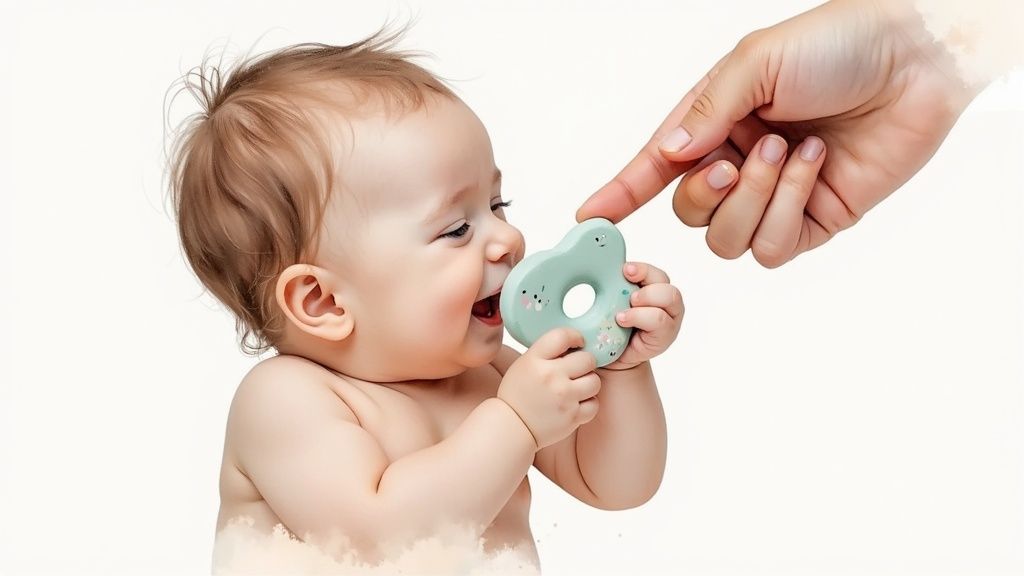
Welcome! If you're navigating one of your baby’s first big milestones, you're in the right place. The world of baby products can feel overwhelming, but finding the perfect teether doesn’t have to be another thing on your to-do list.
Pediatric-dentist approved styles
Soothing picks for fussy moments
Take 20% off at checkout, applied automatically when you shop through this link.
Shop with MOM20 →Free US shipping over $100. Code applies automatically at checkout.
A great teething toy is so much more than just a cute accessory. It's a lifesaver that provides serious relief for your little one while also supporting their sensory and motor skill development.
Think of this guide as your friendly roadmap to choosing a teether that checks all the right boxes: safety, comfort, and fun. We’ll break down exactly what makes a toy a winner, from non-toxic materials to smart, age-appropriate designs your baby will actually want to chew on.
Why Teething Toys Are So Important
Teething is a completely normal part of development, but let's be honest—it can be a really tough time for babies and parents alike. Giving them a safe object to chew on applies just the right amount of counter-pressure to their gums, which can make a world of difference for an emerging tooth.
But the best teething toys for babies are multi-taskers. They also help with:
- Sensory Exploration: Different textures, interesting shapes, and even temperatures (like a chilled teether) help wake up your baby’s oral sensory system.
- Motor Skill Development: The simple act of grasping a toy, holding onto it, and bringing it to their mouth is a huge workout for refining hand-eye coordination.
- Building Jaw Strength: All that chewing helps build the muscles they'll need for tackling solid foods down the road.
It's no surprise that the demand for high-quality, developmentally supportive teethers is growing. The global baby teething toys market was valued at around USD 680 million in 2023 and is expected to climb to USD 956.83 million by 2031, largely because parents are so focused on early childhood wellness.
For new parents looking for a guide that covers everything from A to Z, this comprehensive new parenting guide is a fantastic resource for preparing for your first baby and navigating common challenges like teething.
A Mom’s Story of Comfort and Connection
Teething doesn't just affect the baby; it can ripple out and impact the whole family, especially if you're a breastfeeding mom. One mom, Sarah, shared that when her baby started teething, nursing suddenly became incredibly painful.
Her baby was fussy and couldn't latch properly, leaving Sarah feeling defeated. She was on the verge of giving up on breastfeeding until a friend suggested something that changed everything.
She started using Moogco Silver Nursing Cups, which offer natural, soothing relief for sore nipples. The pure silver has antimicrobial and anti-inflammatory properties that helped her heal quickly and without any fuss.
"The silver nursing cups were a game-changer. They allowed me to heal so I could continue breastfeeding comfortably, even through the toughest teething days. When I was comfortable, my baby was calmer, and our nursing bond stayed strong." - Sarah, a Moogco Mom
Sarah's story is a beautiful reminder of how a parent's comfort is directly linked to a baby's well-being. When you find solutions that support both of you, you create a more peaceful and happy home for everyone.
If you’re looking for more ways to get through this phase, we have a whole guide on natural teething remedies for babies.
Understanding Your Baby's Teething Timeline
Teething isn’t a one-and-done event; it’s more like a long, winding road with different milestones. Knowing what’s coming helps you stay one step ahead and have the right kind of teether ready for your little one when they need it most. And believe me, this journey often starts quietly, long before that first little tooth pokes through.
The first signs often appear between 3 to 6 months. You’ll know it when you see it: suddenly, there's a flood of drool, their little fists are constantly in their mouth, and your happy-go-lucky baby might be a bit more irritable. Their front gums are getting tender, which is your cue to bring in soft, gentle teethers. A lightweight silicone toy that’s easy for them to grab is perfect for this early stage. It offers just the right amount of soothing pressure without overwhelming their sensitive mouth.
Matching the Right Toy to the Right Tooth
As your baby gets older, their teething game changes. The simple ring that brought so much relief for those first two bottom teeth just won't cut it when the big, stubborn molars decide to show up.
- Front Teeth (Incisors): These usually pop up between 6-12 months. For these sharp little newcomers, you'll want teethers that are easy to hold and maneuver. Look for toys with soft, massaging textures or varied surfaces that feel good on those easy-to-reach front gums.
- Canines and Premolars: Making their appearance around 12-22 months, these teeth demand something a bit tougher. This is a great time to introduce slightly firmer materials or toys with more interesting shapes to keep your curious toddler engaged.
- Back Molars: This is often the toughest part of the journey, happening between 23-33 months. These big teeth are way in the back and hard to get to. The best teethers for this stage are the ones with long, thin arms that can reach the molar area and provide that satisfying counter-pressure they crave.
A Mom’s Success Story: Saving the Breastfeeding Journey
Teething can throw a wrench into everything, especially feeding. For nursing moms, a teething baby can mean painful biting and a whole lot of fussing at the breast. It’s enough to make you want to throw in the towel on your entire breastfeeding journey.
One mom, Chloe, shared her success story with us. Her daughter started biting aggressively during nursing seemingly overnight, leaving Chloe in constant pain and dreading every feed. "I was so close to stopping," she said. "The pain was awful, and what used to be our special bonding time just felt like a battle."
Just when she was about to give up, she tried Moogco Silver Nursing Cups. These little cups are made of pure silver and create the perfect environment for healing sore, cracked nipples naturally.
"The relief was almost instant. The Moogco Silver Nursing Cups soothed my skin between feedings, and I healed so much faster than I expected. They gave me the break I needed to be patient with my daughter and push through her worst teething days. They didn't just save my nipples—they saved our nursing relationship and I kept breastfeeding thanks to them."
Chloe's story is such a powerful reminder that taking care of yourself is one of the best ways to take care of your baby. When you aren't wincing in pain, you can be the calm, comforting parent your little one needs. Sometimes, a simple tool like these silver nursing cups can make all the difference during a tough phase like teething.
If you want to learn more about what to expect, check out our guide on navigating your baby's teething journey.
Choosing the Best Materials: Silicone vs. Wood vs. Rubber
When it comes to teething toys, the material is everything. It's the single most important factor for your baby’s safety and for how much relief the toy actually provides. As you browse, you'll see three main players: silicone, wood, and natural rubber. Each has its own personality, and figuring out the differences will help you find the perfect soother for your little one's aching gums.
This little map shows you what the teething journey really looks like.
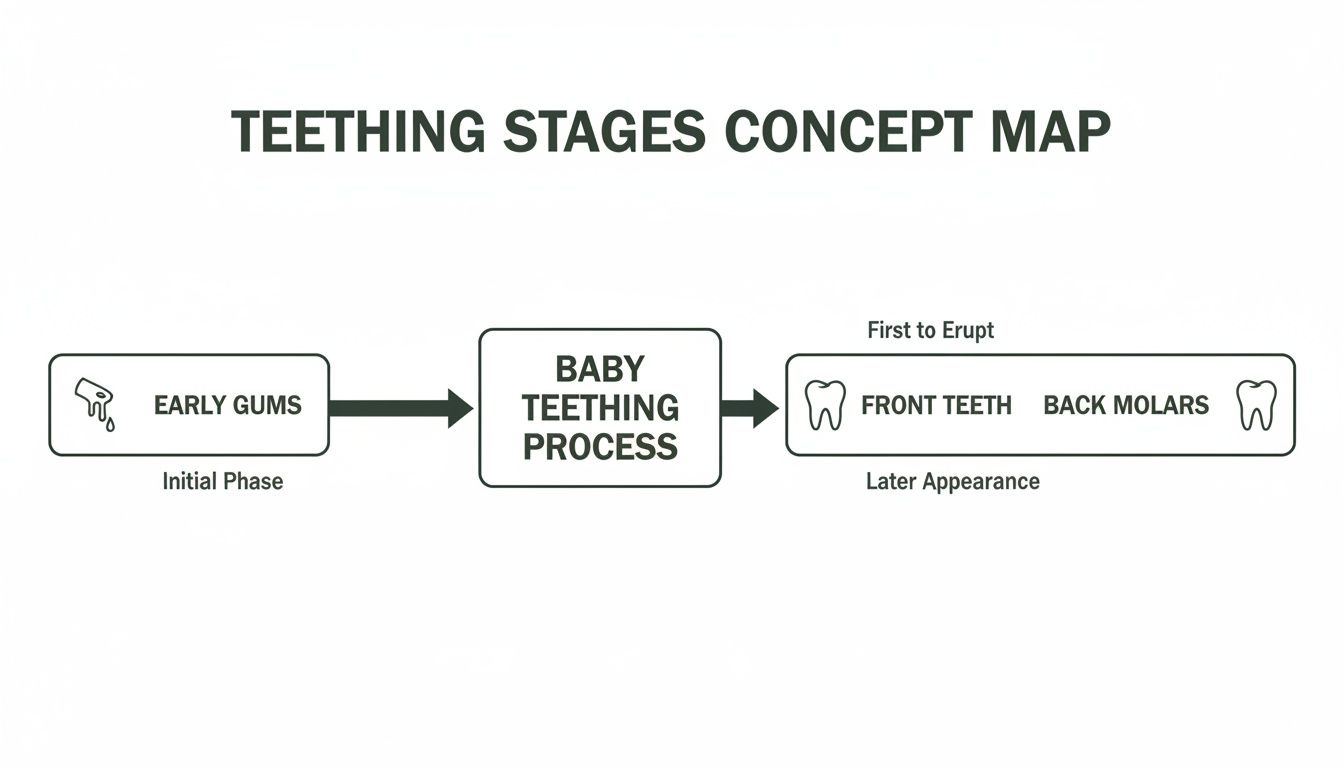
From those first tender gums all the way to the big, stubborn molars in the back, your baby needs different kinds of comfort. That’s why the material you choose makes such a big difference.
The Gentle Power of Food-Grade Silicone
There’s a reason silicone is the undisputed champ in the teething world. It’s wonderfully soft and flexible, yet incredibly tough—perfect for being gentle on sensitive gums while holding up to some serious chomping. The magic words you’re looking for are 100% food-grade silicone. That’s your guarantee it’s free of nasty stuff like BPA, phthalates, and PVC.
Silicone can be molded into all sorts of fun shapes and textures, giving your baby plenty of interesting surfaces to gnaw on. Even better, it’s a breeze to clean. Most can be tossed right into the dishwasher or boiled for a quick, deep clean, making it a favorite for busy parents.
It’s no surprise that silicone teethers have taken over the market, holding an estimated 45% global share because they just get the job done safely and comfortably. Parents love that soft-but-sturdy texture that massages gums without any risk of breaking. It’s a top pick for babies from 3-12 months old.
Parent Tip: For those extra-tough teething days, pop a silicone teether in the fridge for a bit (never the freezer!). The cool sensation is amazing for numbing sore gums and calming down inflammation.
If you love how safe and easy silicone is, you might also like our guide on why you should choose silicone feeding sets for your baby, as the same benefits apply to mealtime!
The Firm, Satisfying Feel of Natural Wood
Got a baby who loves to apply some serious pressure? Natural wood teethers might be your answer. These eco-friendly options are usually made from solid hardwoods like maple or beech, which are naturally antimicrobial and don't splinter. That firm, unyielding surface gives a satisfying resistance that can feel heavenly when those back molars are pushing through.
When you're shopping for a wooden teether, make sure it’s either completely unfinished or sealed with something baby-safe, like beeswax or coconut oil. Steer clear of any paints, stains, or varnishes that could chip off.
Wood is fantastic, but it does need a little extra care. Never soak or boil it. All it needs is a quick wipe-down with a damp cloth to stay clean.
The Unique Flexibility of Natural Rubber
Sourced from the Hevea tree, natural rubber offers a unique bouncy, flexible texture that some babies just adore. It’s a completely natural material, so you don't have to worry about plastics or weird additives. Its soft, pliable feel is great for a gentle gum massage.
A lot of natural rubber teethers, like the famous Sophie la Girafe, also have a little squeaker inside, which adds a fun sensory element to the soothing.
Just two things to keep in mind here. First, natural rubber has a distinct earthy smell and taste that not all babies are fans of. More importantly, it is not safe for children with a latex allergy. Always be mindful of this before handing one over to your little one.
Teething Toy Material Comparison
To make it even easier, here’s a quick side-by-side look at the top three materials.
| Material | Safety (BPA-Free) | Texture & Feel | Cleaning & Care | Best For |
|---|---|---|---|---|
| Silicone | Yes (100% food-grade) | Soft, flexible, chewable | Dishwasher safe, boilable | Early teethers, sensitive gums, chilling for relief |
| Natural Rubber | Yes (plastic-free) | Bouncy, pliable, unique texture | Wipe clean, no boiling/dishwashing | Babies who like a softer, springy chew (no latex allergies!) |
| Wood | Yes (natural material) | Hard, firm, smooth | Wipe clean, do not soak | Babies needing firm pressure, especially for molars |
Ultimately, the "best" material often comes down to what your baby prefers. Don't be afraid to try a couple of different types to see what really hits the spot for their sore gums
Putting Safety First: What to Avoid in Teething Toys
When you’re hunting for the perfect teether, knowing what not to buy is just as crucial as knowing what to look for. Think of this as your personal safety briefing—a guide to help you sidestep the risky stuff and feel confident you’re choosing a truly safe and soothing toy for your little one.
First on the list is the big one: BPA. You've seen the "BPA-free" label on just about every baby product, and it’s there for a very good reason. Bisphenol-A (BPA) is an industrial chemical that used to be common in plastics, but we now know it comes with some serious health concerns.
The potential risks, including links to cancer, childhood asthma, and heart disease, spurred parents to demand 100% safe, chewable alternatives. This parent-led movement completely changed the baby product industry for the better. This huge shift toward safer materials is a key driver in the market's growth, and you can discover more insights about baby teether market trends.
But seeing that “BPA-free” label is just the first checkpoint. Your safety inspection shouldn’t stop there.
Spotting Common Red Flags
Beyond chemicals, you need to watch out for physical hazards. A toy can look adorable on the shelf but be a real danger in your baby’s hands (and mouth). Here’s what to keep on your radar.
- Small or Detachable Parts: This is a huge no-go. Any toy with little bits and pieces that could pop off—think tiny beads, decorative accents, or even internal rattles—is a serious choking hazard. Before buying, give it a good tug and a twist. If anything feels loose, leave it on the shelf.
- Brittle or Hard Plastics: While a little firmness can feel great on sore gums, plastic that’s too hard can be brittle. A baby’s surprisingly strong bite can cause these materials to crack or even shatter, creating sharp, dangerous edges that could cut your baby’s mouth.
- Liquid-Filled Teethers: The idea of a cool, gel-filled teether from the fridge sounds amazing, right? The problem is, they carry the risk of leaking or being punctured. If that happens, there’s no telling what your baby might accidentally swallow. It’s always safer to stick with solid materials.
And once you bring a teether home, keeping it clean is a non-negotiable part of keeping it safe. For more on that, check out our guide on easy methods for sterilizing baby bottles and pacifiers.
The Amber Teething Necklace Controversy
I’m sure you’ve seen those cute little amber bead necklaces on babies. The claim is that when the amber is warmed by the baby’s skin, it releases succinic acid, which is supposed to act as a natural pain reliever.
Sounds good in theory, but health experts are in firm agreement: avoid them.
The American Academy of Pediatrics (AAP) and other major health organizations warn parents not to use amber teething necklaces. They present a double danger: the beads are a choking hazard if the necklace breaks, and the necklace itself poses a significant risk of strangulation.
On top of the physical risks, there's no solid scientific evidence that succinic acid can even be absorbed through the skin, let alone in amounts that would actually relieve pain. The very real dangers just aren’t worth any unproven benefits.
Your Quick Safety Checklist
Finding the best teething toys for babies really comes down to being a bit of a safety detective. Stick with brands that have a solid reputation for safety and always give a toy a quick once-over before handing it to your baby.
Keep an eye out for any wear and tear, and toss out anything that’s cracked or broken. Your baby’s well-being is everything, and by knowing what to avoid, you can give them comfort without any compromise.
More Than Teethers: Creative Ways to Soothe Your Baby
While having a great collection of teethers is a must, they aren’t the only trick up your sleeve. Sometimes, the simplest things offer the most immediate relief for a fussy, miserable baby. You can get pretty creative when it comes to soothing those sore gums, and you probably already have everything you need at home.
These are the tried-and-true methods that parents have relied on for generations. Think of them as the perfect partners to your favorite teething toys, giving you more options to try when one thing just isn't working.
Let's dive into some parent-tested, expert-approved ways to bring your little one some much-needed comfort.
Simple and Effective Home Remedies
The classics are classics for a reason—they work! Before you even grab a teether from the freezer, give one of these gentle, soothing methods a try.
- The Chilled Washcloth Trick: This is an old-school favorite. Just wet a clean, soft baby washcloth, wring it out, and pop it in the fridge for 15-20 minutes. The cool temperature is a fantastic natural numbing agent, and the nubby texture of the cloth feels great for your baby to chew and gnaw on.
- A Gentle Gum Massage: Never underestimate the power of your own touch. After washing your hands well, use a clean finger to gently but firmly rub your baby's gums. The counter-pressure can work wonders, especially when you can feel a little tooth just waiting to pop through.
- Cold, Soft Foods (For Babies on Solids): If your little one has started eating solid foods, cold snacks can be a total game-changer. Think chilled applesauce, yogurt, or a fruit puree straight from the fridge. You can also offer bigger pieces of soft, cold foods like a peeled cucumber spear for them to munch on—just be sure to supervise them closely.
When Mom’s Comfort Means a Calmer Baby
Teething doesn’t just make babies cranky; it can throw the whole family for a loop, particularly around feeding time. A teething baby might get fussy, irritable, or even bite during breastfeeding, which is incredibly painful and stressful for a nursing mom. This is where making sure mom is comfortable becomes just as important as soothing the baby.
A mom named Jessica shared a powerful success story about how teething nearly ended her breastfeeding journey. Her son, Leo, started getting agitated while nursing, and his new latch was leaving her nipples sore and cracked. She was on the verge of giving up.
A friend suggested she try Moogco Silver Nursing Cups. These little cups are made of pure 925 silver, which is naturally antimicrobial and anti-inflammatory, helping to heal sore skin quickly.
"The pain relief was almost immediate," Jessica told us. "The silver nursing cups created the perfect healing environment between feeds. Since I wasn't in constant pain, I could be more patient and comforting with Leo. It completely saved our breastfeeding relationship and I was able to keep breastfeeding."
Jessica’s story gets to the heart of it: a parent’s comfort is directly tied to their baby’s well-being. When a mom feels supported and isn't in pain, she can offer that calm, reassuring presence her teething baby is desperate for. Taking care of both parent and child is the secret to getting through tough parenting phases.
These natural silver nursing cups are a perfect example of a tool that supports the entire family. By taking care of herself, Jessica was better able to care for her son, turning a painful, stressful time back into a period of connection. You can check out the Moogco Silver Nursing Cups on our website to learn more.
Your Essential Teething Toy Buying and Care Guide
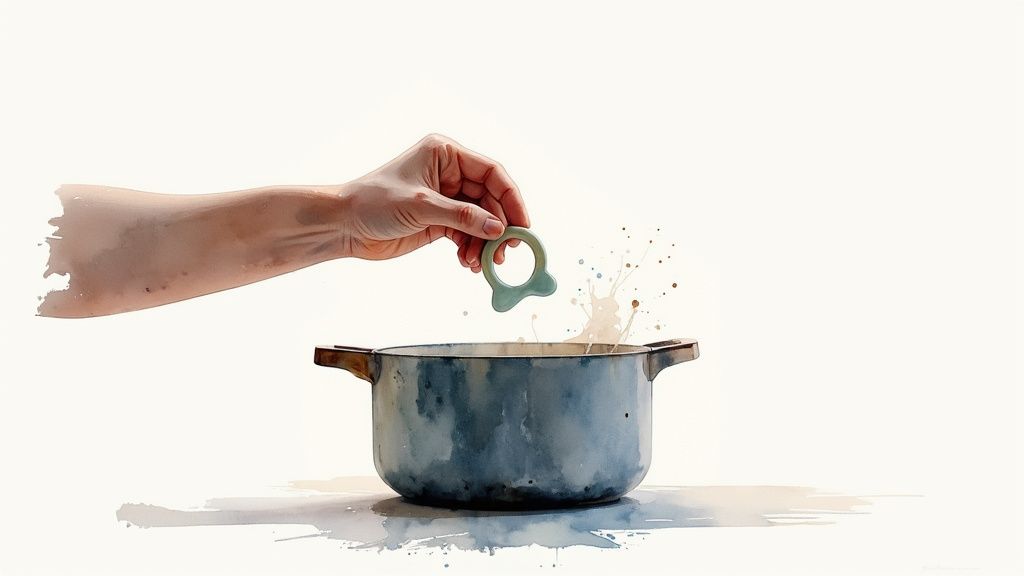
Alright, you’ve done your homework and now you’re ready to pick out the perfect teether. Let’s bring it all together with a simple shopping checklist and some no-fuss tips for keeping those toys clean and safe for your little one.
Think of this as your go-to cheat sheet. With these key points in mind, you can walk down that baby aisle with confidence, knowing exactly what to look for to bring home a teether that actually helps, supports development, and gives you total peace of mind.
Your Teething Toy Buying Checklist
When you're out shopping, just run through these four simple checks. It makes picking the right toy so much easier and helps you avoid the duds.
- Safety First, Always: Look for that 100% BPA-free label—it’s non-negotiable. Before you buy, give the toy a little tug and a twist. You want to make sure no small parts feel loose or like they could break off.
- Match the Toy to Their Age: A teether that’s perfect for a 4-month-old might not be right for a one-year-old. Soft, lightweight silicone is a dream for early teethers (3-6 months), but older babies tackling those back molars will need something with a firmer texture or a longer reach.
- Built to Last: Teethers take a beating! Opt for toys made from tough stuff like high-quality, food-grade silicone or solid hardwood. Steer clear of any brittle plastics that might crack under the pressure of those determined little gums.
- Easy to Clean? Yes, Please: Let’s be honest, if it’s a pain to clean, it’ll end up at the bottom of the toy bin. A teether you can toss in the dishwasher or boil for a quick sterilization is a game-changer for busy parents.
Getting the right toy for each stage is a huge part of the puzzle. For a deeper dive, take a look at our month-by-month guide to choosing the perfect toys for your baby.
Simple Steps for Cleaning and Care
Since these toys are going straight into your baby’s mouth, keeping them clean is a top priority. Here’s a quick rundown of how to care for different types of teethers.
- Silicone & Rubber: These are the superstars of easy cleaning. A quick scrub with warm, soapy water usually does the trick. For a deep clean, you can pop most of them on the top rack of your dishwasher or boil them for a few minutes.
- Wood: Wooden toys need a gentler touch. Never soak or boil them, as the wood can swell and crack. Just wipe them down with a damp cloth and a little baby-safe soap, then let them air dry completely.
- Toys with Fabric: If there’s a cloth or crinkle component, check the tag for washing instructions. Most can be tossed in the washing machine on a gentle cycle.
Parent Tip: Make it a habit to clean teething toys daily. A quick wash at the end of the day keeps germs from building up and ensures a clean, safe soother is always ready to go when your baby needs it.
Got Teething Toy Questions? We've Got Answers.
When you're in the thick of teething, it feels like a million questions pop up. When do I even start? How on earth do I keep these things clean? It's a common feeling, and you're not alone. Let's walk through some of the biggest questions parents have so you can feel confident you're doing what's best for your little one.
When Is the Right Time to Introduce a Teething Toy?
You can bring out a teether the moment you see those first classic signs of teething. This usually kicks in somewhere between 3 and 6 months old. Look for the drool-pocalypse, a sudden fussiness you can't quite pin down, and a desperate need to gnaw on fists, fingers, and anything else they can get their hands on.
A soft, lightweight silicone teether is a fantastic first choice. It's gentle on their sensitive gums and gives them a safe, satisfying outlet for that intense chewing instinct.
How Often Do Teething Toys Need to Be Cleaned?
Think about how much time these toys spend in your baby's mouth—it's a lot! Because of that, a daily cleaning is a really good idea. For a quick wash, a little warm water and soap will do the trick just fine. If you're looking for a deeper clean, always check what the manufacturer recommends for that specific toy.
Most silicone teethers can be popped on the top rack of the dishwasher or even boiled for a few minutes to sanitize them. Wood toys are different, though; they just need a quick wipe with a damp cloth. Staying on top of cleaning keeps germs from building up and helps keep your baby healthy.
Is It Okay to Freeze a Teether for Extra Relief?
This is a really common question, and it seems like a great idea on the surface. But it’s actually best to avoid freezing teething toys. When frozen solid, a teether can become rock-hard and might actually bruise your baby’s delicate gums. The extreme cold can be more shocking than soothing.
A much better approach? Just pop it in the fridge for about 15-20 minutes. This gives it a lovely, cool temperature that gently numbs the gums and eases their discomfort without any of the risks of freezing.
How Do Silver Nursing Cups Help Moms?
This one isn't for the baby, but for you, the breastfeeding mom. When a baby starts teething, they can get fussy at the breast or even bite down, which can lead to incredibly sore, cracked, or painful nipples. That kind of discomfort can make you dread nursing and might even make you think about stopping altogether.
One of our moms, Sarah, told us how these cups completely changed her experience.
"When my daughter started teething, nursing became so painful. I was ready to give up. The Moogco Silver Nursing Cups offered incredible, natural relief and helped me heal quickly. A comfortable mom makes for a much calmer feeding experience, which was a huge benefit for both of us."
These natural silver nursing cups are all about supporting your well-being, which in turn helps you and your baby maintain that precious bond.
At Moogco Baby, we truly believe that one of the best ways to support a baby is to support their mom. See how our thoughtfully chosen essentials, including the beloved Moogco Silver Nursing Cups, can bring a little more comfort and calm to your journey.
Bring this guide home with 20% off.
Use code MOM20 for 20% off →
Featured pick from Moogco
Baby Bib, 2 Burp Cloth and Teether Gift Set - 10 Flowers by Harmony Arts Organic Cotton
$69.00
Shop this pick →
Frequently Asked Questions
Can I Use Multiple Teething Toys at Once for My Baby?
Absolutely! In fact, having a variety of teethers on hand is a smart strategy. Different textures, shapes, and materials can provide relief for different teeth and stages. Just make sure each one is clean, safe, and age-appropriate for your little one.
What Should I Do If My Baby Refuses Their Teething Toy?
Don't worry, this happens more often than you'd think. Try offering the teether at different times of day, chilling it for a new sensation, or gently rubbing their gums with a clean finger first to show them relief is possible. Sometimes babies need a few tries before they warm up to a new toy.
Are Wooden Teething Toys Safe for Babies?
Yes, as long as they're made from untreated, natural hardwood and finished with food-safe oils or beeswax. Avoid any wood teethers with varnish, paint, or unknown coatings. Always check for splinters or rough edges before handing it to your baby, and inspect regularly for wear.
How Do I Know If a Teething Toy Is Too Hard or Too Soft?
A good teething toy should be firm enough to provide counter-pressure but soft enough that it won't hurt delicate gums or emerging teeth. If you press it with your thumb and it leaves a deep impression, it might be too soft. If it feels rock-hard and unyielding, it's likely too firm for a young baby.
Can Teething Toys Help Prevent My Baby from Biting During Breastfeeding?
They can definitely help! Offering a teether right before nursing gives your baby a chance to satisfy that urge to bite and soothe their gums first. It won't eliminate biting completely, but it can reduce the frequency and give your nipples a much-needed break during tough teething phases.
What's the Difference Between a Teether and a Pacifier?
A pacifier is designed for sucking and soothing through that motion, while a teether is specifically made for chewing and applying pressure to sore gums. Teethers have varied textures and shapes to massage different areas of the mouth, and they're built to withstand serious gnawing without breaking down.
Should I Buy Different Teethers for Daytime and Nighttime?
It's not necessary, but some parents find it helpful. A softer, quieter teether can be nice for nighttime comfort, while a bright, textured one with multiple features works great for daytime play and distraction. The key is having clean, accessible options whenever your baby needs relief.
How Long Does the Teething Phase Typically Last?
Teething is a marathon, not a sprint. It usually begins around 3 to 6 months and can continue until your child is about 3 years old when their final molars come in. The intensity varies from tooth to tooth, so having a reliable teether and a solid support system makes all the difference throughout the journey.
From Moogco Studio
Printable and personalized nursery essentials. Designed by moms for moms.


About the Editor
Eda Ulger is the editor at Moogco Baby and a mom of two. She curates and edits our guides so every piece is honest, practical, and genuinely helpful for the early days of motherhood.














































































































