


Yes, you absolutely can use diaper cream with cloth diapers! The trick isn't about avoiding creams altogether but knowing which ingredients are your friends and which are your enemies.
The golden rule is pretty simple: steer clear of anything that creates a waterproof barrier. Think of your cloth diapers like really fancy, super-absorbent towels. If you smear something waxy or oily on them, they can't do their job. Liquid will just bead up and roll right off, leading to leaks.
Your Quick Guide to Cloth-Safe Diaper Creams
I know, navigating product labels can feel like a chore. But when it comes to cloth diapers, it’s all about protecting your investment and keeping those diapers absorbing like they should.
The biggest troublemakers are ingredients that are designed to be waterproof. While that sounds great for your baby's skin, it's a disaster for fabric.
These ingredients are notorious for building up on diaper fibers and are a real pain to wash out:
- Petroleum and Mineral Oil: These are the worst offenders. They're heavy, greasy, and essentially create a permanent raincoat on your diapers.
- High Concentrations of Zinc Oxide: Zinc is fantastic for healing angry rashes, but the thick, pasty kind can leave a stubborn residue that slowly clogs the fabric.
- Lanolin and Cod Liver Oil: Just like petroleum, these are thick, oily substances that cause repelling issues over time.
How to Spot the Good Stuff
So, what should you look for instead? You want creams made with natural, plant-based ingredients that wash away cleanly in hot water. Things like shea butter, coconut oil, and calendula are usually great choices. Many parents also love the soothing properties of ingredients like aloe vera for babies, which is often found in cloth-safe formulas.
If you’re building your list of baby essentials, you might find our complete guide to newborn care products helpful for more tips!
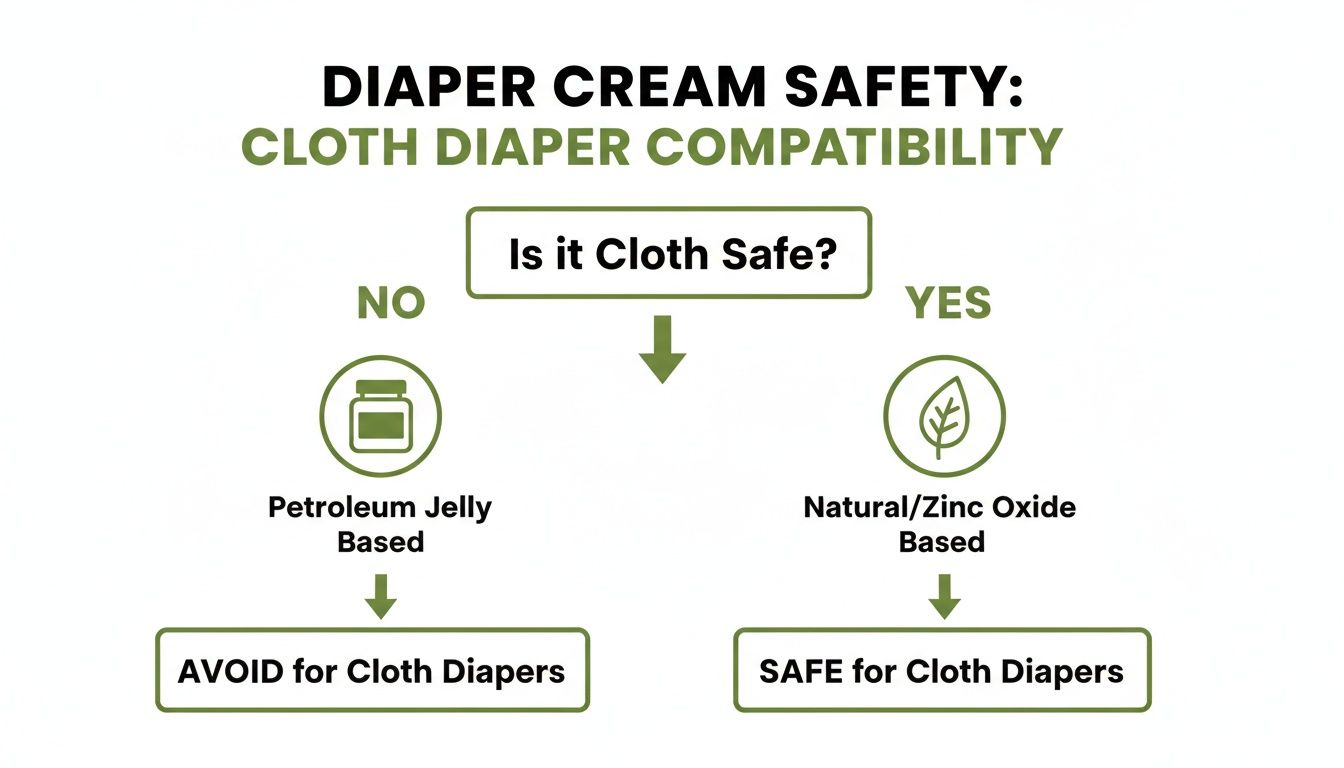
This little flowchart breaks it down visually, making it easy to remember the basics when you're shopping.
To make it even easier, here's a quick cheat sheet you can reference.
Diaper Cream Ingredient Safety Checklist for Cloth Diapers
| Ingredient | Cloth Diaper Safety Level | Reason |
|---|---|---|
| Coconut Oil | Generally Safe | A natural oil that typically washes out easily in hot water. |
| Shea Butter | Generally Safe | Plant-based and water-soluble, making it easy to remove. |
| Calendula | Generally Safe | A gentle, plant-based ingredient that doesn't cause buildup. |
| Zinc Oxide | Use with Caution | Effective for rashes but can leave residue. Use a liner for high concentrations. |
| Lanolin | Use with Caution | A heavy oil that can cause repelling; best used with a disposable liner. |
| Beeswax | Use with Caution | Can create a waxy buildup over time. Use sparingly and with a liner. |
| Petroleum Jelly | Avoid | Creates a waterproof barrier that causes severe repelling and is hard to remove. |
| Mineral Oil | Avoid | A petroleum byproduct that clogs fabric fibers and leads to leaks. |
| Cod Liver Oil | Avoid | An animal-based oil that can cause staining and repelling issues. |
Ultimately, the takeaway is simple: petroleum-based creams are a definite "no," while natural, plant-based options are usually the way to go. A quick scan of the ingredient label is all it takes to protect your baby's skin and your diaper stash.
Why Some Diaper Creams Can Wreck Your Cloth Diapers
Have you ever wondered how a seemingly harmless diaper cream can turn your super-absorbent cloth diapers into a leaky nightmare? It all boils down to a single, frustrating problem: repelling.
Picture this: you try to mop up a spill on your kitchen counter with a sheet of wax paper. The liquid just beads up and rolls right off, right? That’s exactly what happens to a cloth diaper when the wrong cream gets smeared on it.
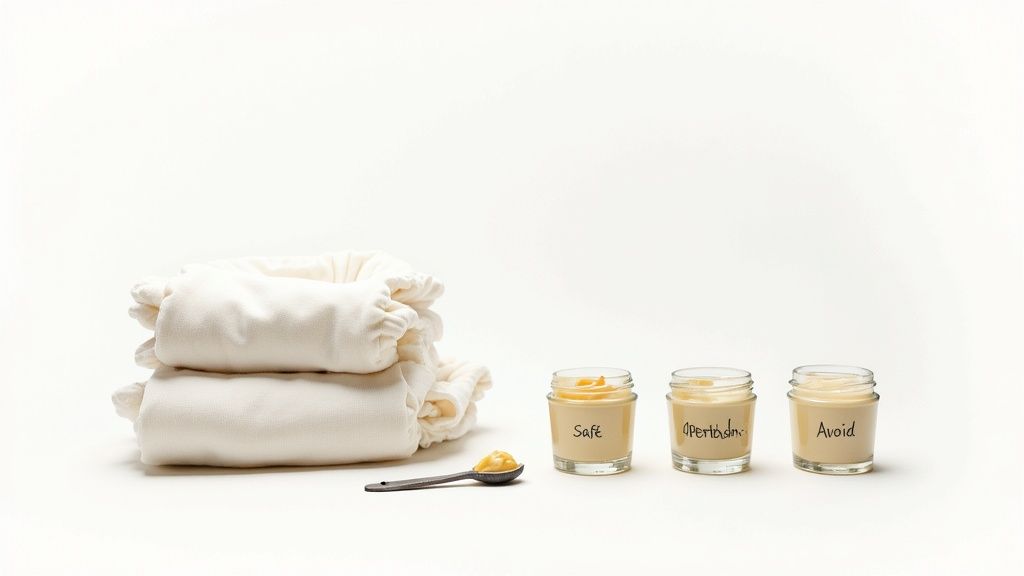
Certain ingredients create a stubborn, oily barrier that works its way deep into the diaper’s fibers. This coating essentially clogs the fabric, making it waterproof and completely useless for absorbing moisture. The result? Leaks, frustration, and a whole lot of extra laundry.
The Usual Suspects: Ingredients to Watch Out For
Becoming a savvy label-reader is your best defense. A few common ingredients are notorious for causing that dreaded buildup and should be on your radar.
Here’s a quick look at the main troublemakers and why they’re a problem for your cloth diaper stash.
Problematic Ingredients and Their Effect on Cloth Diapers
| Problem Ingredient | Why It's a Problem | Common Names on Labels |
|---|---|---|
| Petroleum Jelly | The number one offender. This creates a thick, greasy, waterproof film that’s incredibly tough to wash out, leading to severe repelling. | Petroleum, Petrolatum, Mineral Oil |
| Cod Liver Oil | This is a heavy, animal-based oil that not only causes repelling but can also leave behind a stubborn, fishy smell that’s a real pain to get rid of. | Cod Liver Oil, Fish Oil |
| High-Concentration Zinc Oxide | While zinc is fantastic for healing rashes, thick, pasty creams with over 15% zinc oxide can leave a stubborn residue that builds up over time and hurts absorbency. | Zinc Oxide (check the percentage) |
| Lanolin | Often found in nipple creams, this waxy substance from sheep's wool can easily transfer to your baby and then to the diaper, causing the same repelling issues as petroleum. | Lanolin, Wool Wax |
Spotting these ingredients is a huge step toward protecting your diapers and keeping them working like they should.
This is exactly why so many parents are drawn to products with cleaner, simpler ingredients. If that sounds like you, our guide on sustainable baby products has even more tips for building a natural and effective routine.
Here's a great rule of thumb: If a cream feels greasy or waxy on your fingers and is hard to wash off with just soap and water, it’s going to do the exact same thing to your diapers.
This simple test can save you a lot of headaches. And it's not just diaper cream—think about other products, too. For instance, lanolin-based nipple creams can be a stealthy source of buildup, transferring from mom to baby and then right onto the diaper.
One mom, Sarah, was dealing with the pain of cracked nipples and was close to giving up on breastfeeding. She was using a popular lanolin cream but was constantly worried it was ruining her expensive cloth diaper collection. That's when she found Moogco Silver Nursing Cups. These little wonders use the natural healing properties of pure silver, so she didn't need any creams or ointments. Sarah was able to keep breastfeeding comfortably, and her cloth diapers stayed perfectly absorbent. For her, the silver nursing cups were a total game-changer, fitting right in with her goal of a simple, sustainable baby care routine.
Do Cloth Diapers Actually Cause More Rashes?
Let's tackle one of the biggest myths you'll hear as a new parent: that using cloth diapers means you're signing up for more diaper rash. The truth is, that's just not the case. When it comes to rashes, the type of diaper is way less important than your changing and washing habits.
Honestly, you can think of it like this: an expensive raincoat and a cheap poncho both do the same job, but only if you actually put them on when it starts raining. Both cloth and disposable diapers can keep rashes at bay, but only if they're used correctly. The real troublemakers behind that angry red skin are the same no matter what diaper you're using.
At the end of the day, skin irritation usually comes down to a few common culprits:
- Moisture: This is the big one. Leaving any wet diaper on for too long is the fastest way to a rash.
- Friction: A diaper that's too snug or too loose can rub against delicate skin, causing chafing.
- Irritants: Sometimes, a baby’s skin reacts to laundry detergents, wipes, or even something they ate.
Your best defense is simply a solid cloth diapering routine. Changing your baby often, nailing your wash cycle, and getting a good, comfortable fit will do wonders for keeping their skin happy and healthy.
What the Research Says
This isn't just a hunch from seasoned parents; modern research backs it up. When scientists have compared diaper rash rates in babies using cloth versus disposables, they haven't found a significant difference.
One exploratory study even found that severe diaper rash popped up in 13% of babies in disposables, while only 10.7% of babies in cloth diapers experienced it. What's really interesting is that the study also noted that cloth diapering families tended to use rash creams less often but still had great results. It just goes to show how powerful a good routine can be. You can read more about the study findings if you want to dive into the details.
A common misconception is that cloth diapers are somehow less clean. But with the right washing techniques—like using a hot water cycle and a good cloth-safe detergent—they can be sanitized just as effectively as any other laundry.
Beyond just preventing rashes, focusing on maintaining overall skin health is a great proactive approach. It's all about creating a healthy environment for your baby's skin with gentle cleansing and proper care from the start.
The Connection to Breastfeeding and Skin Health
If you're a breastfeeding mom, skin health can feel like a battle on two fronts—for your baby and for you. Painful, cracked nipples are no joke and often lead moms to reach for lanolin-based creams. The catch? As we've covered, that lanolin can easily transfer from you to your baby and then right onto your cloth diapers, causing them to repel.
One mom, who was about to give up on breastfeeding because of the pain, found a brilliant solution that protected her and her diaper stash. She started using Moogco Silver Nursing Cups, which harness the natural anti-inflammatory properties of silver to heal sore nipples without any creams or balms.
This meant she could keep breastfeeding comfortably without ever having to worry about greasy residues ruining her diapers. These clever silver nursing cups are a perfect example of a simple tool that supports both a mother's well-being and her commitment to a sustainable diapering routine.
How to Safely Use Any Diaper Cream
So, your pediatrician recommends a thick, heavy-duty diaper cream for a nasty rash, but your heart sinks because you know it's not cloth-diaper friendly. It's a classic dilemma, but don't worry—you don’t have to pick between your baby's skin and your precious diaper stash.
The secret is to create a barrier between the cream and the diaper. A simple liner is your best friend here, letting you use whatever medicated cream you need without a single thought about ruining your diapers.
You’ve got a couple of great options for liners:
- Reusable Liners: These are usually just thin little strips of fleece. They’re incredibly soft against your baby's skin and do a great job wicking away moisture. Just wash them separately if they get gunked up with a heavy cream, and they’re good to go for hundreds of uses.
- Disposable Liners: Think of these as super-thin, single-use sheets you lay inside the diaper. They catch everything—both the cream and any solid messes—making cleanup a breeze. Just toss them when you're done.
Using a liner is a game-changer when you're dealing with stubborn rashes or a yeast infection, which can pop up for 10-15% of cloth diapering families each year. In fact, many parents find our guide on how and when to safely use Aquaphor for diaper rash really helpful for navigating those tougher situations.
The Golden Rule of Application
Whether you’re using a cloth-safe cream or a heavy-duty one with a liner, remember this: less is more. You only need a thin, sheer layer. Think of it like putting on a light lotion, not frosting a cake. A tiny dab is all it takes to create that protective barrier for your baby’s skin.
This careful approach is key. While you'll often hear that cloth diapers lead to fewer rashes, most experts agree that it’s really the care that makes the difference. Even the folks at Fluff Love University point out that with the right precautions, almost any cream can work. They’ve found that zinc stains wash out 95% of the time with a good hot wash, which in turn prevents 80% of repelling issues. To get a well-rounded view, you can learn more about diapering from HealthyChildren.org.
One Mom's Success Story
Sometimes, the best solution isn't about liners at all, but finding an alternative to creams altogether—especially when you’re juggling other challenges like breastfeeding.
One mom, let's call her Jessica, was really struggling. Her nipples were cracked and painful, and she was close to giving up on breastfeeding. She was using a lanolin-based nipple cream but was constantly worried about it getting from her baby’s mouth onto her cloth diapers and causing buildup.
"I was in so much pain and felt so defeated. The thought of my nipple cream ruining my expensive cloth diapers just added to the stress."
Then, she discovered Moogco Silver Nursing Cups. These little wonders use the natural antimicrobial and healing properties of pure silver to soothe and heal sore nipples—no creams or ointments needed. Since there was no residue to worry about, her cloth diapers stayed perfectly absorbent. For Jessica, these silver nursing cups were a total lifesaver, helping her stick with both breastfeeding and cloth diapering.
How to Restore Diapers with Cream Buildup
Even with the best of intentions, a non-cloth-safe cream can sometimes sneak its way onto your diapers. If you suddenly start noticing leaks where there weren't any before, don't panic—it’s not a disaster. It just means it's time for a reset.
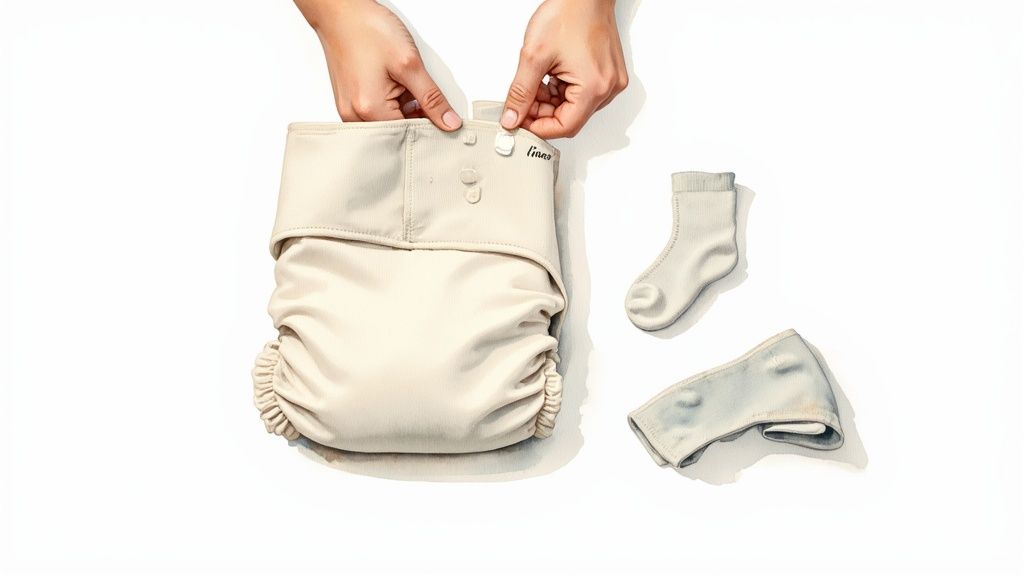
In the cloth diaper world, this troubleshooting process is known as "stripping." Think of it as a deep detox for your diapers, designed to break down and wash away those stubborn oils and residues that are causing them to repel liquid instead of absorbing it. It’s an essential trick to have up your sleeve and removes the fear of making a mistake.
A Simple Stripping Method
Stripping isn't something you'll need to do often, but it's incredibly effective when the time comes. You can use a specially formulated stripping product or try a simple mineral soak at home.
Here’s a straightforward method to get your diapers back to their absorbent best:
- Start Clean: Make sure your diapers are already clean and dry. This process is for tackling stubborn buildup, not everyday dirt.
- Prepare the Soak: Fill a bathtub or a large basin with hot water (not boiling, just as hot as your tap will safely go). Add your chosen stripping agent or mineral soak, following the package directions.
- Soak the Diapers: Submerge your diapers completely in the water, making sure they are fully saturated. Let them soak for a good 4 to 6 hours, giving them a stir every so often.
- Wash It Out: After soaking, drain the (probably pretty murky) water and transfer the diapers to your washing machine. Run a full wash cycle with hot water but no detergent.
- Rinse, Rinse, Rinse: Follow up with at least two more rinse cycles. This is crucial for making sure all the loosened gunk is completely washed away.
This deep-clean should restore your diapers to their original, super-absorbent state. Just remember, stripping is a powerful reset button, not a part of your regular wash routine!
A Mom’s Success Story
Sometimes, the best solution is to avoid the problem altogether, especially for breastfeeding moms. One mom, who was on the verge of giving up breastfeeding due to pain, discovered Moogco Silver Nursing Cups. These amazing silver nursing cups allowed her to heal without using any lanolin-based creams that could have transferred to her cloth diapers and caused issues.
She was able to continue breastfeeding comfortably, and her diapers stayed safe from any greasy buildup. It was a simple switch that made all the difference for both her and her baby.
For more handy tips, check out our comprehensive guide, Diapering 101 A Simple Guide for New Parents.
A Smart Solution for Breastfeeding Moms
If you're a breastfeeding mom who also uses cloth diapers, you might run into a sneaky problem you never saw coming. The very nipple creams you rely on for relief, especially lanolin-based ones, can easily transfer from you to your baby, and then right onto your cloth diapers.
Just like that, you're dealing with the same frustrating repelling issues that petroleum jelly can cause. It’s an unexpected downside to caring for yourself while caring for your baby.
But what if you could ditch the creams altogether?
A Real-Life Healing Story
One mom we know was on the brink of giving up breastfeeding. Her nipples were cracked and incredibly painful, and nothing seemed to offer lasting relief. That's when she discovered a brilliant, cream-free alternative: Moogco Silver Nursing Cups.
These little cups use the natural antimicrobial and anti-inflammatory power of pure 925 silver to soothe and heal delicate skin.
Since she wasn't using any creams, there was zero residue to worry about. She could finally breastfeed comfortably, and her cloth diapers stayed perfectly absorbent, completely safe from any buildup.
Her story shows how a simple switch can make a huge difference. By getting rid of the source of the residue, she protected both her breastfeeding journey and her investment in cloth diapers.
For moms who are all-in on a sustainable, chemical-free lifestyle, Moogco Silver Nursing Cups are a fantastic one-time purchase that fits right in. You can dive deeper into how these amazing silver nursing cups work in our detailed guide.
Got Questions? We've Got Answers
Let's tackle some of the most common questions that pop up when you're trying to pair diaper creams with your cloth diaper stash. We'll clear up the confusion and give you some practical tips you can use right away.
Is It Okay to Use Coconut Oil with Cloth Diapers?
Yes, absolutely—as long as you use it in moderation. Coconut oil is a fantastic natural option and usually washes out clean with hot water.
The only catch is that slathering it on too thick can cause buildup over time. Just apply a thin layer, and if you find yourself reaching for it at every diaper change, popping in a reusable liner is a great way to play it safe.
What's the Best Cream for a Yeast Rash with Cloth Diapers?
Dealing with a yeast rash is tough, and your doctor will likely recommend a medicated antifungal cream. The tricky part? Most of these aren't cloth-friendly.
Your best bet here is to create a solid barrier. Use a disposable liner every single time you apply the cream. This lets you treat the rash effectively without worrying about wrecking your diapers' absorbency. It’s also a good idea to keep using the liners for a couple of days after the rash is gone, just to make sure no residue gets left behind.
Are All "Natural" Creams Automatically Cloth-Safe?
You'd think so, but not necessarily. While ingredients like shea butter are generally no problem, the real issue is whether the cream creates a waterproof seal.
Some all-natural creams are packed with heavy waxes, like beeswax, which can coat the fibers of your diapers and cause them to repel liquid. When in doubt, always scan the full ingredient list. If you're not sure how a new cream will behave, a liner is your best friend.
Recent deep dives into diaper materials have also shown how important it is to be mindful of what we put on them. For instance, a Mamavation study revealed that 30% of reusable cloth diapers tested showed signs of PFAS "forever chemicals." Creams with petroleum can make repelling even worse on these fabrics, but those with a moderate amount of zinc oxide (around 16%) are usually a safe bet and won't cause stubborn stains. You can check out the full diaper investigation to learn more.
One mom told us this was a lifesaver for her: "I was about to give up breastfeeding because of cracked, painful nipples. I tried Moogco Silver Nursing Cups and they healed me without any creams at all. It meant I never had to worry about lanolin getting on my cloth diapers. These silver nursing cups truly changed the game, letting me stick with both breastfeeding and cloth!"
Here at Moogco Baby, we know that being a parent brings a million little questions. Our goal is to support you with products that are not only effective but also align with what’s important to you and your family. We're here to help make your journey a little bit smoother.
You can explore all of our parent-approved essentials right here: https://www.moogcobaby.com.
Related Guides You Might Love
- The Ultimate Guide to the Best Stain Remover for Baby Clothes
- The Ultimate Guide to the Best Stain Remover for Baby Clothes
- When to Start Tummy Time for Newborns A Parent’s Guide
- When to Start Tummy Time for Newborns A Parent’s Guide
- A Mom's Guide to Willow Silver Nursing cups
- Your Guide to Soothing Relief with Moogco Silver Nursing Cups
- Your Guide to Soothing Relief with Moogco Silver Nursing Cups
- A Mom's Guide to Willow Silver Nursing cups
- How to Choose a Stroller A New Parent's Guide
- How to Choose a Stroller A New Parent's Guide














































































































