


From the first wobbly head movements to taking those exciting first steps, motor development is a crucial aspect of a baby’s growth. Understanding how babies develop movement skills and how parents can support them through play and interaction can help ensure healthy physical progress.
Understanding Motor Development
Motor development is divided into gross motor skills (large movements like rolling, crawling, and walking) and fine motor skills (small, precise movements like grasping and pinching). Both types of development occur in a predictable sequence but at a unique pace for each child.

✔️ Cephalocaudal Development: Babies gain control from the head downward, starting with neck strength and progressing to walking. ✔️ Proximodistal Development: Movement control starts at the core (trunk) and gradually extends to the hands and fingers. ✔️ Reflex to Voluntary Control: Many newborn movements are reflexive but evolve into purposeful actions over time.
Free US shipping over $100
Real essentials, picked by real moms
Take $15 off at checkout, applied automatically when you shop through this link.
Shop with MAMA15 →Free US shipping over $100. Code applies automatically at checkout.
Dr. Rachel Langford, Pediatric Physical Therapist: “Babies develop motor skills in stages, but they thrive with plenty of tummy time, exploration, and interaction with their environment.”
Picks From This Story
Picks related to this guide, ready to ship from Moogco.
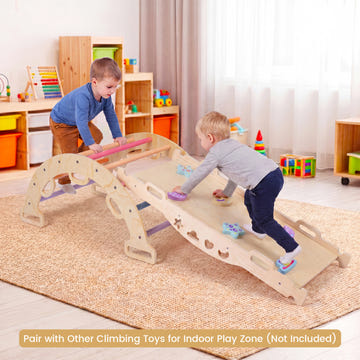
Wooden Rocking Climbing Arch with Cushion 3-in-1 Mon...
$59.99
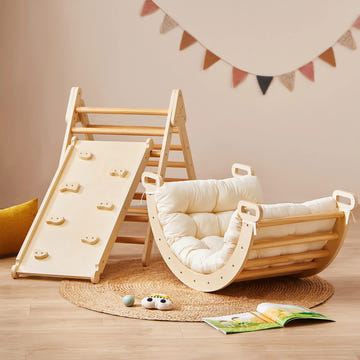
Tiny Land 7-in-1 Montessori Climbing Set with Thick ...
$199.99
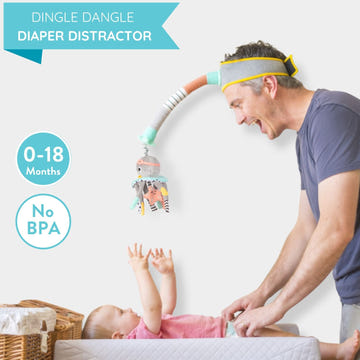
Dingle Dangle Baby Diaper Changing Distractor Head-W...
$32.99
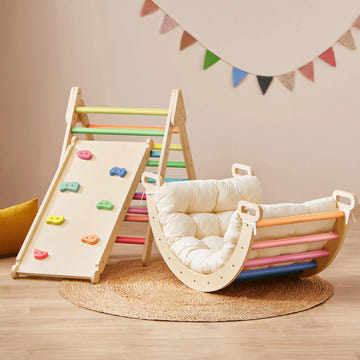
Tiny Land® 7-in-1 Rainbow Climbing Set with Thick Pl...
$199.99
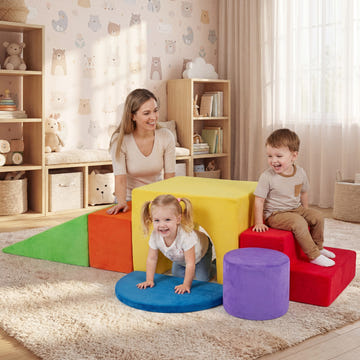
6 Pieces Foam Climbing Blocks for Kids with Slide an...
$73.99
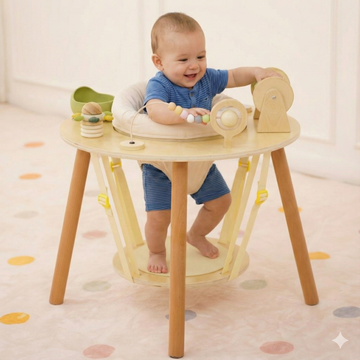
Aldar Convertible Montessori Activity Table
$199.00
Motor Development Milestones & How to Support Them
0-3 Months: Head & Neck Control
✅ Begins lifting head during tummy time. ✅ Moves arms and legs more fluidly. ✅ Starts to bring hands to mouth.
💡 Tip: Place your baby on their tummy daily for short periods to strengthen neck and shoulder muscles.
4-6 Months: Rolling & Reaching
✅ Rolls from tummy to back (around 4-5 months). ✅ Grasps and shakes toys. ✅ Pushes up on arms while on tummy.
Dr. Emily Carter, Developmental Pediatrician: “Tummy time is one of the best activities for building early motor strength. Babies who get frequent tummy time often reach movement milestones earlier.”
7-9 Months: Sitting & Crawling
✅ Sits without support. ✅ Begins to crawl or scoot. ✅ Transfers objects between hands.
💡 Encouragement: Provide floor space and let your baby explore safely. Avoid prolonged use of baby seats or jumpers, as they can limit natural movement development.
10-12 Months: Pulling Up & First Steps
✅ Pulls up to stand and cruises along furniture. ✅ Begins to take assisted steps. ✅ Uses pincer grasp (thumb and index finger) to pick up small objects.
💡 Support: Hold their hands as they practice stepping, but let them balance independently when ready. Barefoot walking helps strengthen foot muscles.
12-18 Months: Walking & Coordination
✅ Walks independently or with minimal support. ✅ Climbs onto low furniture. ✅ Begins stacking objects and scribbling.
Dr. Laura Kim, Pediatric Occupational Therapist: “Fine motor skills like grasping and stacking are just as important as gross motor skills. Finger-feeding and playing with small objects help develop hand strength and coordination.”
How to Promote Healthy Motor Development
✔️ Encourage Free Movement: Allow your baby to explore different positions instead of relying on devices like walkers or swings. ✔️ Provide Interactive Toys: Soft blocks, push toys, and stacking rings help improve coordination. ✔️ Avoid Screen Time: The AAP recommends no screen time before age 2, as physical play is crucial for motor learning. ✔️ Let Your Baby Take Their Time: Every child develops at their own pace. If delays are a concern, consult your pediatrician.
More Related Picks
A few more favorites from the same collection.
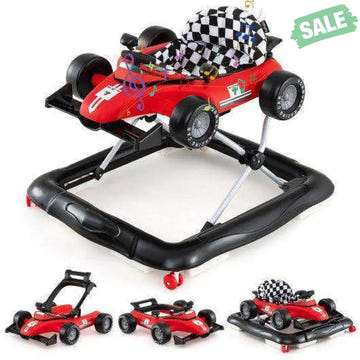
4-in-1 Baby Push Walker Activity Center Height Adjus...
$59.99
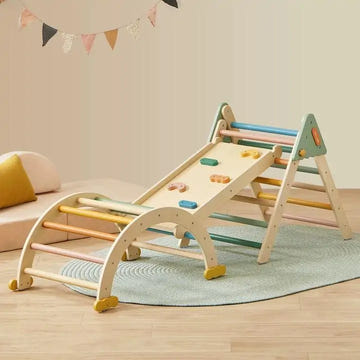
Tiny Land® 7-in-1 Morandi Pikler Triangle Set
$159.99
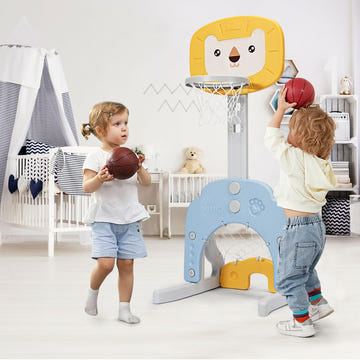
3-in-1 Adjustable Kids Basketball Hoop Sports Set - ...
$52.99
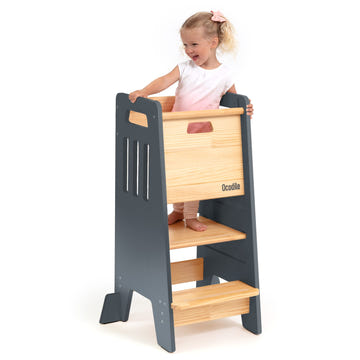
Standing Toddler Tower with Sliding Safety Door
$129.99
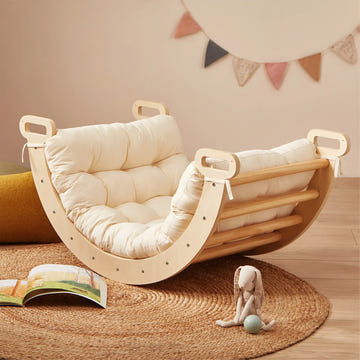
Tiny Land Thick Padded Play Cushion Arch Not Included
$74.99
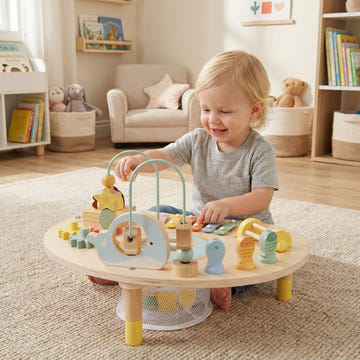
7-in-1 Toddler Activity Table Montessori Sensory Toy...
$39.99
The Role of Moogco Silver Nursing Cups
Breastfeeding provides key nutrients that support muscle and bone development. Moogco Silver Nursing Cups help relieve soreness naturally, making breastfeeding more comfortable for moms.
📌 Get yours today: Moogco Silver Nursing Cups on Amazon.
Final Thoughts: Movement is Learning
Every stretch, roll, and step your baby takes is part of their incredible growth journey. With the right environment, encouragement, and patience, you can help support their development in a fun and engaging way.
🛒 Find all your baby essentials at Moogco Baby.
Bring this guide home with $15 off.
Use code MAMA15 for $15 off →
Featured pick from Moogco
MOOGCO Silver Nursing Cups 925k Silver - Protect Against Sore Breasts And Nipple Irritation
$45.90 $49.90
Shop this pick → Frequently Asked Questions
When should I be concerned if my baby isn't crawling yet?
Most babies begin crawling between 7 and 10 months, but some skip it entirely and go straight to walking. If your baby shows other signs of development like sitting independently, pulling up, and using their hands to explore, they're likely progressing well. However, if you notice your baby isn't using both sides of their body equally or seems very stiff or floppy, consult your pediatrician.
How much tummy time does my newborn really need each day?
Start with 2 to 3 short sessions of 3 to 5 minutes each day during the first weeks, gradually building up as your baby gets stronger. By 3 to 4 months, aim for about 20 to 30 minutes total throughout the day. Tummy time strengthens neck, shoulder, and core muscles that are essential for rolling, sitting, and eventually crawling.
Are baby walkers safe or helpful for learning to walk?
Baby walkers are not recommended by pediatricians and can actually delay motor development while posing serious safety risks. Walkers prevent babies from seeing their feet, limit natural movement patterns, and can lead to falls or injuries. Instead, let your baby practice pulling up on furniture and taking assisted steps while holding your hands.
What are the best toys to encourage fine motor skill development?
Simple toys work best: soft blocks for stacking, large beads for threading, shape sorters, and toys with buttons or levers to push. Everyday items like wooden spoons, plastic cups, and crinkly paper also provide excellent sensory and motor practice. The key is offering objects that encourage grasping, transferring between hands, and manipulating with fingers.
Should my baby always wear shoes when learning to walk?
Barefoot walking is actually best for developing balance, coordination, and foot strength during the early walking stage. When indoors or on safe surfaces, let your baby walk without shoes so they can feel the ground and develop natural foot mechanics. Save shoes for outdoor protection or cold weather, and choose soft, flexible options that mimic barefoot movement.
Is it normal for my baby to scoot on their bottom instead of crawling?
Yes, bottom scooting is a completely normal variation of mobility that some babies prefer over traditional crawling. As long as your baby is moving independently, using both sides of their body, and progressing toward other milestones like pulling up and standing, scooting is just their unique way of getting around. Most scooters go on to walk without any issues.
Can too much time in swings or bouncy seats affect motor development?
Yes, prolonged time in container devices like swings, bouncy seats, and infant carriers can limit the floor time babies need to practice moving and strengthening muscles. These devices are fine for short periods, but babies develop best when they have plenty of supervised floor time to roll, reach, and explore different positions. Aim for more floor play than device time throughout the day.
What's the difference between gross motor delays and just being a late bloomer?
Late bloomers still show steady progress and achieve milestones in the expected sequence, just on their own timeline. Red flags for delays include not bearing weight on legs by 6 months, inability to sit with support by 9 months, not pulling to stand by 12 months, or losing skills they once had. Trust your instincts and talk to your pediatrician if you notice your baby isn't progressing or seems significantly behind peers.
From Moogco Studio
Printable and personalized nursery essentials. Designed by moms for moms.


About the Editor
Eda Ulger is the editor at Moogco Baby and a mom of two. She curates and edits our guides so every piece is honest, practical, and genuinely helpful for the early days of motherhood.
Shop This Story
Picks related to this guide, ready to ship from Moogco.
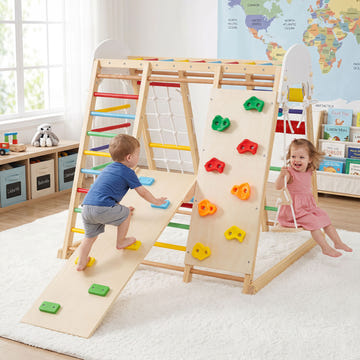
8-in-1 Foldable Indoor Jungle Gym for Kids with Swin...
$169.99
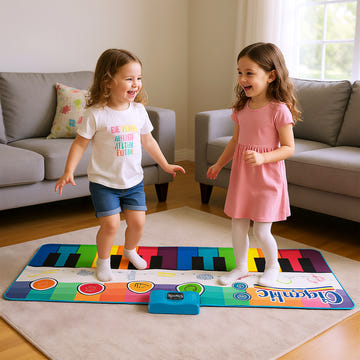
Floor Piano Dance Mat for Kids Musical Playmat with ...
$49.99
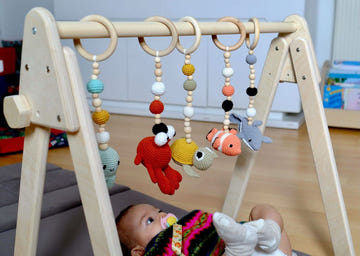
Kidodido Baby Play Gym Wooden Montessori Foldable wi...
$76.97
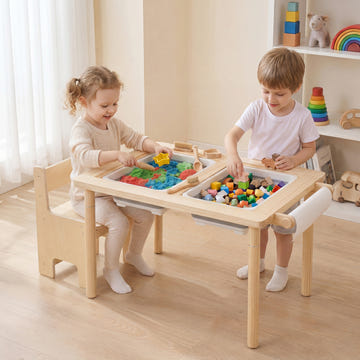
Kids Sensory Table Set with Adjustable Height and 2 ...
$79.99
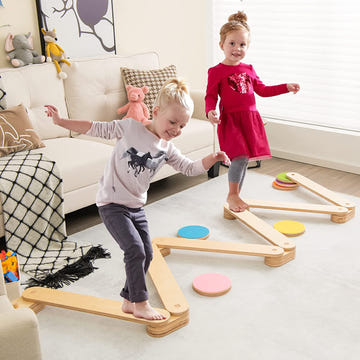
12-Piece Kids Wooden Balance Beam with Colorful Stee...
$47.99
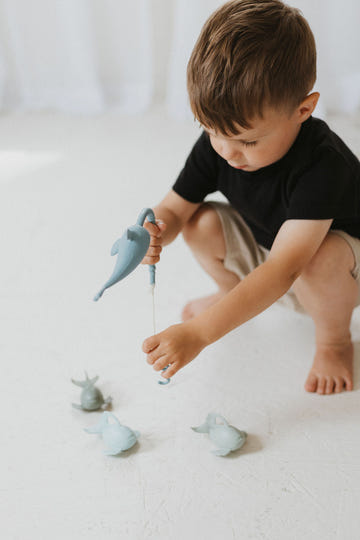
ShopMyLittleSongbird Silicone Fishing Set 3 Fish 1 N...
$15.99
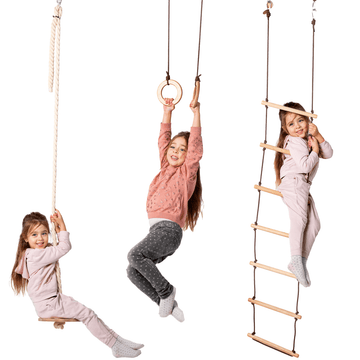
Goodevas 3in1 Swing Climbing Set Rope Ladder Gym Rin...
$79.00
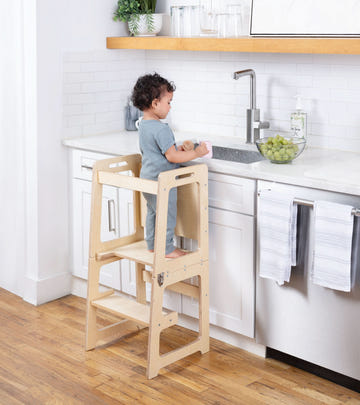
Avenlur 4-in-1 Convertible Toddler Kitchen Tower Des...
$119.00
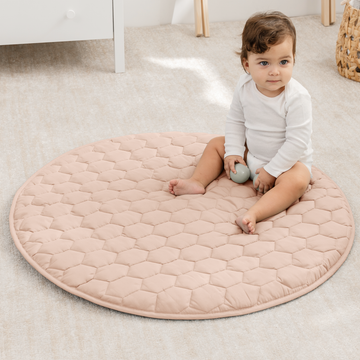
Comfy Cubs Play Mat with Non-Slip Bottom Blush round...
$34.99
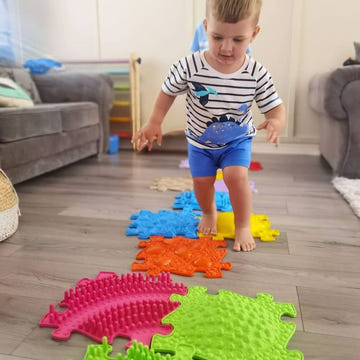
Rainbow Sensory Playmat Set
$104.95