When you think of a comforting ritual, what comes to mind? For many, it's the simple act of brewing a warm cup of tea. But what if that daily cup could do more than just soothe your soul? What if it could help quiet the chronic, low-grade inflammation simmering within your body?
That's the idea behind anti-inflammatory teas. Staples like turmeric, ginger, and green tea are packed with natural compounds that can support your body's healing processes and help manage that internal fire.
Your Guide to Soothing Inflammation with Herbal Teas


Think of chronic inflammation as a tiny, persistent campfire inside your body. It's often the hidden culprit behind everything from achy joints and digestive upset to persistent fatigue. While some inflammation is a normal and healthy immune response, it becomes a problem when the "off" switch gets stuck. Anti inflammatory teas offer a gentle, daily way to help manage that internal blaze.
Free US shipping over $100
Real essentials, picked by real moms
Take 20% off at checkout, applied automatically when you shop through this link.
Shop with BABY20 →Free US shipping over $100. Code applies automatically at checkout.
This guide is your map to the world of these powerful herbal remedies. We'll break down the science in a way that makes sense, introduce you to the most effective herbs, and share practical tips for brewing the perfect, soothing cup. My goal is to show you how these plant-based allies can become a natural, enjoyable part of your wellness routine.
Of course, to effectively manage inflammation, it helps to know what's fanning the flames in the first place. Getting a handle on triggers like diet and lifestyle is key. For a fantastic deep dive, understanding the various causes of inflammation offers some great context for your journey.
Why People Choose Herbal Teas
The move toward natural wellness isn't just a trend; it's a significant shift. The global market for anti-inflammatory teas has swelled to an estimated USD 2.18 billion, a number that speaks volumes. It shows a real desire for plant-based solutions over synthetic options and a growing commitment to proactive, long-term health.
So, what’s the appeal? Why are so many people turning to the humble tea leaf?
- Accessibility: These teas are everywhere—easy to find, affordable, and incredibly simple to prepare.
- Gentle Support: Unlike harsh medications, they work with your body, offering subtle, supportive action that complements a healthy lifestyle.
- An Enjoyable Ritual: Let's be honest, the simple act of brewing and sipping a warm, fragrant cup of tea is a calming, mindful practice in itself.
By incorporating these beverages into your routine, you’re not just hydrating; you’re delivering targeted, plant-based compounds that help your body find balance and soothe irritation from the inside out.
To help you navigate the options, here's a quick look at some of the top players in the world of anti-inflammatory teas.
Top Anti-Inflammatory Teas at a Glance
This table offers a snapshot of the most effective teas, their superstar compounds, and what they're best known for. It's a great starting point for finding the right blend for your needs.
| Tea | Key Compound | Primary Benefit |
|---|---|---|
| Turmeric Tea | Curcumin | Reduces joint pain and systemic inflammation |
| Ginger Tea | Gingerol | Soothes digestive inflammation and nausea |
| Green Tea | EGCG | Provides powerful antioxidant and anti-inflammatory effects |
| Chamomile Tea | Apigenin | Calms the nervous system and reduces mild inflammation |
| Rosehip Tea | Polyphenols | Supports joint health, particularly for osteoarthritis |
Think of this as your cheat sheet. Whether you're dealing with creaky knees or an upset stomach, there's likely a tea that can offer some gentle relief.
How Anti-Inflammatory Teas Calm Your Body
So, how exactly can a simple cup of tea help fight something as complex as inflammation? It's easier to picture if you think of your body’s inflammatory response as a line of falling dominoes. An injury, illness, or even stress can tip that first domino, starting a chain reaction that leads to swelling, redness, and pain. This is a good thing in the short term—it’s your body's way of healing. But when that reaction never shuts off, you're left with chronic inflammation.
That's where anti-inflammatory teas come in. The powerful compounds inside these herbs act like a hand that reaches in and stops the dominoes from falling. They interrupt the cascade before it gets out of hand, helping your body find its balance again with every sip.
This isn't magic—it's just gentle, natural biochemistry. The active ingredients in herbs like ginger and turmeric work on a molecular level, calming the specific pathways that tell your body to stay on high alert.
The Power of Polyphenols and Antioxidants
The real heroes in these teas are potent plant compounds, mainly polyphenols and antioxidants. Instead of getting tangled up in scientific jargon, let’s stick with another simple analogy.
Imagine your body’s cells are shiny new cars. Everyday life—things like pollution, stress, or a not-so-great diet—is like flinging mud and rocks at them. This assault creates unstable molecules called free radicals, which cause cellular "rust" and damage. This process is called oxidative stress, and it's a huge driver of chronic inflammation.
Antioxidants are your body’s expert detailing crew. They swoop in, neutralize those damaging free radicals, and polish away the rust, protecting your cells from further harm. By dialing down oxidative stress, they help turn down the volume on your body's inflammatory signals.
By neutralizing free radicals, the antioxidants in herbal teas help protect your cells from the daily wear and tear that contributes to chronic inflammation, supporting your body's natural healing processes.
Lots of teas are packed with these protective compounds. Green tea, for instance, is famous for a catechin called EGCG, while turmeric’s power comes from curcumin. Both are celebrated for their incredible antioxidant abilities, making them superstars in the world of anti-inflammatory teas.
Interrupting Inflammatory Pathways
These herbal compounds do more than just clean up cellular damage—they can directly intervene in the body's inflammatory process. Think of the enzymes and proteins that create inflammation as factory workers on an assembly line.
Certain compounds in herbs can essentially tell these workers to slow down or take a break. For example, gingerol (from ginger) and curcumin (from turmeric) have been shown to inhibit the very enzymes your body needs to produce inflammatory substances.
This targeted approach is what makes these teas so effective. They aren't just masking symptoms; they're getting to some of the root mechanisms that keep the cycle of inflammation going. This is especially vital for new mothers, as managing inflammation is key to postpartum recovery. In fact, these same principles can apply to other postpartum issues. You can learn more by reading about understanding mastitis, its causes, prevention, and relief in our comprehensive guide.
Here's a quick look at how some of these star compounds get the job done:
- Gingerols (in Ginger): These compounds are known to inhibit inflammatory pathways, offering relief that's been compared to over-the-counter anti-inflammatory drugs, just in a much gentler form.
- Curcumin (in Turmeric): This is the vibrant powerhouse famous for its ability to block multiple inflammatory molecules at once. It's a true multi-tasker in the fight against inflammation.
- Apigenin (in Chamomile): This antioxidant does more than just calm your nerves; it also has a soothing effect on inflammatory signals throughout your body.
Ultimately, drinking anti-inflammatory teas is a gentle, proactive way to support your body's natural defenses. It’s a simple daily ritual that gives your system the tools it needs to quiet those internal fires and find a state of healthy balance.
The Best Herbs for Anti-Inflammatory Tea
Now that we've covered the science, let's get to the good stuff—the herbs themselves. Think of this as your field guide to the all-stars of the herbal world. Each one brings something unique to the table with its own profile of active compounds, benefits, and flavors.
Whether you're looking for the earthy warmth of turmeric or the gentle calm of chamomile, there’s a perfect brew out there for you. We'll walk through the most potent and popular options one by one, giving you the inside scoop on what makes them so effective.
This infographic gives a great visual breakdown of how the polyphenols in these teas work to calm your body's inflammatory response.
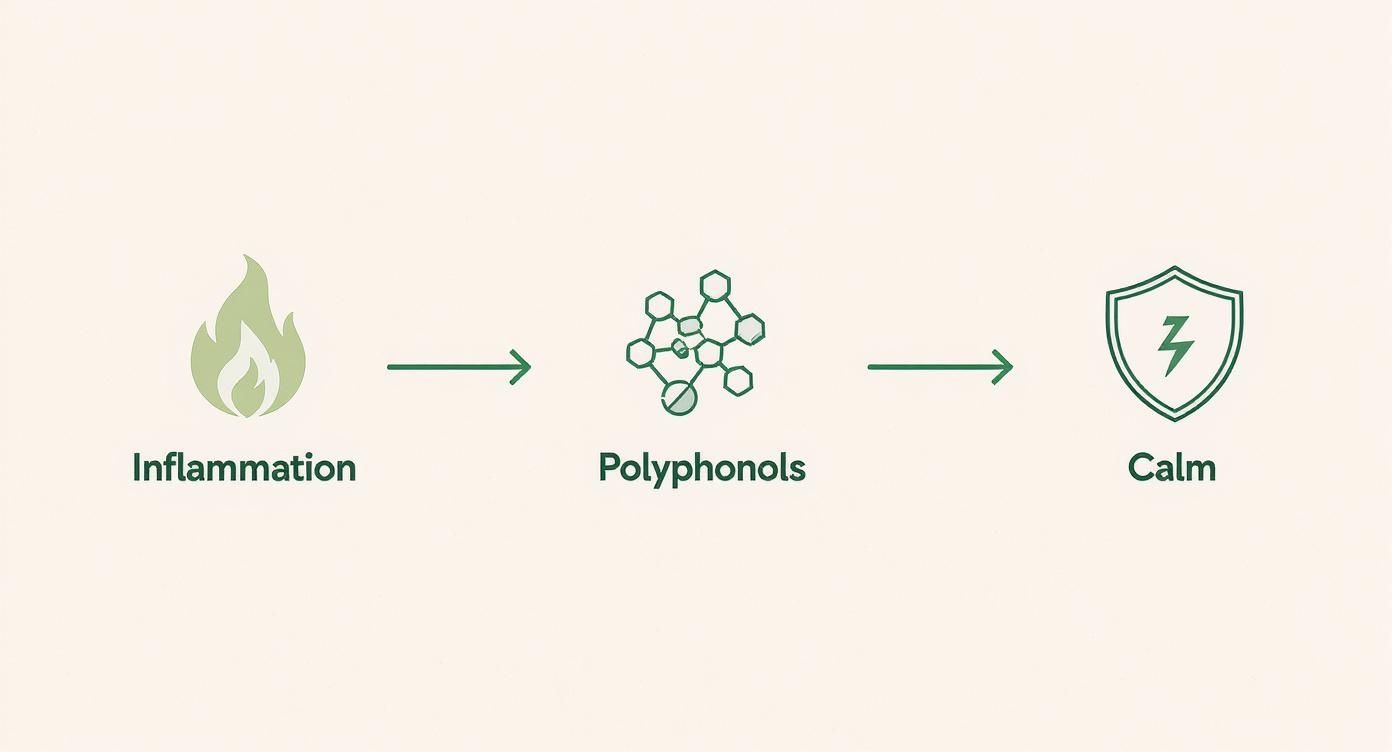
As you can see, these powerful plant compounds essentially act as a shield, helping to interrupt the chain reaction that can lead to chronic inflammation.
Turmeric: The Golden Healer
When you think "anti-inflammatory," turmeric is probably the first thing that pops into your head. And for good reason. This vibrant golden root has been a cornerstone of Ayurvedic medicine for centuries, celebrated for its incredible healing properties.
The magic ingredient here is curcumin. This powerful polyphenol is a master at quieting inflammation right at the molecular level. It gets involved in multiple inflammatory pathways, making it a fantastic choice for tackling systemic issues like achy joints and general stiffness.
- Best For: Easing joint discomfort, especially for conditions like osteoarthritis and general bodily aches.
- Flavor Profile: Warm, earthy, and a little bitter, with a peppery spice that lingers.
- Pro Tip: Always brew your turmeric tea with a pinch of black pepper. The piperine in pepper is known to boost curcumin absorption by up to a staggering 2,000%, making it vastly more effective.
Ginger: The Digestive Soother
A close cousin to turmeric, ginger is another root powerhouse known for its potent anti-inflammatory and antioxidant effects. Its signature spicy kick comes from its primary active compound, gingerol, which is also where most of its medicinal properties lie.
Ginger is especially brilliant at calming inflammation in the digestive system. It can help soothe an upset stomach, fight nausea, and ease bloating by relaxing the intestinal muscles. It's the perfect post-meal brew or a go-to for anyone dealing with tummy troubles.
Ginger's natural warming effect also helps improve circulation. Better blood flow can further aid in reducing inflammation in the body's tissues and joints, offering a comforting and effective remedy for both gut and body.
It’s a wonderfully versatile herb that provides relief from the inside out. For new mothers, focusing on gentle, nourishing foods and drinks is key for recovery. To learn more about this, check out our guide on what to eat while breastfeeding for a balanced diet.
Green Tea: The Antioxidant Powerhouse
While it's technically from a plant, not an herb, green tea (Camellia sinensis) is one of the most studied anti-inflammatory drinks on the planet. Its benefits are largely thanks to a group of polyphenols called catechins, with the most famous one being epigallocatechin gallate (EGCG).
EGCG is an incredibly strong antioxidant. Its main job is to neutralize free radicals and reduce oxidative stress—a major trigger for chronic inflammation. Sipping green tea regularly is linked to a whole host of health perks, from supporting a healthy heart to protecting brain function.
- Best For: Overall systemic anti-inflammatory support and powerful antioxidant protection.
- Flavor Profile: Can range from grassy and vegetal to toasty and slightly sweet, depending on the variety.
- Brewing Tip: To avoid a bitter brew, use water that's hot but not boiling (around 175°F or 80°C). This protects the delicate leaves from getting scorched.
Chamomile: The Calming Agent
Often pegged as the ultimate bedtime brew, chamomile is so much more than a sleep aid. These delicate, daisy-like flowers contain an antioxidant called apigenin, which has gentle anti-inflammatory properties.
Chamomile primarily works by calming the nervous system, which can indirectly help reduce the kind of inflammation that's tied to stress. It also has a wonderfully soothing effect on the digestive tract, making it great for mild indigestion. It may not be as heavy-hitting as turmeric or ginger, but it's a fantastic, gentle option for daily wellness.
Rosehip: The Joint Supporter
Did you know rosehips are actually the fruit of the rose plant? They are one of nature's most concentrated sources of vitamin C, but their benefits don't stop there. They're also loaded with polyphenols and galactolipids that have shown significant anti-inflammatory effects.
Research has specifically pointed to rosehip's benefits for people with osteoarthritis. The compounds in these little red fruits appear to reduce joint inflammation and help protect cartilage, which can lead to less pain and better mobility.
- Best For: Supporting joint health, especially for those with osteoarthritis.
- Flavor Profile: Tart, tangy, and slightly floral, almost like a cross between hibiscus and cranberry.
- Did You Know? During World War II, a rosehip syrup was handed out across Britain as a source of vitamin C when citrus fruits were hard to come by.
Comparing Popular Anti-Inflammatory Herbs
To help you choose the right tea for your goals, here’s a quick side-by-side look at these herbal heroes.
| Herb | Active Compound | Best For | Flavor Profile |
|---|---|---|---|
| Turmeric | Curcumin | Joint pain and systemic inflammation | Warm, earthy, peppery |
| Ginger | Gingerol | Digestive soothing and nausea relief | Spicy, pungent, warming |
| Green Tea | EGCG | Potent antioxidant protection | Grassy, vegetal, slightly sweet |
| Chamomile | Apigenin | Calming stress and mild inflammation | Floral, apple-like, delicate |
| Rosehip | Polyphenols | Osteoarthritis and joint support | Tart, tangy, slightly fruity |
At the end of the day, the best anti-inflammatory tea is the one you actually enjoy drinking. Don't be afraid to experiment with different herbs and blends to find what you love. Making it a consistent, enjoyable part of your daily routine is what really matters.
Brewing Tea for Maximum Benefits

You've picked out the right anti-inflammatory tea—that's a fantastic first step. But how you brew it can make all the difference. The brewing process is where you coax out all those potent, beneficial compounds hiding inside the leaves, roots, and flowers. A few simple tweaks to your routine can turn a pleasant cup of tea into a genuinely therapeutic one.
Think of it like cooking. You wouldn't blast a delicate piece of fish with the same heat you’d use for a tough roast. The same idea applies here. Delicate green tea leaves need a gentle touch, while tough roots like ginger and turmeric require more heat and time to give up their good stuff.
Mastering Steeping Time and Temperature
Getting the water temperature and steep time right is the key to pulling out the maximum anti-inflammatory compounds without ending up with a bitter, disappointing brew. Different herbs have different sweet spots.
Here are a few rules of thumb to get you started:
- Delicate Leaves (Green Tea): Go for hot, but not boiling, water—around 175°F (80°C) is perfect. Let it steep for just 1-3 minutes. If you use boiling water, you risk scorching the leaves, which kills off the delicate polyphenols and creates that classic bitter taste.
- Flowers and Lighter Herbs (Chamomile): Boiling water is totally fine for these. A steep time of about 5-7 minutes will draw out those calming, anti-inflammatory properties perfectly.
- Tough Roots and Spices (Ginger, Turmeric): These guys need a bit more muscle. Use boiling water and let them sit for a good 10-15 minutes. This gives the water enough time to fully extract the active ingredients like gingerol and curcumin.
If you really want to get the most out of every cup, even the water you use matters. You can learn more about achieving optimal water quality for brewing for any kind of hot drink.
Simple Recipes for Potent Blends
Ready to put this into practice? Making your own anti inflammatory tea blends at home is incredibly simple, and it lets you customize the flavors and benefits to exactly what you need. Here are two easy, effective recipes to get you going.
Golden Turmeric Elixir
This is a classic for a reason. It's a powerhouse blend for tackling systemic inflammation and easing joint discomfort.
- Add 1 teaspoon of freshly grated turmeric root (or ½ tsp of the dried stuff) to a mug.
- Add a pinch of black pepper. Trust me, this part is non-negotiable—it dramatically boosts your body's ability to absorb the curcumin in the turmeric.
- Pour 8 ounces of boiling water over the top.
- Let it steep for 10 minutes, then strain it. A slice of lemon or a little honey can round out the flavor nicely.
Soothing Ginger-Lemon Infusion
This one is perfect for calming your digestive system and fighting nausea. The same compounds in ginger that combat inflammation are brilliant at settling an upset stomach. If you're looking for more natural remedies, our guide on anti-nausea tea has some great tips.
- Slice or grate about a 1-inch piece of fresh ginger root and drop it in your mug.
- Squeeze in the juice from half a lemon.
- Cover everything with 8 ounces of boiling water.
- Let it all steep for 10-12 minutes before you strain and drink it.
Pro Tip: When you’re brewing green tea, a squeeze of lemon does more than just add flavor. The citric acid and vitamin C actually help protect its powerful EGCG catechins from breaking down, making sure you get the biggest antioxidant punch from every cup.
Drinking Herbal Teas Safely
Herbal teas are wonderful, but it's important to remember that "natural" doesn't automatically mean "harmless." These are potent plants, full of active compounds that can have a real effect on your body. Think of them less like simple beverages and more like gentle wellness supplements—something to be respected.
The key is moderation. It’s like getting a little sunshine; it's fantastic for you, but too much can cause problems. The same goes for anti inflammatory teas. A few cups a day is a great habit, but going overboard can backfire. For example, drinking too much ginger tea can sometimes lead to heartburn or an upset stomach, turning a soothing ritual into a source of discomfort.
Finding a Healthy Balance
So, what's a sensible daily limit? For most people, 2-3 cups of any single herbal tea per day is a safe and effective sweet spot. I also recommend rotating the types of teas you drink during the week. One day it might be turmeric, the next chamomile. This gives your body a wider range of beneficial compounds and prevents you from overdoing it on any one active ingredient.
This approach is easier than ever now. You can find pre-made anti-inflammatory tea blends and convenient single-serving bags just about anywhere, making it simple for anyone to work these healthy drinks into a busy schedule.
When to Be Extra Cautious
While herbal teas are fine for most, some people need to be more careful. The powerful compounds in these herbs can interact with certain health conditions or medications in unexpected ways.
Pay close attention in these situations:
- Pregnancy and Breastfeeding: The truth is, many herbs haven't been thoroughly studied for safety during pregnancy or while nursing. Always talk to your healthcare provider before adding a new herbal tea to your routine.
- Existing Health Conditions: If you have an underlying condition like liver or kidney disease, or an autoimmune disorder, your body might process these herbs differently. It's a conversation you need to have with your doctor.
- Upcoming Surgery: Certain herbs, like ginger and turmeric, have mild blood-thinning effects. To be safe, most doctors recommend you stop drinking them at least two weeks before any scheduled surgery to prevent any risk of increased bleeding.
- Medication Interactions: This is a big one. The blood-thinning properties of ginger and turmeric can interfere with anticoagulant drugs like warfarin. Even green tea can affect how some medications work.
Always tell your doctor or pharmacist about any herbal supplements you're taking, including teas. They can spot potential interactions and make sure your wellness routine is safe and effective for you.
Safety During Breastfeeding
If you're a nursing mom, remember that what you consume can pass to your baby through your breast milk. Many herbal teas are perfectly safe in moderation, but some contain compounds that might affect your little one. For instance, some women have found that drinking large amounts of peppermint tea can reduce their milk supply.
Caffeine is another thing to keep an eye on, even the smaller amounts found in green tea. If you want to learn more about managing your intake, our guide on caffeine usage while breastfeeding and what you need to know is a great resource.
When in doubt, stick with naturally caffeine-free options like chamomile or rosehip. The best rule of thumb is to listen to your body and talk with a lactation consultant or your doctor for advice tailored to you and your baby.
When to Talk to a Doctor About Inflammation
Sipping on anti-inflammatory teas is a fantastic way to support your body's wellness. It's a gentle, consistent way to help manage the everyday things that can trigger inflammation. But it’s important to see these teas for what they are: a supportive tool, not a substitute for professional medical care.
Think of it this way: a warm cup of ginger tea is perfect for soothing a temporarily upset stomach. It’s not, however, a cure for chronic digestive issues. You have to listen to your body and know when it's telling you something more serious is going on.
Recognizing Warning Signs
If you're dealing with symptoms that just won't go away, that’s your body waving a red flag. These are clear signs it's time to book an appointment with your doctor:
- Persistent Joint Pain or Swelling: If your joints are achy or swollen for weeks, or the pain is getting worse, it could point to a condition like arthritis that needs a real treatment plan.
- Unexplained Chronic Fatigue: Feeling completely wiped out all the time, even when you're getting plenty of sleep, isn't normal. A doctor can help figure out the root cause.
- Ongoing Digestive Problems: Regular bloating, stomach pain, or lasting changes in your bathroom habits could signal an issue that herbal tea alone can't fix.
- Skin Issues Like Rashes or Psoriasis: Skin inflammation that hangs around often has an internal cause, and a doctor can help you pinpoint and manage it.
Think of anti-inflammatory teas as a valuable player on your wellness team. Your doctor, however, should always be the coach. They're the ones who can give you an accurate diagnosis and create a complete treatment plan that herbal remedies can support, but never replace.
In the end, using these teas wisely means understanding their limitations. This is especially true for new mothers, who need to be extra mindful of everything they consume. For more detailed advice, you can learn about what to avoid while breastfeeding to keep you and your baby safe. Your health is a partnership, and knowing when to bring in a professional is a crucial part of self-care.
Your Top Questions About Anti-Inflammatory Teas Answered
When you start exploring the world of herbal wellness, it's natural to have a few questions. Let's tackle some of the most common ones I hear about bringing anti-inflammatory teas into your daily life.
How Quickly Will I See Results?
This is probably the number one question people ask. It's crucial to set the right expectation: these teas aren't like popping a painkiller for immediate relief. Their benefits are much more subtle and build up over time.
Think of it less like a quick fix and more like nurturing a garden. Each cup you drink adds valuable compounds that help your body function better. Consistency is everything—the real power comes from making these teas a regular part of your wellness routine.
Is It Okay to Drink These Teas Every Day?
For most healthy adults, yes, enjoying these teas daily is perfectly fine. A good rule of thumb is to stick to around 2-3 cups a day.
I always recommend rotating the types of tea you drink. One day it might be turmeric and ginger, the next it could be green tea. This gives your body a broader spectrum of beneficial compounds and prevents you from getting too much of any single active ingredient. It’s a smarter, safer way to get the most out of your herbs.
The best approach is to create a balanced, sustainable habit. Listen to your body and mix things up—that's how you'll get the most well-rounded benefits on your wellness journey.
Is Loose-Leaf Tea Really Better Than Tea Bags?
Great question! The short answer is yes, loose-leaf is generally a better choice. The main reason comes down to quality. Loose-leaf teas are made from larger, intact pieces of herbs, which hold onto their potent essential oils and active compounds far better.
Tea bags, on the other hand, are often filled with the fine, broken bits left over from processing—sometimes called "dust." This simply doesn't pack the same punch. On top of that, some tea bags can leach microplastics or other chemicals into your brew. So, for a purer and more powerful cup, loose-leaf is the way to go.
At MoogCo, we believe in providing natural, effective solutions for mothers on their wellness journey. Our Original Silver Nursing Cups are designed to offer soothing, chemical-free relief for breastfeeding moms, making your postpartum experience more comfortable. Discover the gentle protection of MoogCo Silver Nursing Cups today.
Bring this guide home with 20% off.
Use code BABY20 for 20% off →
Frequently Asked Questions
Can I drink anti-inflammatory teas while breastfeeding?
Most common anti-inflammatory teas like chamomile and ginger are generally considered safe in moderate amounts while breastfeeding, but it's always best to check with your healthcare provider first. Some herbs can affect milk supply or pass compounds to your baby, so starting with small amounts and monitoring for any changes is a smart approach. Turmeric and green tea are usually fine in culinary amounts, but high doses may need extra caution.
What's the best time of day to drink anti-inflammatory tea?
The ideal time really depends on the tea and your goals. Green tea is energizing and works beautifully in the morning, while chamomile is calming and perfect before bed. Ginger and turmeric teas can be enjoyed throughout the day, especially after meals to support digestion. Listen to your body and build a rhythm that feels natural and supportive for your daily routine.
Can anti-inflammatory teas replace my medication?
No, these teas should complement, not replace, any medications prescribed by your doctor. While they offer gentle, natural support for managing inflammation, they aren't a substitute for medical treatment, especially for chronic conditions. Always talk to your healthcare provider before making changes to your treatment plan, and think of these teas as a supportive addition to your overall wellness toolkit.
Do I need to add black pepper to turmeric tea?
Adding a pinch of black pepper to turmeric tea is a great idea because it dramatically increases curcumin absorption. The piperine in black pepper can boost curcumin bioavailability by up to 2,000 percent, making your tea far more effective. A tiny amount is all you need, and many people add a healthy fat like coconut oil or milk for even better absorption.
Are there any side effects I should watch for?
Most anti-inflammatory teas are gentle and well-tolerated, but some people may experience mild digestive upset, especially with ginger or turmeric in large amounts. Green tea contains caffeine, which can cause jitters or sleep issues if consumed late in the day. If you're on blood thinners, have a bleeding disorder, or take other medications, check with your doctor, as some herbs can interact with prescriptions.
How much tea should I drink each day for benefits?
Most experts suggest two to three cups per day to experience meaningful anti-inflammatory benefits. This gives your body a steady supply of those helpful compounds without overdoing it. Start with one cup daily and gradually increase, paying attention to how your body responds. Consistency matters more than quantity, so make it a daily ritual you actually enjoy.
Can I mix different anti-inflammatory herbs together?
Absolutely! Combining herbs like turmeric, ginger, and cinnamon can create a delicious, synergistic blend that offers broader benefits. Many traditional wellness practices encourage layering complementary herbs to support multiple body systems at once. Just be mindful of caffeine content if you're mixing green tea with other herbs, and introduce new combinations gradually to see how your body reacts.
Will these teas help with postpartum joint pain?
Many new moms find that anti-inflammatory teas, especially turmeric and ginger, offer gentle relief from postpartum aches and joint discomfort. The hormonal shifts and physical demands of caring for a newborn can leave your body inflamed and sore, and these teas provide natural, soothing support. They're a wonderful self-care ritual that fits easily into your busy day, though always check with your provider if you're breastfeeding or have specific health concerns.
From Moogco Studio
Printable and personalized nursery essentials. Designed by moms for moms.


About the Editor
Eda Ulger is the editor at Moogco Baby and a mom of two. She curates and edits our guides so every piece is honest, practical, and genuinely helpful for the early days of motherhood.