


When it comes to your baby’s first baths, think "comfortably warm," not hot. The sweet spot for the water temperature is right around 98.6°F to 100.4°F (that’s 37°C to 38°C). This range is a near-perfect match for a baby's own body temperature, so the water will feel just right on their delicate skin.
Getting this simple step right is the foundation for creating a bath time that’s safe, soothing, and something you both can enjoy.
Your Guide To The Perfect Baby Bath Temperature
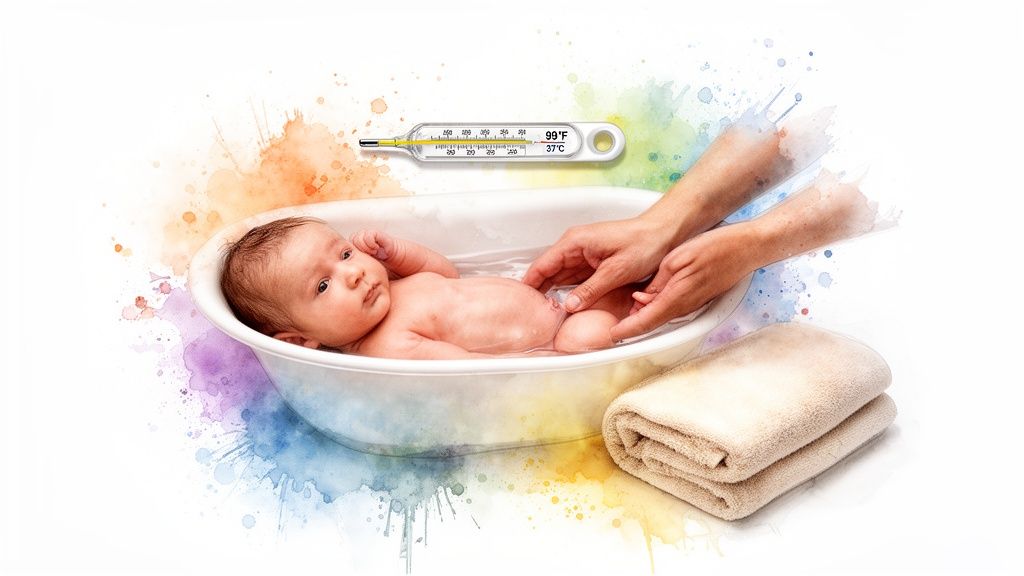
Let's be honest, bringing home a newborn comes with a lot of questions. But figuring out the basics, like how to give a good bath, is a huge confidence booster. The right water temperature isn't just a number—it’s about your baby’s safety and comfort. You’re essentially creating a tiny, warm oasis that feels as cozy and secure as the womb.
It's a surprisingly universal standard, too. Pediatric experts around the world agree that bath water should be kept between 37°C and 38°C (98.6°F and 100.4°F). This specific range is critical because it helps prevent a baby from losing precious body heat, keeping them from getting chilled or, on the flip side, overheating. This is especially important in those first few fragile weeks.
Safe Baby Bath Temperature At A Glance
To help you feel confident as your little one grows, here’s a quick-reference table. It breaks down why these temperatures are so important at each stage.
This simple chart is a great starting point for understanding the needs of your growing baby.
| Age Group | Ideal Temperature Range (°F/°C) | Why It Matters |
|---|---|---|
| Newborns (0-3M) | 98.6–100.4°F / 37–38°C | This mimics their body temp, which is crucial for preventing heat loss in fragile newborns and avoiding skin irritation. |
| Infants (3-12M) | 98.6–100.4°F / 37–38°C | As they get more active and aware, this range ensures they stay comfortable and safe during splashes and kicks. |
| Toddlers (1-3Y) | 98–100°F / 36.5–37.5°C | Their skin is a bit tougher now, but it's still vital to prevent scalds from water that's even a little too hot. |
While the numbers are helpful, the goal is to create a positive experience for both of you.
At Moogco, we know that a calm, confident parent helps create a happy, relaxed baby. When you master simple routines like bath time, you can focus on what truly matters—bonding with your little one.
Building a peaceful bath routine can set a positive tone for the rest of the day or help wind things down for a calm night. For more tips and a complete walkthrough, take a look at our comprehensive baby bath time guide to make every splash a good one.
Why The Right Temperature Is So Important
Getting the baby bath temperature just right isn't just another thing to fuss over—it's genuinely one of the most critical parts of a safe and happy bath time. It’s easy to forget, but a baby’s skin is dramatically thinner and more sensitive than our own. This makes them incredibly vulnerable to both burns and chills.
Think of it this way: your newborn is like a tiny little house that hasn't had its insulation installed yet. They lose body heat at an astonishing rate.
This isn't just about them feeling a bit cold. It has real, physical consequences. For a newborn, just staying warm is a big job that burns a ton of energy. In fact, when a baby’s skin temperature drops by just 1°C, their oxygen consumption can shoot up by about 10%. That’s their tiny body working overtime, which can increase the risk of other complications.
Beyond Safety: Creating a Foundation for Bonding
A perfectly warm bath does more than just keep your little one safe. It sets the stage for a soothing, positive experience that truly strengthens the bond between you. When a baby feels secure and comfortable in the water, bath time stops being a chore and becomes a cherished ritual.
It turns into a quiet moment of connection, free from the stress of a baby who is either shivering and fussy or uncomfortably hot. That sense of calm is a game-changer for a peaceful postpartum routine, not just for the baby but for you, too. Knowing you can rely on your home's hot water is a big part of creating this consistent, comforting experience, so it's always a good idea to be familiar with understanding different water heater systems.
A Story of Comfort and Calm
For one new mom, Sarah, building that peaceful routine felt completely out of reach. She was dealing with painful, cracked nipples and was ready to give up on breastfeeding. Every feeding was filled with stress, which made other moments, like bath time, feel totally overwhelming.
A friend suggested she try Moogco Silver Nursing Cups. Sarah was skeptical but willing to try anything. The natural healing properties of the silver nursing cups soothed her skin between feedings, and she didn't have to deal with any messy creams. Within just a few days, the pain started to fade, and breastfeeding finally became the beautiful experience she’d always imagined.
“That small change made all the difference,” Sarah shared. “Once breastfeeding wasn't a source of pain, I could finally relax and enjoy my baby. Bath time became our special time to connect, all because I found a solution that let me be a calm, present mom.”
Finding that comfort allowed her to build the serene postpartum life she truly wanted. Protecting a baby is about more than just getting the bath temperature right; it's also about caring for their incredibly sensitive skin. For more tips, check out our guide on how to care for your baby’s delicate skin.
How To Test Bath Water With Confidence
Knowing the ideal baby bath temperature is one thing, but feeling sure you’ve actually nailed it is another. This is where you put theory into practice, building the confidence that turns a potentially stressful task into a sweet, bonding moment.
Thankfully, there are two simple, trusted ways to check the water, and you can choose whichever one makes you feel most comfortable.
The Old-School Method: The Elbow or Wrist Test
You’ve probably heard about this one from your own parents or grandparents. The classic elbow or wrist test is recommended by pediatricians and parents alike for a good reason—it works.
The skin on your elbow and the inside of your wrist is much thinner and more sensitive than the skin on your hands, which has toughened up from daily use. Just dip your elbow into the water. It should feel pleasantly warm, not hot. The goal is a neutral feeling, where the water temperature feels just right against your skin, not jarringly warm or cool.
The High-Tech Method: A Bath Thermometer
For parents who love precision and want to eliminate any and all guesswork, a good baby bath thermometer is a fantastic little gadget. It gives you a clear, digital reading, so you know for certain that the water is within that perfect 98.6°F to 100.4°F (37°C to 38°C) sweet spot.
Many modern bath thermometers even float and have built-in safety alerts, like a light that flashes red if the water is too hot. It’s a simple tool that offers an extra layer of security and peace of mind.
To understand why getting this temperature just right is so important, it helps to know a little about how a baby’s body works.
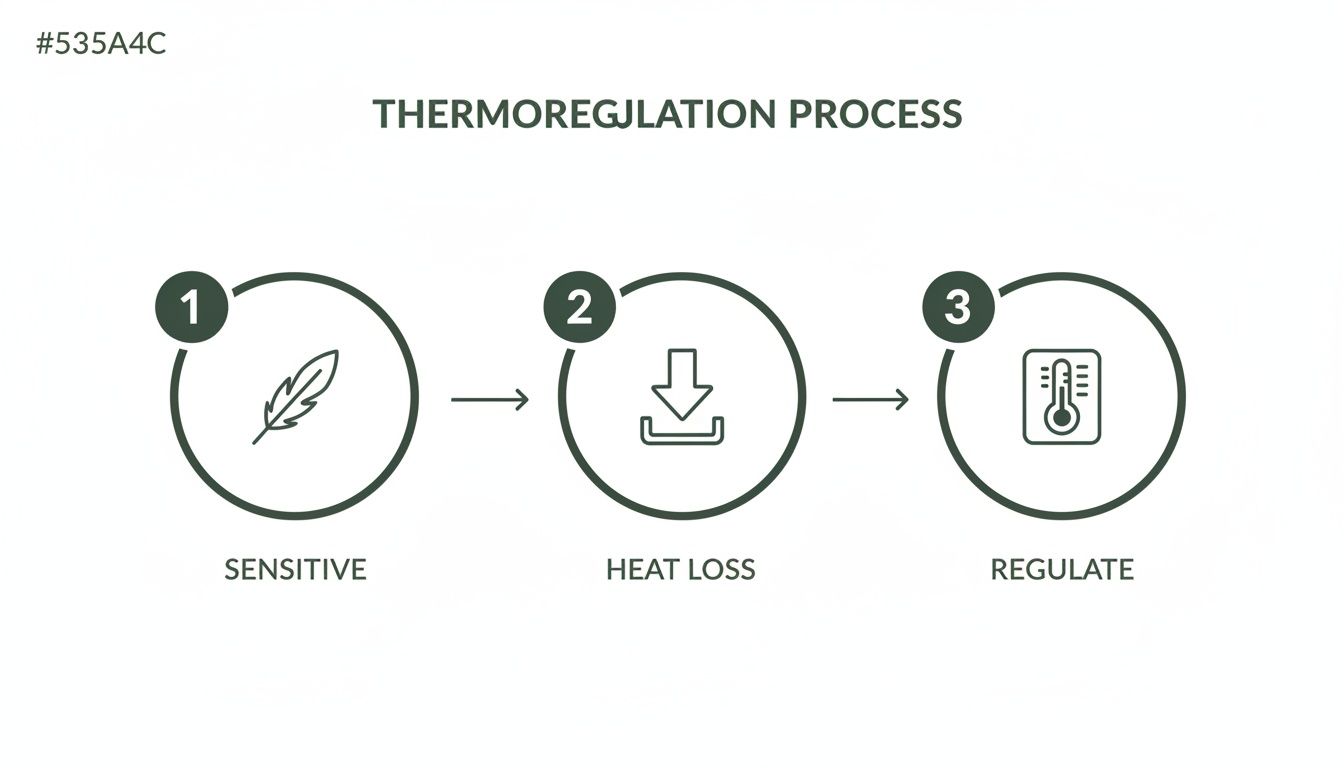
As you can see, a baby's tiny system is incredibly sensitive and loses heat quickly. They have to work much harder than we do to regulate their core temperature. Keeping the bath water consistently warm helps support this natural process, preventing their little bodies from getting stressed or chilled.
So, which testing method is right for you? Both are great options, but they have their own unique pros and cons.
Testing Water Temperature: Two Trusted Methods
| Method | How It Works | Pros | Cons |
|---|---|---|---|
| Elbow/Wrist Test | Dip your elbow or inner wrist into the water. It should feel comfortably warm, not hot—close to your own body temperature. | - No equipment needed - Quick and easy - Trusted for generations |
- Subjective; relies on your personal sense of temperature - Less precise |
| Bath Thermometer | Place the thermometer in the water and wait for a digital reading. Look for a temperature between 98.6°F and 100.4°F. | - Highly accurate and precise - Removes all guesswork - Many have visual safety alerts for "too hot" |
- Requires batteries - Another piece of baby gear to buy and store |
Ultimately, the best method is the one that gives you the most confidence. Whether you trust your touch or a digital reading, consistency is what matters most.
Simple Steps for a Safer Bath
No matter how you test the water, a few simple safety habits will make every bath a secure one.
- Cold First, Then Hot: Always start by running cold water into the tub before adding the hot. This easy step prevents the bottom of the tub from getting dangerously hot and reduces the risk of scalding.
- Swirl It All Around: Before you test the temperature (and definitely before your baby goes in!), give the water a good swirl with your hand. This mixes everything together and gets rid of any hidden hot spots, ensuring the temperature is even from end to end.
These small actions, when done every time, become the foundation of a safe and happy bath routine. For a complete walkthrough from start to finish, be sure to check out our detailed guide on how to bathe an infant.
Creating The Perfect Bath Time Environment
Getting the baby bath temperature just right is about more than just the water. It’s about creating a whole cozy, safe little world for your baby, from the moment the clothes come off to the final snuggle in a warm towel.
The first step? Make sure the room itself is warm and free of drafts. Aim for a room temperature of about 75°F (24°C). This keeps your baby from feeling a sudden chill when they get out of the lovely warm water.
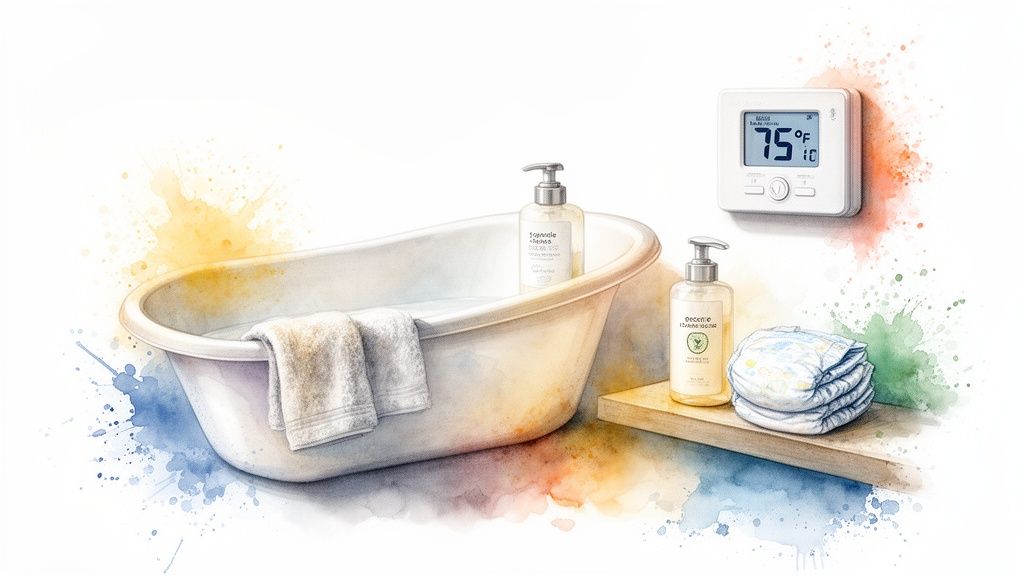
This isn't just a comfort tip; it's backed by science. Newborn care experts often recommend a room temperature between 79-82°F (26–28°C) to prevent heat loss. In fact, studies confirm that a warm, immersive tub bath is much better at keeping a baby’s body temperature stable than a simple sponge bath. You can learn more about these newborn care findings here.
Your Pre-Bath Checklist
The secret to a stress-free bath is having everything you need ready before your baby even touches the water. Once they're in the tub, your full attention needs to be on them. A quick prep session prevents any mad dashes for a forgotten item.
Here’s what to have within arm's reach:
- A soft, hooded towel ready to go for an immediate post-bath wrap-up.
- A gentle, baby-safe cleanser if you're using soap this time.
- A fresh diaper and clean clothes for after the bath.
- A clean washcloth for their face and tiny body parts.
Getting this little station set up makes the whole experience feel like a calm, loving ritual instead of a scramble.
The Most Important Safety Setting
While you’ve set the room temperature and organized your supplies, there's one more crucial safety measure that protects your child from serious harm: your water heater. This is a one-time adjustment that offers round-the-clock peace of mind.
Set your water heater to a maximum temperature of 120°F (49°C). This simple step is a game-changer. It means that no faucet in your house—not in the kitchen, not in the bathroom—can ever release water hot enough to cause a severe scald.
Think of it as the ultimate baby-proofing hack for your plumbing. It turns your bathroom into a true safe haven.
Of course, creating a comfortable environment is just one piece of the puzzle. Understanding the basics, like how often your little one actually needs a bath, is just as important. For more on that, check out our guide on how often to bathe a newborn.
A Mom’s Success Story: Overcoming Breastfeeding Pain
Every new parent dreams of creating a peaceful, consistent routine for their baby. But when you're dealing with your own physical pain, even the simplest tasks can feel overwhelming. For so many new moms, the unexpected challenges of breastfeeding can cast a shadow over those precious early days.
This was exactly where one mom, Jessica, found herself. She was on the verge of giving up on breastfeeding altogether. Her nipples were cracked and incredibly sore, turning every feeding into a painful, tear-filled ordeal. The constant discomfort made it almost impossible to relax and truly bond with her newborn.
A Small Change That Made a Big Difference
Just as she was ready to switch to formula, a close friend recommended she try Moogco Silver Nursing Cups. Jessica was skeptical—she’d tried all the messy creams and ointments with little success—but she was also desperate for relief. The idea of a natural, simple solution was too good to pass up.
She started wearing the silver nursing cups between feedings and was completely amazed by how quickly she felt a difference. The pure silver soothed her irritated skin and created a protected environment that allowed her body to heal naturally. Best of all, there was no residue to wipe off before nursing, which made them incredibly convenient.
Within just a few days, the pain had almost completely disappeared. Breastfeeding was no longer something to dread. It finally became the beautiful, bonding experience she had always imagined, and this one small change had a ripple effect on her entire postpartum journey.
"I honestly didn't think I could continue," Jessica shared. "Finding Moogco Silver Nursing Cups was a turning point. Once the pain was gone, I could finally breathe and just enjoy my baby. That newfound comfort spilled over into everything we did together."
Finding Joy in the Everyday Moments
With the stress of painful nursing behind her, Jessica found she could be more present and calm. This shift in her own well-being transformed daily routines, like bath time, from a stressful chore into a cherished ritual. The warm water, the soft towel, and her baby’s happy splashes became moments of pure, unfiltered connection.
Her success story is a powerful reminder that taking care of yourself is one of the best ways to take care of your baby. Finding solutions that support your own comfort, like the gentle healing of silver nursing cups, can restore your confidence and help you build the serene, joyful family life you deserve. For new mothers looking for more ways to navigate this new chapter, you can find more guidance in our practical breastfeeding tips for new moms.
Common Bath Time Mistakes To Avoid
Every new parent has been there—that mix of excitement and nerves when it comes to baby's first baths. We all learn on the job, and it’s completely normal to feel a bit clumsy at first.
Think of this less as a list of "don'ts" and more as a friendly heads-up from parents who have been through it. Knowing what to watch for can help you sidestep a few common wobbles and turn bath time into a sweet, confident routine.
Keeping It Short And Sweet
It’s tempting to let your little one splash around, but one of the easiest mistakes to make is letting bath time drag on. While a long soak sounds like a dream to us, a newborn’s skin is incredibly sensitive and can lose moisture in a flash.
For newborns and young infants, think "short and sweet." A bath of just 5 to 10 minutes is perfect. That’s plenty of time to get them clean without stripping away the natural oils that protect their delicate skin.
For so many new moms, stress can sneak into every part of the day. One mom told us how the pain of breastfeeding made her anxious about everything, but finding gentle relief with Moogco Silver Nursing Cups helped her finally relax and be present for those simple, happy moments like a quick, calm bath.
These simple, natural silver nursing cups helped her heal without dealing with messy creams, completely changing her postpartum journey for the better.
Holding On With Confidence
Let’s be honest: a wet, wiggly baby can feel like a slippery bar of soap! It’s one of the biggest anxieties for new parents—that feeling of not having a secure grip. The secret is just a little bit of prep and finding a hold that makes you both feel safe.
Here are a couple of go-to techniques that parents swear by:
- The Football Hold: Tuck one arm under your baby’s back, letting your hand cradle their head and neck. Their spine will rest along your forearm. This keeps one hand free for washing.
- Support the Head and Shoulders: No matter what, always keep one hand dedicated to supporting your baby’s head, keeping it safely above the water at all times.
And the golden rule of bath time: never, ever leave your baby alone in the water, not even for a second. If you forgot the towel, scoop them up, wrap them, and take them with you. A little practice is all it takes to feel like a seasoned pro.
Answering Your Top Baby Bath Time Questions
Alright, let's tackle some of the most common questions that pop up for new parents. Think of this as your quick-reference guide to clear up any last-minute worries, so you can head into bath time feeling confident and ready.
How Often Should I Bathe My Newborn?
This one surprises a lot of parents: newborns don't need a daily bath! Two or three times a week is perfectly fine. A daily "top and tail" wash—gently wiping their face, neck folds, hands, and diaper area—is all you need to keep them fresh in between.
Bathing them too often can actually dry out their super-delicate skin by stripping away its natural, protective oils. As your baby gets older and starts exploring (and making bigger messes!), you can gradually bump up the bath frequency. As you get everything ready for your little one's arrival, you'll find tons of helpful tips in this comprehensive guide on preparing for a newborn.
What Are The Signs My Baby Is Too Cold Or Too Hot?
Your baby is pretty good at telling you if the baby bath temperature isn't quite right, you just have to know what to look for.
- If they're too cold: You might notice their lips or skin have a slight bluish tinge. Shivering is another obvious sign, or they might seem unusually floppy or lethargic.
- If they're too hot: Look for flushed, red skin. They might also be sweating, especially around their head and neck, or seem extra fussy and irritable.
If you see any of these signs, it's time to end the bath. Scoop them up, wrap them in a cozy towel, and give them a good cuddle to help get their body temperature back to normal.
One mom shared how painful breastfeeding made her feel overwhelmed with every baby task. She found that using Moogco Silver Nursing Cups provided natural relief, which helped her relax and feel more confident during other routines like bath time. These simple silver nursing cups allowed her to heal and continue her breastfeeding journey.
Is It Okay To Use Bath Oils Or Bubbles?
For newborns and very young babies, the simpler, the better. Plain, warm water is really all you need. Their skin is so sensitive that bubble baths, scented soaps, and oils can easily cause irritation, dryness, or even an allergic reaction.
Once they're a little older, feel free to introduce some mild, tear-free, baby-formulated products. A good rule of thumb is to add new products one at a time, just in case their skin reacts to something.
When Can I Be Less Precise About The Water Temperature?
As your baby grows into a toddler, their little body gets much better at regulating its own temperature. This means you can relax a bit on getting the temperature exactly right. The goal is still comfortably warm, never hot.
Even with a more resilient toddler, always, always test the water before they hop in. It’s also a non-negotiable safety step to keep your home’s water heater set to a maximum of 120°F (49°C). This simple setting is one of the best ways to prevent serious accidental burns.
Here at Moogco Baby, our goal is to help you create a calm and confident parenting journey. We carefully choose essentials that support you and your little one through every precious milestone. Discover solutions like our healing Moogco Silver Nursing Cups and other thoughtful products designed to make your experience as joyful as it can be.
Explore our curated collection at https://www.moogcobaby.com.
Related Guides You Might Love
- Choosing the Best Car Seat Stroller Combo for Infants
- Choosing the Best Car Seat Stroller Combo for Infants
- Your Calm and Confident Checklist of Essentials for Newborn Baby
- Your Calm and Confident Checklist of Essentials for Newborn Baby
- How to Choose a Stroller A New Parent's Guide
- How to Dress Baby for Sleep A Parent's Practical Guide
- Crib Or Bassinet For Newborn: Which Is Right For Your Baby?
- When to Start Tummy Time for Newborns A Parent’s Guide
- When to Start Tummy Time for Newborns A Parent’s Guide
- Crib Or Bassinet For Newborn: Which Is Right For Your Baby?














































































































