


When you start shopping for the best convertible car seats, you'll quickly discover their main superpower: versatility. These seats are cleverly designed to grow right alongside your child, transforming from a snug rear-facing ride for your newborn into a secure forward-facing seat for your toddler. It's why so many families see them as a smart, one-and-done purchase.
Why a Convertible Car Seat Is Your Best Investment
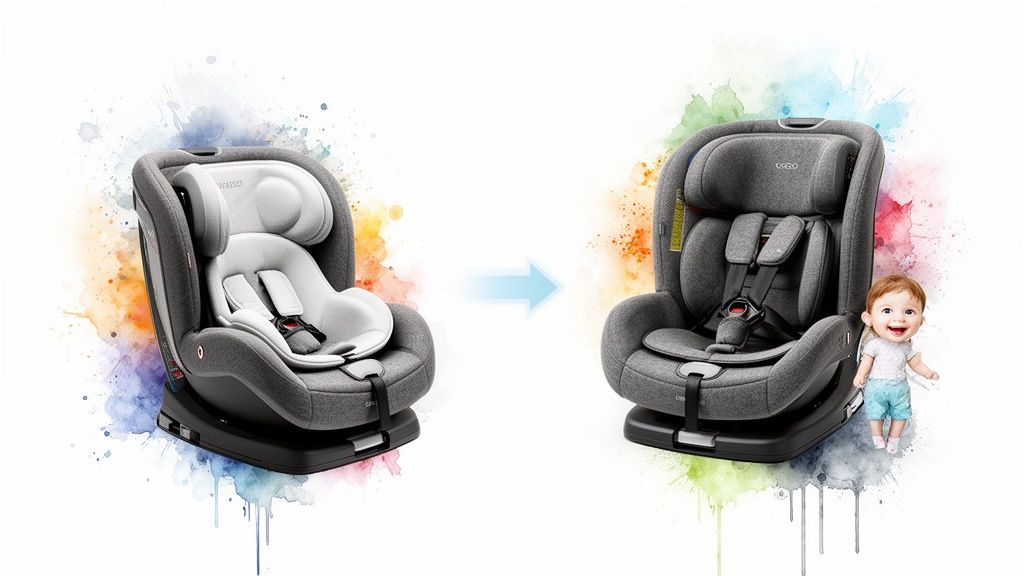
As you start putting together your baby registry, the endless list of gear can make your head spin. There are infant seats, boosters, all-in-ones... it's a lot. But time and again, convertible car seats rise to the top of the list for experienced parents, and for very good reasons.
Think of a convertible car seat like the Swiss Army knife of your baby gear. It’s one piece of equipment built to handle several stages of your child's early years. That adaptability is what makes it so brilliant.
The Power of Long-Term Value
The biggest draw of a convertible car seat is its incredible lifespan. Instead of buying an infant-only seat that your baby will probably outgrow within their first year, a good convertible model can serve your family for years. This "buy it once" approach pays off in a few key ways:
- It’s Easier on Your Wallet: You’re making one purchase that sees your child through from their first trip home from the hospital until they’re ready for a booster seat. This saves you the cost and hassle of buying multiple seats down the road.
- Consistency is Comforting: Your little one gets used to the feel of one seat, which can make car rides a whole lot smoother. You also become an expert at installing that one seat, giving you total confidence that it's in there correctly every single time.
- It Simplifies Your To-Do List: Choosing a high-quality convertible seat from the start lets you check a huge item off your shopping list for good. You can see just how this one big purchase fits into the rest of your preparations in our complete baby shopping list for first-time moms.
A Market Leader for a Reason
It’s no surprise that this blend of safety and practicality has made convertible seats the champs of the car seat world. They dominate the market, capturing a massive 42.70% of their product category. When a product is that popular, it's usually because it just works.
Let's break down exactly why these seats are such a smart choice for growing families.
Why Convertible Car Seats Are a Smart Choice
This table sums up the key advantages of choosing a convertible car seat.
| Key Feature | Benefit for Your Family | Long-Term Safety Advantage |
|---|---|---|
| Grows with Child | One-time purchase covers infancy to toddlerhood (and beyond). | Eliminates the risk of using an outgrown seat by mistake. |
| Extended Rear-Facing | Accommodates rear-facing longer, which is the safest way for young children to ride. | Protects the head, neck, and spine up to 5x more effectively in a crash. |
| Cost-Effective | Saves hundreds of dollars by avoiding the need to buy multiple car seats. | Allows you to invest in a single, high-quality seat with top safety features. |
| Familiar Installation | You only need to learn one installation process for your vehicle. | Increases the likelihood of a correct, secure installation every time. |
Ultimately, choosing a convertible seat is about more than just a purchase; it's an investment in your child's safety and your own peace of mind for all the miles ahead.
When it comes to your child's safety, nothing feels more important than choosing the right car seat. But let's be honest, staring at a wall of them can feel like trying to crack a code. All those acronyms and certifications can be overwhelming, but I promise it's simpler than it looks. Think of these standards as your cheat sheet for peace of mind.
At the very top of the safety pyramid here in the U.S. is the National Highway Traffic Safety Administration (NHTSA). They're the ones who set the non-negotiable rules. Every single car seat on the market has to pass their intense crash tests (officially known as Federal Motor Vehicle Safety Standard 213) just to be sold. It's the baseline guarantee that the seat is built to protect your child in an accident.
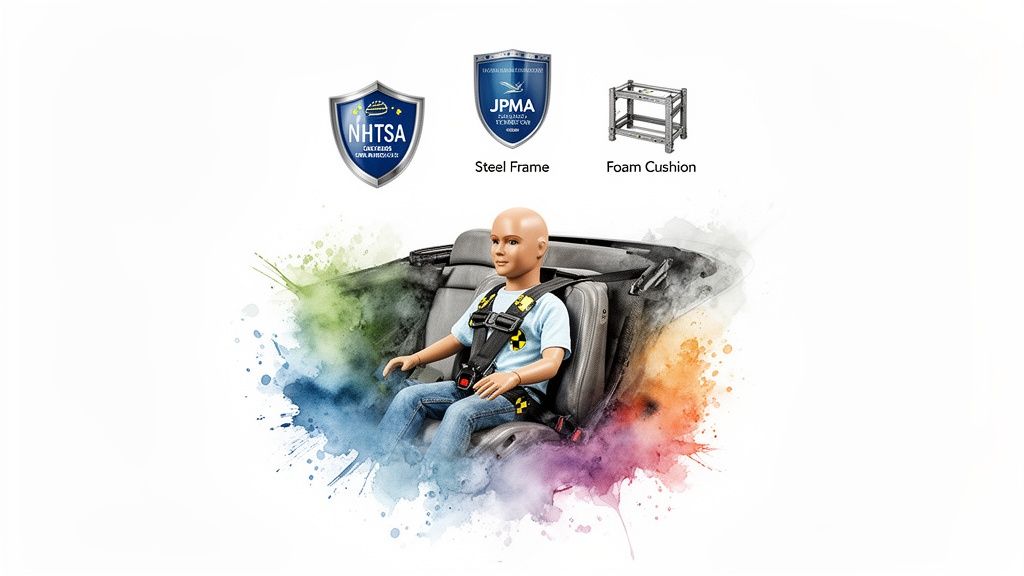
What Do All Those Stickers and Seals Mean?
Seeing a sticker on a car seat box is more than just marketing; it's a sign of a promise. While the NHTSA sets the must-have federal standards, other groups add extra layers of vetting.
- NHTSA: This is the big one. It means the seat has passed government-mandated frontal crash tests, ensuring the structure stays intact and keeps your child secure.
- JPMA Certification: The Juvenile Products Manufacturers Association (JPMA) offers a voluntary seal of approval. When you see this, it means an independent lab has tested the seat not just for crash safety but also for things like lead content and sharp edges. It's an extra thumbs-up for overall product quality.
This laser focus on safety is what's driving so much innovation. As parents become more informed, the demand for safer, more versatile seats has skyrocketed. In fact, the baby car seat market is projected to grow from USD 5.6 billion in 2024 to USD 9.4 billion by 2034. It's because we know these seats work—when used correctly, they can reduce the risk of fatalities in rollovers by a staggering 70%.
The Golden Rule: Rear-Facing for as Long as Possible
If you take away one piece of advice today, let it be this: keep your child rear-facing for as long as their convertible car seat allows. This isn't just a suggestion; it’s a life-saving recommendation from the American Academy of Pediatrics (AAP), and convertible seats are designed to help you follow it.
So, why is this so critical? A toddler’s head is proportionally much larger and heavier than an adult's, and their spine is still developing. In a crash, a rear-facing seat acts like a catcher's mitt, cradling their entire body and absorbing the impact. The forces are spread evenly across the seat's shell. A forward-facing child, on the other hand, can have their head thrown forward violently, which can lead to devastating head and spinal injuries.
The best convertible car seats are the ones that let you keep your child in that safer rear-facing position for longer, with generous height and weight limits that can often accommodate them until age three or even four.
Key Safety Features to Look For
Beyond the official certifications, you'll see a lot of talk about specific safety features. Understanding what they do will help you cut through the noise and compare seats like a pro.
- Steel-Reinforced Frame: This is the skeleton of the car seat. A steel frame adds critical strength, preventing the seat from twisting or breaking under the extreme forces of a crash.
- Energy-Absorbing Foam: Look for specialized foam, often called EPP or EPS, packed into the shell. Its job is to compress during an impact, soaking up crash energy before it reaches your child.
- Side-Impact Protection: This is a big one. Federal standards don't yet require side-impact testing, so manufacturers who invest in it are going above and beyond. This feature usually involves deeper side walls, extra layers of foam, or even air-filled cushions around your child's head area.
- Expiration Dates: Believe it or not, car seats have a shelf life. Over years of use, exposure to sun and temperature changes causes the plastic to become brittle. An expired seat might not hold up in a crash. We have a complete guide on car seat expiration dates that explains everything you need to know.
Finding the Perfect Fit for Your Child and Car
Picking a convertible car seat with great safety ratings is a fantastic start, but let's be real: the safest seat on the planet is the one that actually fits your child and your car correctly. A seat that’s a perfect match can do its job properly if you’re ever in a crash. So, let’s break down how to find that perfect fit, turning what feels like a complicated puzzle into a confident decision.
Every single car seat has specific height and weight limits for both rear-facing and forward-facing. These aren't just gentle suggestions; they're hard-and-fast rules for keeping your little one safe. A good rule of thumb is to pay closer attention to the height limit, as most kids will get too tall for their seat long before they get too heavy for it.
The main goal here is to keep your child rear-facing for as long as you possibly can, right up to the seat's maximum rear-facing limits. When you're browsing the best convertible car seats, keep an eye out for models with higher rear-facing limits—some go all the way up to 50 pounds. That one feature can make a huge difference in safety as your baby grows into a toddler.
Matching the Seat to Your Child
First things first, you need to know your child's stats. Grab their current height and weight to make sure they're within the seat's approved range. But a good fit goes way beyond just the numbers on a growth chart.
- Harness Height: When your child is rear-facing, the harness straps should come out of the seat at or just below their shoulders. Once you turn them forward-facing, those straps need to be at or slightly above the shoulders. This is where a no-rethread harness is a lifesaver—it adjusts with the headrest, so you don't have to take the whole seat apart.
- Crotch Buckle Position: Most seats give you a few slots for the crotch buckle. You want to use the one that's closest to your child's body, but not underneath their bottom. This simple adjustment helps prevent them from slumping down in the seat.
- Comfort and Support: Don't forget about coziness! Think about the padding and support, which is especially important for newborns. A lot of convertible seats include removable infant inserts to create a snug, secure little nest for the tiniest passengers.
For kids who have specific sensory needs, the feel of the seat is just as important as the fit. The texture of the fabric or how tightly the harness snuggles them can make car rides a joy or a struggle. For a deeper dive, understanding Sensory Processing Disorder can offer some really helpful insights into how a child experiences their surroundings.
Will It Fit in Your Car?
Alright, on to the second part of the puzzle: your car. It's a truth every parent eventually learns—not every car seat plays nicely with every vehicle. Before you hit that "buy now" button, take a couple of quick measurements.
Start by measuring the width of your back seat. This is super important if you're trying to fit multiple car seats or just want to save room for an actual human passenger. Some of the smartest convertible car seats are designed with a slim profile (under 19 inches) to make that coveted "three-across" setup a reality, even in a mid-size car.
Next, think about the front-to-back space. A rear-facing convertible seat, especially when it’s reclined for a newborn, can be a real space hog. It might mean the driver or front passenger has to slide their seat pretty far forward. If you've got a smaller car, definitely look for seats that are known for being compact.
Success Story: From Car Seat Safety to Self-Care
Sarah, a new mom, spent weeks researching the best convertible car seat. She finally found the perfect one at Moogco Baby, feeling confident her baby was safe. But in the whirlwind of new motherhood, she overlooked her own needs. Breastfeeding became incredibly painful, and she was close to giving up. A friend suggested she try Moogco Silver Nursing Cups, and they were a game-changer. The natural healing power of these silver nursing cups provided immediate relief, allowing her to continue her breastfeeding journey. You can learn more about these amazing cups on the Moogco website.
LATCH vs Seat Belt Installation
You've got two main ways to install your car seat: using the LATCH system or your vehicle's seat belt. It’s a common myth that one is safer than the other. The truth? The safest method is whichever one allows you to get a rock-solid, correct installation every single time.
- LATCH (Lower Anchors and Tethers for Children): This system uses anchors built right into the frame of your car's back seat. Many parents find it a bit more straightforward, but there's a catch: it has a combined weight limit for the child plus the car seat (usually 65 pounds).
- Seat Belt: This is the universal method that uses your car's own seat belt to secure the seat. You'll need to switch to this installation once your child outgrows the LATCH weight limits, so it's a good one to master.
Many families start with a dedicated infant car seat before making the jump to a convertible. If you're looking for a system that works together from day one, take a look at our guide on the best car seat stroller combo for infants. Finding the right fit is all about feeling confident, and with these tips, you're well on your way to making a great choice.
5. Getting the Installation Just Right (Without the Stress!)
Let’s be honest: installing a car seat for the first time can feel like you’re trying to solve a puzzle with the highest stakes imaginable. It’s intimidating! But I promise, it’s not as complicated as it looks. Think of it less like a final exam and more like learning a new skill—once you get the hang of it, you’ll feel like a total pro.
The goal here is to get you so confident that you can install that seat securely, every single time, without a second thought.
LATCH vs. Seat Belt: Which One Is Safer?
First things first, you have two ways to secure the seat in your car: the LATCH (Lower Anchors and Tethers for Children) system or your vehicle's seat belt. This is a common point of confusion, so let's clear it up: one is not inherently safer than the other.
Both are designed to be equally safe when used correctly. The best method is simply the one that gives you a rock-solid, wiggle-free installation in your specific vehicle.
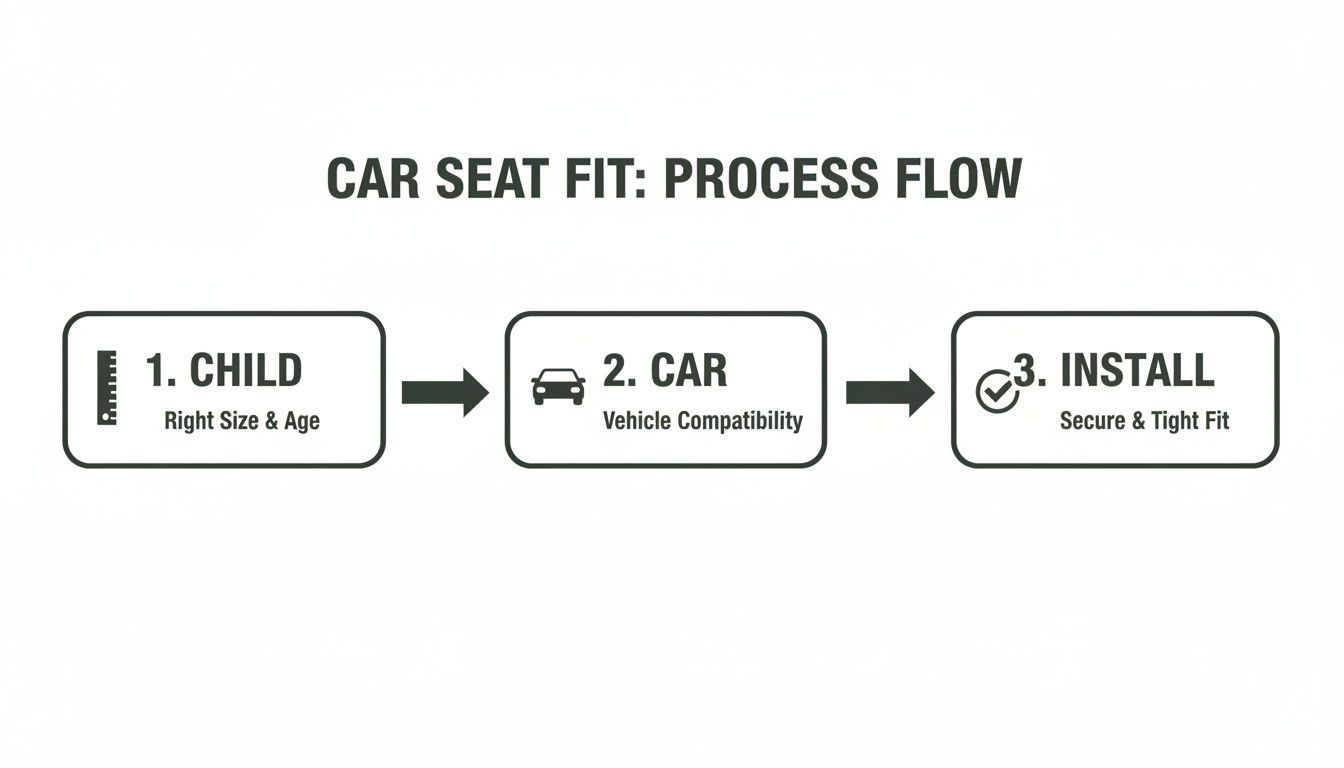
This little flowchart breaks down the whole process. Getting the installation right is the crucial final piece after you've made sure the seat is a good match for both your little one and your car.
A Quick and Dirty Installation Guide
No matter which method you pick, the core principles are the same. Before you do anything else, grab the car seat manual and your vehicle's owner's manual. Seriously, they are your best friends in this process.
Here’s the game plan:
- Pick Your Spot: The safest place is the center of the back seat, but only if you can get a snug fit there. A wobbly center-seat installation is far less safe than a rock-solid install on one of the side seats.
- Get the Angle Right: When your baby is rear-facing, the seat needs to be reclined enough to keep their head from flopping forward, which could block their airway. Look for the little bubble or color-coded recline indicator on the side of the seat—it’ll tell you when the angle is perfect.
- Route and Tighten: Your manual will show you exactly where to thread the LATCH strap or seat belt. There are different "belt paths" for rear-facing and forward-facing, so double-check you're using the right one. Now for the secret weapon: use your body weight! Put a knee in the seat and press down hard while you pull the strap tight. This helps you get all the slack out.
Remember, a proper installation is what makes all those fancy safety features actually work. When the AAP recommends keeping kids rear-facing until at least age 2, it’s because it can slash the risk of head injuries in a crash by a staggering 72%. But you only get that incredible protection if the seat is installed correctly.
The Ultimate Test: The One-Inch Rule
Okay, you think you’ve got it installed. How can you be sure? It’s time for the "one-inch rule."
This is your final check. Grab the car seat at the belt path (where the LATCH strap or seat belt is holding it down) and give it a good, firm shake—side-to-side and front-to-back.
The car seat should not move more than one inch in any direction. If it does, you need to tighten it more. Go back and pull that strap again until it’s completely solid.
This simple test is the gold standard. It’s how you know, with absolute certainty, that your child is as safe as they can be.
Common Installation Mistakes and Quick Fixes
Even with the best intentions, it's easy to make a small mistake. Don't worry, we've all been there! This table covers the most common slip-ups I see and how to fix them in a snap.
| Common Mistake | Why It's Risky | How to Fix It |
|---|---|---|
| Loose Installation | The seat can move too much in a crash, increasing the risk of injury. | Use your body weight to press down on the seat while tightening the strap. Check your work with the "one-inch rule." |
| Incorrect Recline Angle | For a rear-facing infant, a seat that's too upright can cause their head to fall forward, obstructing their airway. | Check the recline indicator on the side of the seat. Adjust the recline foot or use a rolled towel/pool noodle if the manual allows. |
| Using the Wrong Belt Path | The belt paths are engineered specifically for rear-facing or forward-facing forces. Using the wrong one compromises the seat's performance. | Double-check the manual. The paths are usually color-coded (blue for rear-facing, orange for forward-facing). |
| Harness Straps are Twisted | A twisted strap can't distribute crash forces evenly and may not hold up under pressure. | Before buckling your child in, run your fingers down each strap to make sure they are flat and untwisted. |
Think of this table as your troubleshooting cheat sheet. A quick check against these common issues can give you that extra bit of confidence on the road.
A Mom’s Journey from Car Seat Safety to Self-Care
Getting ready for a baby can feel like a full-time job in research and planning. You pour hours into finding the best convertible car seats, perfecting the nursery, and stockpiling diapers. For Sarah, a first-time mom, nailing the car seat choice was at the very top of her list. She carefully selected a top-rated model from Moogco Baby, and felt that huge wave of relief that comes with knowing her little one would be safe and sound on every car ride.
What Sarah hadn't planned for, though, was just how tough her own postpartum recovery would be. In the blur of sleepless nights and constant diaper changes, breastfeeding became an unexpected source of serious pain. It got so bad that she started to dread feeding time, and even began to think she'd have to give up and switch to formula—a truly heartbreaking thought after she’d put in so much effort to get nursing started.
A Turning Point in Postpartum Care
Right when she was on the verge of quitting, a friend who had been through the same thing shared her secret weapon: Moogco Silver Nursing Cups. Sarah was skeptical, but also desperate enough to try anything. The results were almost instant. The natural, soothing quality of these silver nursing cups brought immediate comfort and helped heal her sore, cracked skin between feedings.
These little cups completely transformed her breastfeeding experience. The pain faded, and she could finally relax and truly bond with her baby without flinching. She was able to soak up those quiet moments she’d always imagined, feeling confident and comfortable as she nourished her child. It was such a simple fix, but it made a world of difference for her well-being.
"I put so much energy into making sure my baby was safe in his car seat, but I completely forgot to plan for my own care. The pain from breastfeeding was overwhelming, and I felt like I was failing. The Moogco Silver Nursing Cups didn't just save my breastfeeding journey—they gave me back my confidence as a new mom."
Sarah’s story is such a powerful reminder that preparing for a baby means taking care of the whole family. At Moogco Baby, we want to support you through every milestone, from protecting your little one on the road to helping you navigate the tender moments of postpartum recovery. Real peace of mind comes when you know both you and your baby are safe, comfortable, and cared for.
This holistic view is so important, especially when you start planning bigger adventures. You can find more of our favorite tips in our guide on traveling with a baby for stress-free trips.
Your Next Steps for a Safer Journey
Okay, deep breath. You've just absorbed a ton of information, and now you're armed with the knowledge to pick out one of the best convertible car seats with total confidence. From decoding safety standards to mastering that crucial one-inch wiggle test, you’re officially ready to choose a seat that will protect your little one on every single drive.
Here at Moogco Baby, we’re ready to help you take that final, exciting step. Our collection is carefully curated with top-rated convertible car seats, each handpicked to meet the tough safety and quality standards we've covered. We're all about giving you that priceless peace of mind, whether you're just popping out for groceries or heading off on a big family road trip.
From Car Safety to Self-Care
We know your world revolves around your baby's well-being, but taking care of yourself is just as vital. The postpartum journey can be full of surprises, and for many new moms, that includes painful breastfeeding. We heard from one mom who was on the verge of giving up until she discovered Moogco Silver Nursing Cups. The natural healing power of these little silver nursing cups was the game-changer she needed to continue breastfeeding comfortably.
"I thought I had prepared for everything, but breastfeeding was so much harder than I imagined. The Moogco Silver Nursing Cups were a lifesaver—they soothed the pain and let me keep that special bond with my baby."
Your Journey Starts Here
Think of us as your partners in this wild, wonderful parenting adventure. We’re here to provide safe, stylish, and genuinely practical gear for your growing family. Beyond just car seats, you can check out our baby registry services, find other must-have essentials, and soak up more expert advice on our blog.
Getting ready for adventures means having all the right equipment. To learn more, take a look at our complete guide on finding the best baby travel gear for your family. And if you're looking for more general car safety tips to go along with your new car seat, you might find these additional car safety articles really helpful.
Your Top Convertible Car Seat Questions, Answered
Okay, we've covered safety standards, installation tricks, and how to find that perfect fit. But I know you probably have a few more questions rattling around in your head as you get ready to buy. Let's tackle those common "what ifs" so you can feel 100% confident in your choice.
When Is the Right Time to Switch to a Convertible Car Seat?
This is a big one! While many convertible seats are safe to use from day one, most of us start with an infant-only seat because they’re just so easy to click in and out of the car. The non-negotiable time to make the switch is when your little one hits the maximum height or weight limit of their infant seat. For most babies, this happens right around their first birthday.
Moving up to a convertible car seat isn't just a graduation—it's a critical safety upgrade. It's the key to keeping your child rear-facing for as long as possible, which we know is the safest way for them to travel.
How Long Is a Convertible Car Seat Actually Good For?
Think of a car seat like a carton of milk—it has an expiration date for a reason! Every seat has a lifespan, usually somewhere between 6 and 10 years from the date it was made. You’ll find this date printed on a sticker or stamped right into the plastic on the seat's shell or base.
It’s incredibly important to honor that date. Over years of sitting in a hot or cold car, the plastic can become brittle and less effective in a crash. Plus, safety technology is always getting better. And just as a rule of thumb, any seat that's been in a moderate to severe crash needs to be replaced immediately, no questions asked.
Is LATCH Safer Than Using the Seat Belt?
This question comes up all the time, and the answer might surprise you: they are equally safe. The best installation method is the one you can do correctly, every single time. One isn't inherently safer than the other.
So, which one should you choose? It really boils down to your car and what you find easiest.
- LATCH: A lot of parents find the LATCH system (those little clips) simpler to use, which often means they get a tighter, more secure fit. The only catch is that LATCH has weight limits—typically a combined total of 65 pounds for your child plus the car seat.
- Seat Belt: Once your child gets too heavy for the LATCH limits, you’ll have to switch to a seat belt installation anyway. It’s a universal method that works in just about any car, as long as the belt locks properly.
A Mom's Success Story: From Pain to Peace
Just as choosing the right car seat brings peace of mind, so does finding solutions for the tough parts of motherhood. One mom shared her story about nearly giving up breastfeeding due to extreme pain. Her friend recommended Moogco Silver Nursing Cups, and they changed everything. The natural healing properties of these silver nursing cups offered instant relief, allowing her to continue her breastfeeding journey with comfort and joy.
What's the Best Way to Clean This Thing?
Kids are messy. It's a fact of life. Your car seat is going to see its fair share of crushed-up snacks and mystery spills. Before you do anything, grab the car seat manual—cleaning instructions can be surprisingly different from one brand to the next.
But for a general game plan, here’s what usually works:
- The Cover: Most fabric covers can be tossed in the washing machine on a gentle, cold cycle. Just be sure to let it air dry completely to avoid any shrinking!
- The Plastic Shell: A simple wipe-down with a damp cloth and a little mild soap is all you need for the plastic base and shell.
- The Harness Straps: This is the most important part! Never soak the harness straps in water or use harsh chemicals on them. This can weaken the fibers that are designed to protect your child in a crash. Instead, just spot-clean them gently with a soft cloth and a bit of water.
At Moogco Baby, we're here to support your family on every journey, big and small. From the safest car seats to soothing postpartum essentials like our trusted Silver Nursing Cups, we provide thoughtful solutions for modern parents. Explore our collections and find everything you need to feel secure and cared for at https://www.moogcobaby.com.














































































































