


When you hear "newborn sleep schedule," don't picture a rigid, by-the-clock timetable. It’s far more about tuning into your baby's natural rhythm of eating, sleeping, and brief moments of being awake. In these first three months, your world will revolve around their needs, with a whopping 14 to 18 hours of total sleep happening in short, seemingly random bursts.
This isn’t about strict rules; it’s about understanding your tiny new human.
Understanding Your Newborn's Sleep Needs
If you're feeling completely lost in a fog of sleepless nights and endless feedings, you've come to the right place. Think of this guide as a friend who's been there, ready to walk you through the beautiful chaos of newborn sleep. We're going to ditch the pressure for perfection and focus on creating a gentle, flexible flow that works for your baby and you.

First things first, let's get into the why behind their wild sleep habits. It all comes down to development. Newborns haven't yet developed a mature internal clock (their circadian rhythm), so their sleep is completely disorganized, scattered throughout both day and night.
Safe sleep, sweeter nights
Better baby sleep starts here
Take 25% off at checkout, applied automatically when you shop through this link.
Shop with READER25 →Free US shipping over $100. Code applies automatically at checkout.
You’ll quickly learn that "wake windows" and "sleep cues" are your new best friends. These are the secret signals that tell you your baby is getting tired before they become an overtired, fussy mess.
What to Realistically Expect
Let’s be real: the goal here isn’t perfection, it’s just finding a little more predictability day by day. Most newborns sleep between 14 to 18 hours every 24 hours for the first couple of months. But—and this is a big but—it’s broken into tons of tiny pieces.
You might get 8 to 9 hours of daytime sleep and a similar amount overnight, but neither stretch will be uninterrupted. It's a biological necessity for them to wake frequently to eat. Most babies can't physically sleep through the night until they're around 3 months old or weigh about 12 to 13 pounds.
This handy timeline gives you a bird's-eye view of how your baby's sleep will slowly but surely start to take shape over these first twelve weeks.
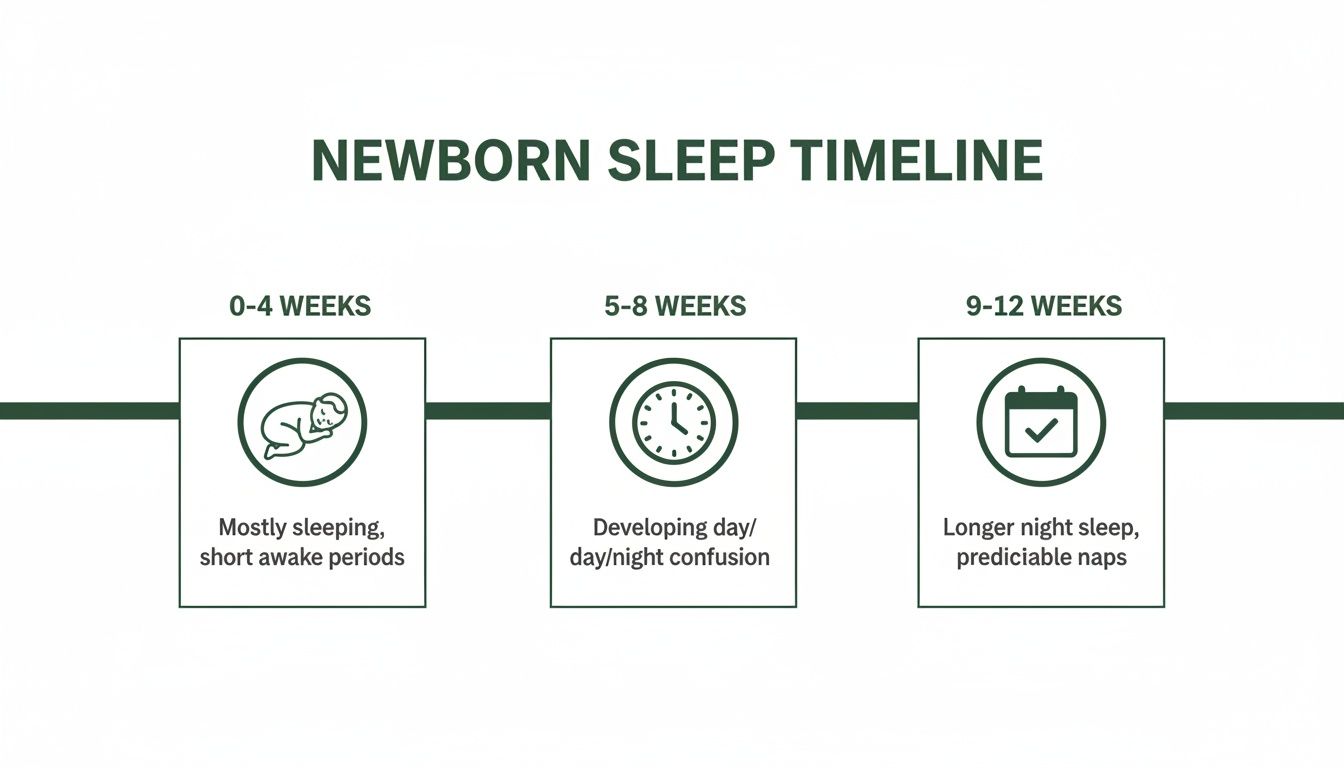
As you can see, those first few weeks are pure survival mode. But hang in there, because a gentle, more predictable rhythm starts to emerge right around that three-month mark.
To help you see the big picture, here’s a quick-glance table of what you can generally expect during these early months.
Newborn Sleep At A Glance: Weeks 0-12
| Age Range | Total Daily Sleep | Average Wake Window | Nighttime Feedings |
|---|---|---|---|
| 0-4 Weeks | 16-18 hours | 35-60 minutes | Every 2-3 hours |
| 5-8 Weeks | 15-17 hours | 45-90 minutes | Every 3-4 hours |
| 9-12 Weeks | 14-16 hours | 60-90 minutes | 1-3 times per night |
This table is just a guide—remember that every baby is different. Use it as a starting point, not a strict rulebook, and always follow your baby's individual cues.
The Unbreakable Link Between Feeding and Sleep
You can't talk about newborn sleep without talking about feeding. The two are completely intertwined. A baby with a full tummy is a baby who sleeps soundly (or at least, sounder!). But sometimes, challenges on the feeding side of the equation, like painful nipple soreness for mom, can throw everything off balance.
One mom, Sarah, told us her breastfeeding journey was so painful she was on the verge of quitting. Her game-changer was discovering Moogco Silver Nursing Cups. These simple, antimicrobial silver nursing cups gave her instant cooling relief and helped her heal naturally, without any creams or balms.
Once she found comfort, Sarah was able to establish a peaceful feeding routine, which in turn became the foundation for her baby’s sleep. It's a powerful reminder that a mother's comfort is a huge, and often overlooked, piece of the newborn sleep puzzle. To learn more, you can dive into the science of baby sleep and build healthy habits right from the start.
The First Month: Navigating The "Survival Phase"
Welcome to the fourth trimester. If your days and nights have completely blurred into one long, continuous loop of feeding, changing, and rocking, you're doing it exactly right. In these first four weeks, the idea of a strict newborn sleep schedule by week isn't just unrealistic—it's a surefire way to feel frustrated.
Instead, let's call this what it is: the survival phase. Your only goals right now are snuggles, healing, and responding to your baby's every need.
During this wild ride, your newborn will sleep a ton—somewhere around 16-18 hours a day. But here's the catch: that sleep comes in short, chaotic bursts, often lasting just 20 minutes to maybe two hours at a time. Their tiny stomachs need constant refueling, and their internal clocks simply don't exist yet.
Your life will follow a simple, fluid rhythm: eat, sleep, change diaper, repeat. The most important thing you can do is let go of any expectations and just embrace the beautiful chaos. This stage flies by.
Decoding Your Baby's Earliest Sleep Cues
Long before that first overtired scream, your newborn will start whispering that they're ready for sleep. Learning to spot these tiny signals is an absolute game-changer. Why? Because an overtired baby is a million times harder to settle. Catching them early is your secret weapon.
Keep an eye out for these subtle cues:
- The "Distant" Stare: They might gaze off into space, looking a little glassy-eyed or unfocused.
- Tiny Yawns: These are often small and easy to miss, but they're the classic sign of a sleepy baby.
- Slowing Down: Your baby might suddenly become still and quiet after a period of wiggling and kicking.
- Subtle Fussing: Think of it as a low, grumbly complaint—totally different from a full-blown hungry cry.
The moment you spot these signs, it’s time to start winding down for a nap. Remember, a brand-new baby's wake window—the amount of time they can comfortably stay awake—is incredibly short, usually just 35 to 60 minutes. This window includes feeding time, so by the time they’ve had a full meal and a diaper change, it's often time to go right back to sleep.
A Typical Day In The Life: Weeks 0-4
Honestly, you can put the clock away for now. A "schedule" in the first month is more of a rhythmic flow than a strict timeline. Here’s a peek at what a 24-hour period might look like, keeping in mind that this will change constantly from day to day and baby to baby.
| Time Block | What's Likely Happening |
|---|---|
| Early Morning | Wake, feed, diaper change, and back to sleep within an hour. |
| Mid-Morning | Wake, feed, maybe a few minutes of quiet awake time, then sleep. |
| Afternoon | A cycle of short naps and frequent feedings. Contact naps are your friend! |
| Evening | The infamous "witching hour" often brings cluster feeding (frequent, back-to-back snacks). |
| Night | Waking every 2-3 hours to eat, with quick changes before going right back down. |
This constant cycle is not only normal but also crucial for your baby's growth. If you're breastfeeding, it’s also nature’s way of establishing a healthy milk supply.
Comfort is Everything (For Both of You)
Trying to establish any kind of peaceful rhythm feels impossible when feeding is a source of pain. For so many new moms, the physical toll of breastfeeding—sore, cracked, and blistered nipples—can make every latch a moment of dread. This disrupts the calm, sleepy connection you and your baby are trying to build.
One of our customers, Jessica, told us she was ready to give up on breastfeeding just two weeks in. The pain was so intense that she would tense up every time her son showed hunger cues, creating a stressful cycle that left them both exhausted.
"I was in tears before every feed. I tried every cream, but nothing worked fast enough. A friend recommended Moogco Silver Nursing Cups, and they honestly saved our breastfeeding journey. The relief was almost instant, and within a day, I could feel myself healing."
By wearing the natural, antimicrobial silver nursing cups between feeds, Jessica found the comfort she needed to push through. This simple change allowed her to relax and actually bond with her baby, transforming feeding from a painful chore back into a peaceful routine. A comfortable mom is a more responsive mom, and that's the real foundation of great sleep.
For more tips on syncing up feedings with your baby's needs, check out our guide on establishing a feeding schedule for your newborn.
Picks From This Story
Picks related to this guide, ready to ship from Moogco.

Swaddelini Grey Swaddle Sleep Sack 3D Knit Seamless ...
$54.95

Swaddelini Lavender Swaddle Sleep Sack 3D knit light...
$54.95

Swaddelini Pink Swaddle Sleep Sack 3D Knit Seamless
$54.95

Swaddelini Blue Swaddle Sleep Sack 3D Knit Seamless
$54.95

Dreamland Baby Dream Weighted Sleep Sack 1.0 TOG 68-...
$109.00

Swaddelini Orange Swaddle Sleep Sack 3D Knit Seamless
$54.95
Finding a Gentle Rhythm at 5-8 Weeks
Okay, let's take a collective deep breath. As you head into the second month, that frantic, minute-by-minute survival mode of the first four weeks finally starts to ease up. You'll notice the first real glimmers of predictability. This is your chance to gently shift from being purely reactive to encouraging a soft, flexible rhythm. A strict newborn sleep schedule by week is still a long way off, but you'll start seeing patterns you can actually work with.
Your baby is changing so fast it can make your head spin. Their wake windows—the time they can happily hang out between naps—are getting a little longer. Instead of the 35-60 minutes you were getting, you might now see a solid 60 to 90 minutes of awake time. This extra time is gold! It opens up the world beyond just feeding and changing; it's the perfect window for some sweet, simple playtime.

Introducing the Eat-Play-Sleep Cycle
Rather than being a slave to the clock, you can start following a simple, baby-led pattern: Eat-Play-Sleep. It’s a beautifully intuitive cycle. When your little one wakes up, the first order of business is a good feed. Once their tummy is full and happy, you move into a short burst of "play." This doesn't have to be complicated—think tummy time, cooing on a play mat, or just listening to you sing.
As you near the end of their wake window, you’ll start spotting those familiar sleepy cues (the yawn, the stare-off, the little fist rubs) and get them down for a nap. This flow gently helps separate feeding from sleeping, which is a fantastic foundation for healthy sleep habits later on. It also helps them take nice, full feeds because they're rested and alert.
Here’s a peek at what this flexible flow could look like. And remember, this is a guide, not a rulebook! Your baby is the real boss here.
Sample Daily Flow for Weeks 5-8
- 7:00 AM: Wake up, big stretch, and time for a feed.
- 7:30 AM: A little playtime. Maybe some tummy time or gazing at high-contrast cards.
- 8:15 AM: You see the first yawn. Time to wind down for a nap.
- 8:30 AM - 10:00 AM: Naptime.
- 10:00 AM: Rise and shine! Time for another feed.
- 10:30 AM: More playtime. Perhaps a walk outside in the stroller or some gentle rocking.
- 11:30 AM: Getting sleepy again. Start the wind-down for the next nap.
This simple pattern repeats throughout the day, guided by your baby’s cues and that rough 60-90 minute wake window.
Navigating the Dreaded "Witching Hour"
Just when you feel like you're finally getting into a groove, the evening fussies can hit like a ton of bricks. The "witching hour" is a very real thing for many families. It's that period, usually in the late afternoon or evening, when your baby becomes intensely fussy, cries, and seems impossible to soothe. This often goes hand-in-hand with cluster feeding, where they want to nurse almost constantly.
This period of intense fussiness doesn’t mean you’re doing anything wrong—it’s a totally normal developmental stage. Your baby’s immature nervous system is just overloaded after processing all the sights and sounds of the day.
To survive it, try a few of these calming tricks:
- Dial Down the Stimulation: Dim the lights, turn off the TV, and create a calm space.
- Head Outside: A quick change of scenery and some fresh air can work miracles.
- Bring in the Motion: Wear your baby in a sling, rock them in a quiet room, or go for a drive.
- Tag Team: If you have a partner or support person, take turns! Even a 10-minute break can help you reset.
A Mom’s Story: From Pain to Peace
It’s impossible to build a peaceful rhythm when feeding is a source of pain and stress. One mom, Emily, shared that her baby’s witching hour felt ten times worse because she was dreading every single latch. Her nipples were cracked and incredibly sore, turning cluster feeding into an agonizing marathon. She was on the verge of giving up on breastfeeding.
Her turning point came when her lactation consultant suggested Moogco Silver Nursing Cups. Emily was skeptical but desperate enough to try anything. The pure 925 silver nursing cups gave her immediate, cooling relief and helped her nipples heal naturally between feeds, without any goopy creams.
By finally finding physical comfort herself, Emily could face the evening cluster feeds with a sense of calm instead of dread. That simple shift completely changed her ability to soothe her baby and embrace the eat-play-sleep flow. It’s such a powerful reminder that taking care of yourself is one of the most important parts of taking care of your baby. For more ways to create a cozy and comforting environment, check out our guide on the best swaddles for newborns.
Laying the Groundwork: Better Sleep at 9-12 Weeks
You’ve made it through the beautiful, blurry chaos of the first two months, and if you’re paying close attention, you might notice something magical starting to happen. Around the three-month mark, your baby's internal clock finally starts to sync up, which is your cue to begin laying a solid foundation for more predictable sleep.
The biggest change you'll see is in their wake windows. That foggy, unpredictable awake time is starting to sharpen up, stretching from just 60 minutes to a more reliable 60-90 minutes. This is a game-changer! It means they can engage more, take fuller feeds, and build up just the right amount of sleep pressure for longer, more restorative naps. It also often leads to that glorious milestone every new parent dreams of: a longer, single stretch of sleep at night.

What a More Structured Day Might Look Like
While you're still absolutely following your baby's lead, your days can start to have a more dependable rhythm. Think of the following as a guide, not a strict rulebook—your baby's day might start earlier or later, and nap lengths will definitely still vary.
A Sample Flow for Weeks 9-12
- 7:00 AM: Wake for the day, feed, and get a fresh diaper.
- 7:30 AM: Time for connection. Enjoy some interactive playtime on the floor mat or sing a few songs together.
- 8:30 AM: Start watching for those sleepy cues. This is when you’ll begin your short, calming nap routine.
- 8:45 AM - 10:15 AM: Nap 1. That first nap of the day is often the most restorative one, so protect it!
- 10:15 AM: Wake up, have a good feed, and another diaper change.
- 10:45 AM: More awake time. A quick walk outside can be wonderful stimulation for them.
- 11:45 AM: Time to wind down for the next nap.
- 12:00 PM - 1:30 PM: Nap 2.
- 1:30 PM: Wake and feed.
- 3:00 PM: Nap 3.
- 4:30 PM: Nap 4. This is often just a short catnap to help bridge the gap to bedtime without them getting overtired.
- 6:30 PM: Kick off your calming bedtime routine—maybe a warm bath, a gentle massage, a final feed, and a story.
- 7:30 PM: Bedtime.
See how the day is built around that consistent 60-90 minute wake window? It brings a little more predictability to your world.
Teaching Your Baby the Difference Between Day and Night
One of the most powerful things you can do right now is to actively help your baby distinguish day from night. This gives their maturing circadian rhythm a major boost.
- During the day: Keep things bright and lively! Throw open the curtains, embrace normal household noise, and make their awake time interactive and fun.
- At nighttime: Do the exact opposite. Create a calm, dark cave. Keep lights incredibly dim (a red-light nightlight is great for this), speak in a low, hushed voice, and keep interactions all business—feed, change, and right back to the bassinet.
This stark contrast sends strong signals to your baby's brain: bright and noisy means it's time to be awake, while dark and quiet means it's time for sleep. As you focus on building this foundation, don't forget the importance of a safe sleep space; selecting the best mattress for a child's crib is a key piece of the puzzle.
Gently Introducing "Drowsy But Awake"
This is also the perfect time to gently introduce the concept of putting your baby down "drowsy but awake." Let me be clear: this is not sleep training. It’s simply the first tiny step in helping your baby learn to self-soothe. The idea is simple: place your baby in their crib or bassinet when they are calm and sleepy, but not completely conked out.
This small practice helps your baby begin to associate their sleep space with the act of falling asleep, rather than only associating sleep with being held, rocked, or fed to sleep. It’s a skill that will become incredibly valuable in the months to come.
Please don't stress if it doesn't work every time—or even most of the time at first! Just giving it a try once a day, maybe for that first nap when they're at their sleepiest, is a wonderful start. A great sleep environment is crucial here, and for more tips, check out our guide on https://moogcosilvercups.myshopify.com/blogs/moogco-baby-journal/finding-the-best-crib-mattress-for-newborns. Building these gentle habits now truly sets the stage for healthier, more independent sleep down the road.
Soothing Breastfeeding Pain To Support Sleep
Let's be honest: trying to get your newborn on any kind of sleep schedule feels like a monumental task. But when you add breastfeeding pain into the mix? It can feel downright impossible.
For so many new moms, the physical reality of cracked, sore, or blistered nipples turns every feeding session into something to dread. That pain makes it hard to create the peaceful, sleepy bond you're aiming for, kicking off a cycle of stress that wrecks sleep for both you and your little one.
When you’re wincing in pain, it's pretty tough to relax. Your baby can sense that tension, making it harder for them to get a good latch and settle in for a nice, full feed. And a baby who doesn't get a full tummy is a baby who's going to wake up hungry again in no time, throwing any semblance of a routine out the window.

This link between a mother’s comfort and her baby’s sleep is a huge piece of the puzzle, but it's often overlooked. Getting a handle on breastfeeding pain isn't just about your own well-being—it's one of the first and most important steps toward peaceful feedings that lead to better sleep.
From Pain to Peace: A Mom’s Success Story
This was the exact situation for Sarah, a new mom who was just days away from giving up on breastfeeding altogether. The pain was so intense that she would brace herself every time her newborn, Leo, showed hunger cues.
"I was in tears before every feed," she shared. "It felt like I was failing because I couldn't relax and enjoy it. Leo would get fussy, and our nights were a mess of short, unsatisfying feeds and constant waking."
She tried every cream and balm she could find, but nothing gave her lasting relief or healed her fast enough. The mess and constant reapplication were just another frustration, and she worried about what her baby might be ingesting. Right when she was about to switch to formula for good, a friend told her about Moogco Silver Nursing Cups.
"I was skeptical, but I was also desperate. The moment I put them on, the cooling sensation was an incredible relief. Within 24 hours, I felt a noticeable difference. The constant friction from my nursing pads was gone, and I could finally start to heal."
How Silver Nursing Cups Made the Difference
The magic behind these little cups is their simplicity and the natural properties of pure 925 silver. Here’s how they helped Sarah turn things around:
- Natural Healing: The silver creates an environment that helps soothe and repair sore nipples without any creams or balms.
- Immediate Comfort: They act as a protective shield against the friction from clothing and nursing pads, which is often a major source of constant irritation.
- Super Easy to Use: Sarah loved that she could just pop them in her bra and forget about them. There was no mess to clean up and nothing to wash off before a feed.
Once she found relief, Sarah was finally able to relax during feedings. Leo picked up on her calm energy, latched better, and started taking full, satisfying meals. This one simple change transformed their entire routine. For more in-depth advice on this, our guide on nipple care during breastfeeding offers even more comfort strategies.
The result? Longer, more predictable naps and more solid stretches of sleep at night. Sarah's story is a powerful reminder that a mother’s physical comfort isn’t a luxury—it’s an essential part of building a successful newborn sleep schedule by week. When you can feed your baby without pain, you create the calm, nurturing foundation they need to truly thrive.
More Related Picks
A few more favorites from the same collection.

8 Sheep Organics Juniors Bedtime Lotion deep sea mag...
$23.00

Sell My Stuff Elephant Plush Baby Sleep Pillow 30 35...
$40.00

Xander Bunny — Lavender Stuffed Bunny | Weighted Cal...
$45.00

Dreamland Baby Dream Weighted Transition Swaddle arm...
$109.00

Little Martin's Drawer 100% Organic Cotton Sleep Sac...
$38.00

Full-Size Montessori Floor Bed Strong Slatted Frame
$249.99
What to Do When Newborn Sleep Goes Off the Rails
Let's be real—even when you're doing everything "right," newborn sleep can suddenly derail. One day you have a peaceful, sleepy baby, and the next, you're in the middle of a screaming protest. A growth spurt, a bit of gas, or just a random fussy afternoon can throw your entire rhythm into chaos.
Think of this as your go-to guide for those moments. It's not about panicking; it's about having a plan to get back on track without losing your mind. Most of these little hiccups are just a normal part of your baby’s journey, not a sign you’ve done something wrong. The trick is to stay calm and run through the basics.
The Fussy Baby Checklist
When your baby is fighting sleep or just seems inconsolable, it usually comes down to one of a few core needs. Before you start to spiral, take a deep breath and quickly check for these common culprits.
- Is my baby hungry? Don't just go by the clock. Growth spurts are notorious for throwing off feeding schedules. If they just ate an hour ago but are showing hunger cues, offer a top-up.
- Could it be the diaper? This one is so easy to forget when you're exhausted, but a wet or dirty diaper is a guaranteed sleep-wrecker.
- Are they overtired? This is a big one. An overtired baby often acts wired and hyper, not sleepy. If you missed their sleepy cues, it's much, much harder for them to settle down.
- Is something uncomfortable? Think like a detective. Is there a tag scratching their neck? Is their swaddle too tight? Do they have a stubborn burp that needs to come out?
- How's the temperature? A baby who is too hot or too cold won't sleep well. Feel the back of their neck—it should be comfortably warm and dry, not sweaty or chilly.
Crying is just how your baby talks to you. Your job isn’t to stop every tear, but to listen with patience and figure out what they’re trying to say.
Always, Always Circle Back to Safe Sleep
In the middle of a 3 a.m. crying jag, it can be tempting to try anything to get some rest. But this is when safe sleep practices are more important than ever. The American Academy of Pediatrics (AAP) guidelines aren't just suggestions; they are your non-negotiables.
Remember the ABCs of Safe Sleep:
- Alone: Your baby needs their own sleep space, like a crib or bassinet. No blankets, no pillows, no bumpers, and no soft toys.
- Back: Always put your baby on their back to sleep for every single nap and every night.
- Crib: The sleep surface must be firm and flat, with only a fitted sheet.
Sometimes, simply optimizing their sleep space can make a world of difference. Checking out these essential sleep hygiene tips is a great place to start.
One Mom's "Aha!" Moment
Even with the perfect sleep environment, feeding pain can completely sabotage sleep for both you and your baby. A mom in our community, Jenna, shared a story that really stuck with me. Her newborn was suddenly fighting naps and waking up constantly. She went through the whole checklist and couldn't figure it out.
Then she realized the problem wasn't just her baby—it was her. She was dealing with painful, cracked nipples, and she would tense up every time she had to breastfeed. Her baby was picking up on her stress, which made it impossible for either of them to relax.
On a friend’s recommendation, she tried Moogco Silver Nursing Cups. She was skeptical, but the natural, soothing properties of the 925 silver gave her immediate relief and helped her heal fast, without any creams or ointments. Once her pain was gone, she could relax during feeds. Her baby started latching better, and their peaceful feed-to-sleep rhythm came right back.
It’s such a powerful reminder that sometimes, troubleshooting your baby’s sleep means taking care of yourself first. For her, those simple silver nursing cups were the key to getting them both back on track.
Got More Newborn Sleep Questions? We’ve Got Answers.
Figuring out newborn sleep can feel like you're trying to solve a complex puzzle with missing pieces, especially in the middle of the night. Even with a week-by-week guide, you're bound to have a few more questions pop up. Let's tackle some of the most common ones that parents ask.
When Can I Expect My Baby To Sleep Through The Night?
Ah, the million-dollar question! While every baby hits this milestone on their own timeline, most aren't truly ready to sleep for a solid 6-8 hour stretch until they are at least 3-4 months old. Sometimes, hitting a weight of about 12-13 pounds is a good indicator, too.
In these first few months, those frequent wake-ups for feedings are completely normal and crucial for their growth. Try to shift your focus from "sleeping through the night" to simply building a foundation of healthy sleep habits. It's a marathon, not a sprint.
What’s A Wake Window And Why Is Everyone Talking About It?
A wake window is just the period of time your baby can comfortably stay awake between naps. For a brand-new baby, this window is shockingly short—we’re talking just 45 to 60 minutes.
Keeping an eye on these windows is your secret weapon against an overtired baby. If you can get your little one down for a nap before they get fussy and wired, they'll fall asleep so much more easily. Missing that window often leads to a cycle of fussiness and short, frustrating naps.
Should I Really Wake My Sleeping Baby To Eat?
It feels wrong, doesn't it? But in those first couple of weeks, the answer is almost always yes. Most pediatricians will recommend waking your baby for a feeding every 2-3 hours, at least until they've regained their birth weight and are growing well.
This is all about making sure they get the calories they need to thrive. Once your doctor confirms your baby is on a good growth track, they’ll likely give you the thumbs-up to let them sleep for longer stretches at night.
A Mom's Success Story: "I was so focused on the sleep schedule that I almost quit breastfeeding because of the pain. Using Moogco Silver Nursing Cups was a turning point. They healed my sore nipples so fast, making feeding peaceful again. A comfortable mom and a full baby are the real secrets to better sleep."
Having the right tools can make all the difference on your new parent journey. See how Moogco Baby can support you with essentials designed for you and your little one. To help soothe breastfeeding pain and get back to peaceful feedings, check out our best-selling Moogco Silver Nursing Cups.
Related Guides You Might Love
- How Many Diapers Newborn: A New Parent's Guide to Diaper Duty
- How Many Diapers Newborn: A New Parent's Guide to Diaper Duty
- How to Pump at Work: A Realistic Survival Guide for Pumping Moms
- How to Pump at Work: A Realistic Survival Guide for Pumping Moms
- 5 Natural Ways to Soothe Postpartum Breast Pain Without Harmful Chemicals
- The Best Gifts for New Moms That Actually Help
- The Best Gifts for New Moms That Actually Help
- 5 Natural Ways to Soothe Postpartum Breast Pain Without Harmful Chemicals
- Your Calm and Confident Checklist of Essentials for Newborn Baby
- When to Start Tummy Time for Newborns A Parent’s Guide
Bring this guide home with 25% off.
Use code READER25 for 25% off →
Frequently Asked Questions
Is it normal for my newborn to only sleep while being held?
Yes, this is completely normal and very common in the first few weeks. Your baby just spent nine months curled up in a warm, tight space, hearing your heartbeat constantly. Contact naps are biologically normal and help regulate their temperature, breathing, and stress levels. As your baby matures and becomes more aware of their surroundings around 8 to 12 weeks, they'll gradually become more comfortable sleeping independently.
How do I know if my baby is getting enough sleep during the day?
If your baby is feeding well, having regular wet and dirty diapers, and meeting developmental milestones, they're likely getting enough sleep. In the early weeks, most newborns will naturally sleep 8 to 9 hours during the day spread across multiple naps. Watch for your baby's cues rather than the clock, and remember that some babies simply need a little more or less sleep than the average.
What should I do during my baby's wake windows?
Keep it simple and low-key, especially in the first month when wake windows are only 35 to 60 minutes. This time includes feeding and diaper changes, so there's often just a few minutes left for gentle interaction. Try soft talking, skin-to-skin contact, tummy time for a minute or two, or simply making eye contact. Avoid overstimulation, as newborns tire very quickly.
Why does my baby seem to sleep better during the day than at night?
This is called day-night confusion, and it happens because your newborn hasn't developed their circadian rhythm yet. In the womb, babies are often rocked to sleep by your daytime movements and become more active at night when you're still. You can gently encourage a day-night distinction by keeping daytime bright and active, and nighttime dark, quiet, and boring. This transition usually improves naturally by 6 to 8 weeks.
Can I start sleep training during the newborn stage?
No, sleep training is not appropriate or recommended for newborns under 4 months old. Your baby's brain and sleep patterns are still developing, and they genuinely need you for comfort, feeding, and regulation. The first three months are all about survival, bonding, and responsiveness. Any formal sleep shaping or training should wait until your baby is developmentally ready, typically around 4 to 6 months at the earliest.
How long should I let my newborn nap during the day?
In the first month, let your newborn sleep as long as they need during the day, as long as they're gaining weight and feeding well. Most individual naps will naturally be 20 minutes to 2 hours. If your baby is sleeping so much during the day that nighttime feedings are being missed or weight gain is a concern, your pediatrician may advise gently waking them. Otherwise, follow their lead.
What is cluster feeding and how does it affect sleep?
Cluster feeding is when your baby wants to nurse frequently over a short period, often in the evening hours. It's completely normal and serves to boost your milk supply and tank up before a longer sleep stretch. While exhausting, cluster feeding usually means your baby may sleep a bit longer overnight. It peaks around 2 to 3 weeks and again around 6 weeks, and it will pass as your baby grows.
Should my newborn nap in a dark room or is light okay?
For the first few weeks, daytime naps can happen in normal daylight or a moderately lit room. This actually helps your baby start to distinguish day from night. As you approach 8 to 12 weeks and sleep becomes more organized, you can begin creating a darker sleep environment for naps to encourage longer, more restorative rest. There's no need to tiptoe around or blackout rooms in the very beginning.
From Moogco Studio
Printable and personalized nursery essentials. Designed by moms for moms.


About the Editor
Eda Ulger is a co-founder of Moogco Baby, the editor of the Moogco Baby Journal, and a mom of two. She curates and edits our guides so every piece is honest, practical, and genuinely helpful for the early days of motherhood.
Shop This Story
Picks related to this guide, ready to ship from Moogco.
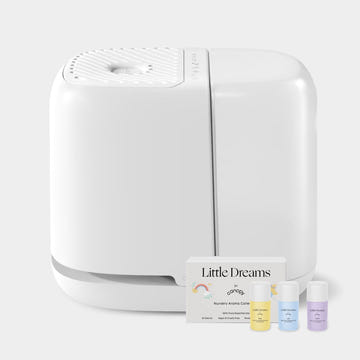
Canopy Nursery Humidifier 2.0 mold-inhibiting dishwa...
$159.00

Burt's Bees Baby Beekeeper Wearable Blanket
$24.95

100% Organic Cotton 1.0 Tog Sleeping Bag with Legs S...
$30.00
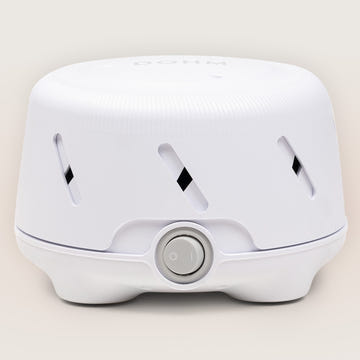
Dohm Uno
$36.99
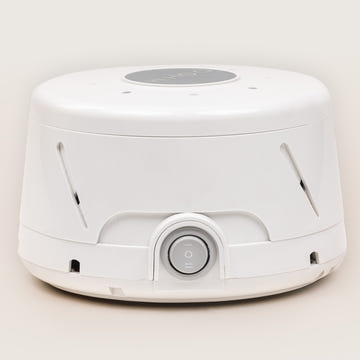
Dohm Classic
$49.99

Rocking Stand for Standard Baby Moses Basket
$165.90

Healthy Horizons Miracle Blanket one-size swaddle 10...
$32.95

Twin Montessori-Inspired Floor Bed with Guardrails
$219.99

WildBird Dove CloudBlend Sleep Sack TOG 1 Blue grey
$44.00

Hubble Connected Hubble Dream+ Comfort Cloud Sleep S...
$124.99