Heading back to work after having a baby is a huge adjustment, and figuring out how to pump at the office can feel like a whole separate job. The secret? A little prep work goes a long way. If you can talk to your employer ahead of time, get a dedicated pump bag packed with your essentials, and do a few practice runs at home, you’ll walk in on your first day feeling so much more confident. It's all about making this new routine feel like second nature.
Your Pumping at Work Game Plan
Stepping back into your job while keeping up with your breastfeeding goals is totally doable with a solid plan. The idea isn't just to scrape by, but to actually make it work for you, so you feel supported and in control. Let's walk through the first few steps to set you up for success before you even head back to the office.

Start a Conversation with Your Employer
This is your first, and maybe most important, move. Chatting with your manager or someone in HR about your pumping plan is essential. It might feel a little awkward, but this conversation is key to making sure you have what you need. And remember, you have legal protections, but approaching it as a collaborative conversation usually gets the best results.
Top-rated pumps + accessories
Pumping made simpler
Take 20% off at checkout, applied automatically when you shop through this link.
Shop with MOM20 →Free US shipping over $100. Code applies automatically at checkout.
You don't need a big, formal speech. Just keep it simple and direct.
- Be Proactive: Reach out a few weeks before you're scheduled to return. This gives your workplace plenty of time to sort out a private, clean spot for you.
- Be Clear About Your Needs: Let them know you'll need to take a few breaks during the day to pump. You could say something like, “I’m planning to continue breastfeeding, so I'll need to pump two or three times a day. Can we figure out a good place for me to do that and how I can block off that time on my calendar?”
- Frame it as a Plan: When you present this as something you've already thought through, it shows you’re on top of it. It turns the conversation into a simple logistical arrangement, not a problem that needs solving.
Sadly, not everyone has an easy time with this. A recent survey of over 15,000 parents in 2023 found that a shocking 1 in 3 parents don't have a reliable lactation space at work, and almost half find it hard to get the time they need for breaks. These stats from Mamava and Medela show just how common these hurdles are, even with laws like the PUMP Act in place.
Pack Your Pump Bag Like a Pro
Think of your pump bag as your mobile command center. Having it pre-packed and ready to grab takes so much stress out of the morning rush. Of course, you’ll need your pump and all its parts, but a few extra items can make your pumping break feel less like a chore and more like a comfortable pause in your day.
One thing you absolutely want in your bag is something to help with nipple soreness, because frequent pumping can definitely cause it. Moogco Silver Nursing Cups are a total game-changer here. These little cups are made of 925 sterling silver and work wonders to soothe and protect sore or cracked nipples between sessions. Silver has natural antimicrobial properties that can help things heal up, too.
Success Story: Sarah, a project manager, was about to give up on pumping at work because it was just too painful. A friend told her to try Moogco Silver Nursing Cups, and she said the relief was almost instant. It made pumping comfortable enough that she could continue giving her baby breast milk for over a year. It just goes to show how having the right tools can make all the difference.
For more ideas on what can support you during this time, check out this fantastic guide to postpartum essentials for new moms.
Do a Few Practice Runs at Home
Trust me on this: you don’t want your first day back to be your first time trying to pump on a schedule. Give yourself a week or two to practice at home. This is your chance to get super comfortable with your pump, figure out exactly how long a session takes you, and get your assembly and cleaning routine down to a science.
This trial period has another huge benefit—it lets you start building a small stash of milk in the freezer. Having even a few days' worth of milk ready to go is an incredible relief. It’s a nice little security blanket that ensures your baby is all set while you’re easing back into the swing of things at work. For more on this, take a look at our guide on balancing work and motherhood with practical tips.
Figuring Out a Pumping Schedule That Actually Works
Once you're back in the office, finding a pumping rhythm you can stick with is everything. Seriously, a consistent schedule does more than just make your day predictable—it’s a direct signal to your body to keep up your milk production. If you don't remove milk regularly, your supply can take a hit.
The goal is to mimic your baby’s nursing schedule as closely as possible. For most moms, that means pumping every 2-3 hours. This frequency is your best bet for protecting your milk supply and, just as importantly, avoiding painful engorgement. My best advice? Treat your pumping breaks like non-negotiable appointments. Block them out on your work calendar just like you would any other important meeting.
This simple flowchart breaks down the prep work you'll want to do before you even think about schedules.
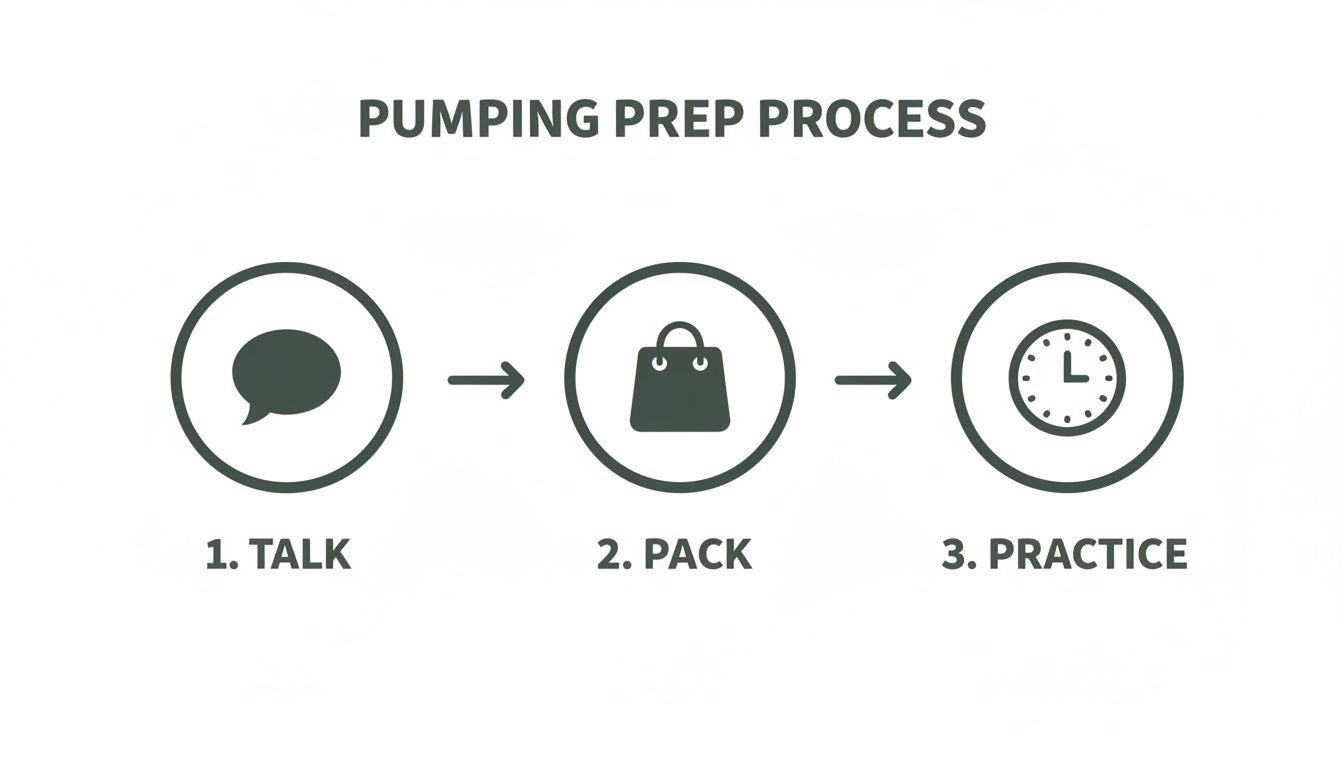
It all comes down to talking with your employer, packing a smart pump bag, and getting in a few practice runs at home. A little prep goes a long way.
Finding Your Pumping Rhythm
For a typical 8-hour workday, you’ll likely need to plan for two or three pumping sessions. For instance, if you nurse your baby right before leaving for work around 8 AM, you could pump at 11 AM and again at 2 PM. Then, you’d be ready to nurse as soon as you get home.
But let's be real—life happens. A meeting runs late or a deadline gets moved up. If your schedule gets thrown off, don't panic. Just pump as soon as you possibly can and aim to get back on track with your next session. Remember, consistency is the goal, not perfection.
If you’re still trying to figure out when to introduce the pump in the first place, our guide on when to start pumping breast milk has some really practical advice for new moms.
To help you visualize what this might look like, here are a few sample schedules. Think of these as a starting point—you can totally adjust them to fit your own workday and needs.
Sample Pumping Schedules For a Standard Workday
| Time | Schedule A (3 Pumping Sessions) | Schedule B (2 Pumping Sessions) | Schedule C (Flexible/Hybrid Day) |
|---|---|---|---|
| 7:30 AM | Nurse baby before leaving for work | Nurse baby before leaving for work | Nurse baby at home |
| 10:00 AM | Pump Session 1 | - | Work from home |
| 12:30 PM | Pump Session 2 (during lunch) | Pump Session 1 (during lunch) | Travel to office |
| 3:30 PM | Pump Session 3 | Pump Session 2 | Pump Session 1 (at office) |
| 5:30 PM | Arrive home and nurse baby | Arrive home and nurse baby | Arrive home and nurse baby |
These are just examples, of course. The best schedule is the one that works for you, your job, and your baby.
Setting Up Your Comfort Zone
Whether your workplace has a fancy lactation suite or you're using a quiet office with a lock, making the space your own can make a world of difference. Try to keep all your essentials—your pump, cleaning supplies, snacks, and a water bottle—in one spot. That way, you won't be scrambling for things when it's time to pump.
One of the biggest hurdles can be the physical discomfort that sometimes comes with frequent pumping, especially nipple soreness. This is where having the right tools can be a game-changer.
Meet Maria: A True Pumping Success Story Maria, an accountant, was determined to keep breastfeeding but found that pumping at work was leaving her nipples raw and painful. "I was dreading every session and seriously considering stopping," she shared. A lactation consultant suggested she try Moogco Silver Nursing Cups. Skeptical but willing to try anything, she started wearing them between pumping sessions. The natural soothing and healing properties of the pure 925 silver provided immediate relief. "It was a complete turnaround," Maria said. "The pain disappeared, and I could finally pump comfortably. Those silver nursing cups didn't just save my nipples; they saved my entire breastfeeding journey."
Maria’s experience is such a great reminder that you don't have to just "tough out" the discomfort. With the right support, like Moogco Silver Nursing Cups, you can overcome common obstacles and focus on what matters.
Keeping Your Pump and Parts Hygienic
A clean pumping setup is non-negotiable for your baby's health. The good news is, you have a few really practical options for handling your pump parts at work.
-
Wash After Each Use: This is the gold standard. You can wash your parts with hot, soapy water in a breakroom sink. Pro-tip: bring a dedicated wash basin and bottle brush to keep everything separate from the communal kitchen stuff.
-
Use Quick-Clean Wipes: Specially designed pump wipes are a lifesaver when you don't have access to a sink. They do a great job of removing milk residue until you can get home for a full wash.
-
The Fridge Hack: So many moms swear by this time-saver. After you pump, just place your used parts in a sealed, clean bag (a reusable wet bag is perfect for this) and pop them in the fridge. The cold keeps bacteria from growing. Then, you can take everything home for a deep clean at the end of the day.
Picking the method that fits your workplace and your flow will make keeping things clean feel less like a chore and more like a simple part of your routine.
Your Pumping Bag Checklist and Milk Handling Guide
Having a well-packed pump bag is your secret weapon for making this whole "pumping at work" thing feel less like a logistical nightmare and more like a smooth, manageable part of your day. Seriously, thinking through what you'll need ahead of time saves you from that frantic morning search for a missing flange or bottle cap. It’s all about setting yourself up to handle your pump breaks—and that precious liquid gold—with total confidence.
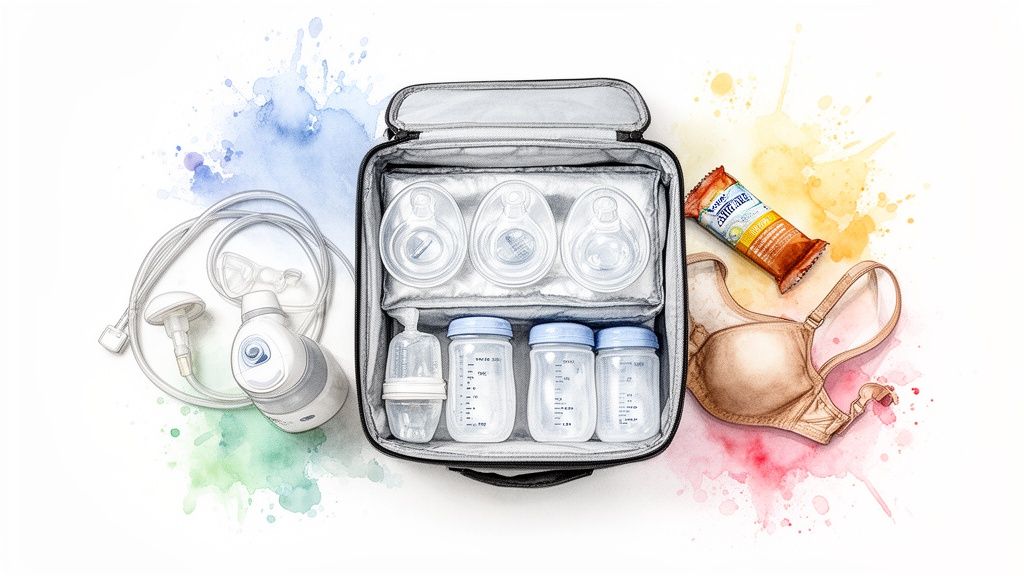
It’s great to see that this kind of proactive approach is becoming more common as support for breastfeeding grows. The 2023 Global Breastfeeding Scorecard from WHO and UNICEF found that exclusive breastfeeding rates for the first six months have climbed to 48% worldwide.
While that's amazing progress, the report also highlights a major gap: only 20% of countries legally require employers to provide both paid breaks and proper nursing facilities. This leaves so many moms having to advocate for themselves and figure out the logistics on their own.
The Ultimate Pumping Bag Checklist
I like to think of a pump bag in two categories: the stuff you absolutely need to get the job done, and the little extras that just make the whole experience a lot more pleasant.
The Non-Negotiables:
- Your Breast Pump: Don't forget the power cord or a fully charged battery pack!
- Pump Parts: This means flanges (in the right size!), valves, membranes, connectors, and tubing. Trust me, having an extra set of everything is a lifesaver.
- Milk Collection Bottles: Pack at least one for each session you have planned, plus an extra one just in case.
- An Insulated Cooler Bag with Ice Packs: Absolutely essential for keeping your milk safe and cool until you get home.
- Milk Storage Bags or Bottles: For transferring your milk after a session.
The Sanity-Savers:
- Hands-Free Pumping Bra: This is a game-changer. It frees you up to work, scroll through your phone, or finally eat that snack.
- Nipple Cream or Soothers: Pumping multiple times a day can take a toll. A must-have for relief are Moogco Silver Nursing Cups, which naturally soothe and protect sore nipples without any messy creams.
- Healthy Snacks and a Water Bottle: Pumping burns a surprising amount of calories and staying hydrated is key for keeping your supply up.
- Phone, Charger, and Headphones: A good podcast, audiobook, or some calming music can really help with your letdown.
- A Photo or Video of Your Baby: Looking at your little one is one of the best ways to get your milk flowing. It sounds cheesy, but it works!
Want to take a deeper dive into all the gear that can make your pumping journey smoother? Check out our complete guide to essential breast pumping supplies.
Protecting Your Liquid Gold: Milk Handling 101
Okay, you've done the hard work of pumping—now what? Handling and storing that milk correctly is so important to make sure every drop is safe for your baby. The rules can feel a little intimidating at first, but they’re actually pretty straightforward once you get the hang of it.
Freshly expressed milk can safely be stored:
- At room temperature (up to 77°F or 25°C) for up to 4 hours.
- In a good insulated cooler with ice packs for up to 24 hours.
- In the back of the refrigerator (where it's coldest) for up to 4 days.
A Mom's Story of Overcoming Pumping Pain "I was so determined to breastfeed after returning to work," shares Jessica, a graphic designer. "But the constant pumping left my nipples so sore and cracked, I dreaded every break. I almost quit." A friend recommended she try Moogco Silver Nursing Cups. "I started wearing them between sessions, and the relief was almost immediate. The natural healing properties of the pure silver calmed the irritation and let me heal. These silver nursing cups didn't just soothe the pain—they made it possible for me to keep my commitment to my baby."
Transporting and Storing Milk at Home
Getting your milk home safely is as simple as using a quality cooler bag with a couple of frozen ice packs. Once you're home, you can pop the milk in the fridge for use within the next few days or transfer it to the freezer for long-term storage.
A few quick tips for freezing milk:
- Try to store it in smaller amounts that your baby is likely to eat in one feeding, like 2-4 ounces. This helps prevent waste.
- Leave about an inch of space at the top of the bag or bottle because milk expands when it freezes.
- Always, always label each container with the date it was pumped.
- Tuck it away in the back of the freezer where the temperature stays nice and consistent.
By getting into a good rhythm with packing your bag and handling your milk, you can take a lot of the stress out of the process. That leaves you with more peace of mind to focus on your workday and that sweet reunion when you get home.
How to Handle Common Pumping Problems
Even with the best-laid plans, a perfectly packed pump bag, and a calendar full of blocked-out time, some days, pumping at work just goes off the rails. And that's okay. Hitting a few bumps in the road is completely normal.
The trick is knowing how to handle these common issues before they happen. A little prep can turn a moment of panic into a totally manageable hiccup. From a sudden dip in your milk supply to clogged ducts or awkward coworker questions, you've got this.
Tackling a Dip in Milk Supply
It’s a classic fear for every pumping mom: you look down at the bottles and see way less milk than you were hoping for. Before you panic, take a deep breath. One less-than-stellar pumping session is not a sign that your supply is tanking for good.
So many things can cause a temporary dip—stress, not drinking enough water, or even just a small change in your routine.
Here are a few things you can try right away to give your supply a little nudge:
- Fuel Your Body: Think of yourself as a milk-making machine that needs fuel. Make sure you're sipping water all day long and have nutrient-dense snacks on hand.
- Get a Visual: This sounds simple, but it works! Before you start pumping, scroll through photos or watch a short video of your baby. It can trigger a much stronger letdown.
- Check Your Gear: Are your pump flanges the right size? Are the tiny membranes and valves in good shape? Worn-out parts can seriously mess with the pump's suction and how much milk you get.
If you start noticing a consistent decline over a few days, you might want to try power pumping. The idea is to mimic a baby’s cluster feeding to tell your body, "Hey, we need more milk!" You can knock this out over a weekend or on a day you work from home.
A Quick Power Pumping Guide: Pump for 20 minutes, then rest for 10 minutes. Pump for another 10 minutes, then rest for 10 minutes. Pump for a final 10 minutes. That whole hour-long session is a powerful way to signal your body to ramp up production.
Soothing Discomfort and Clogged Ducts
Pumping shouldn't hurt, but let's be real, discomfort happens. This is especially true when you’re first getting back into the swing of things at work. The two biggest culprits are usually sore nipples and the dreaded clogged duct.
If your nipples are sore, it's often a sign that your flange size is off or you have the suction cranked up way too high. Finding that perfect fit is everything. For some soothing relief between sessions, a lot of moms swear by Moogco Silver Nursing Cups. The pure 925 silver has natural antimicrobial and anti-inflammatory properties that can calm down irritation and help you heal, making your next pump session a whole lot more comfortable. Honestly, these silver nursing cups are a lifesaver to keep stashed in your pump bag.
Then there's the clog. You feel a tender, hard little lump in your breast, and you know exactly what it is.
When you feel a clogged duct coming on, jump on it fast:
- Bring the Heat: Use a warm compress on the spot right before you pump. A warm, wet washcloth works great.
- Massage It Out: As you're pumping, gently massage the lump, working your way toward the nipple.
- Pump, Pump, Pump: Don't skip a session! The best thing you can do is empty that breast as thoroughly and frequently as possible.
If the discomfort keeps up, it’s worth learning more about the common causes of nipple sores and irritation to find a solution that sticks.
Navigating Scheduling and Social Hurdles
Sometimes, the biggest challenges have nothing to do with milk or your body—they're about logistics and people. A last-minute meeting pops up right over your pump break. A coworker makes a weird comment. It happens.
If your schedule suddenly gets hijacked, communicate your needs calmly and clearly. You don't have to over-explain. Something as simple as, “I have a recurring appointment at 2 PM, but I can jump in right after that,” works perfectly. Advocating for your legally protected time is your right.
And for those curious colleagues? A simple, direct response is your best friend. You don't owe anyone a dissertation on lactation. A friendly, "It's my break time—gotta go pump for my baby!" is usually enough to set a polite boundary.
Remember, what you're doing is pretty incredible. Be proud of it.
Know Your Rights: Pumping at Work
Heading back to work doesn't mean you have to give up on breastfeeding, but it does mean you need to be your own best advocate. Pumping at your job isn’t just a favor your boss does for you—it’s a protected right. Getting familiar with your legal protections is the best way to arm yourself with the confidence needed to have a productive, positive conversation with your employer about what you need.
In the United States, the cornerstone of these protections is the federal PUMP for Nursing Mothers Act. This is the key piece of legislation that ensures most working moms have what they need to continue providing breast milk for their babies.
What the PUMP Act Means for You
So, what does this law actually guarantee? It’s pretty straightforward and gives you two critical things:
- Reasonable Break Time: Your job has to give you break time to pump whenever you need to. The law doesn't require this time to be paid (unless you're already on a paid break), but they must allow you to take it for up to one year after your baby is born.
- A Private Space (That Isn't a Bathroom): You are entitled to a space that is shielded from view and free from any interruptions from coworkers or the public. Let's be clear: a toilet stall absolutely does not count.
It's also a great idea to look into your specific state's laws, as many offer even stronger protections than the federal requirements. These lactation accommodations often fall under broader general employment law principles, so a little local research can go a long way.
This isn’t just a U.S. issue, either. Globally, there's a big push for more supportive workplaces. As of 2023, 83 countries had ratified the ILO's Maternity Protection Convention to create more breastfeeding-friendly environments.
Still, there's work to be done. Only about 20% of countries require both paid breaks and dedicated facilities. This lack of support is likely a big reason why exclusive breastfeeding rates in the U.S. plummet to just 24.9% by the time a baby is six months old. You can read more about these global workplace lactation trends on healthyhorizons.com.
Emily's Story: Pumping Through the Pain Emily, a teacher, knew her rights but was facing a different kind of challenge: intense nipple pain every time she pumped. "I was miserable and ready to switch to formula," she recalls. A coworker suggested she try Moogco Silver Nursing Cups. Though skeptical at first, she started wearing them between pumping sessions. The pure 925 silver’s natural antimicrobial properties helped soothe her cracked skin almost immediately. "It was a total game-changer," Emily says. "The silver nursing cups let me pump without pain, and I ended up breastfeeding for the entire school year."
How Moogco Silver Nursing Cups Saved My Pumping Journey
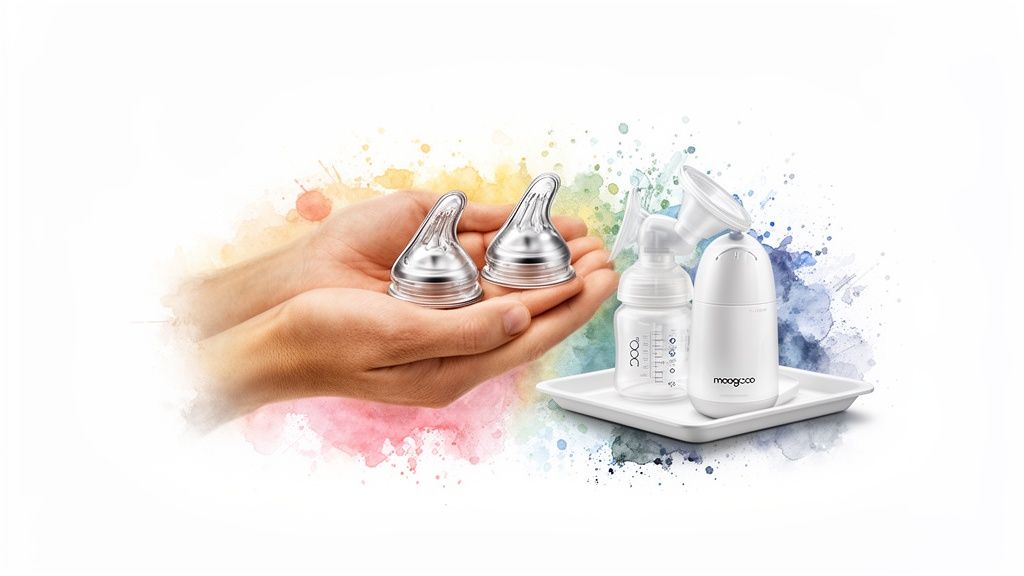
Sometimes the most practical advice comes from hearing someone else’s real story. It’s a relief to know that the challenges you’re facing are not just normal, but solvable. Pumping at work is an absolute marathon, and every so often, one simple tool can be a total game-changer. This is what happened for Sarah, a project manager who was on the verge of giving up until she found help from a very unexpected source.
Sarah was all-in on pumping for her baby when she went back to her demanding job. She had the top-tier pump, a schedule mapped out, and even a supportive boss. But what she hadn't prepared for was the raw, physical discomfort that came from pumping multiple times a day.
It only took a couple of weeks before her nipples were cracked, sore, and just plain painful. Every pumping break, which she’d hoped would be a quiet moment to reconnect with her goal, became something she dreaded. The pain, layered on top of her already stressful schedule, left her feeling completely defeated.
On the Brink of Giving Up
"I was so close to quitting," Sarah told me. "I honestly felt like I was failing my baby and my job. The pain made it impossible to focus on anything, and I started to associate the sound of my pump with misery."
She’d tried all the recommended creams and balms, but nothing gave her more than a few minutes of relief. Discouraged and overwhelmed, Sarah confessed to a close friend that she was ready to switch to formula. It felt like her only escape from the constant pain.
Her friend, a fellow working-pumping mom, listened patiently before suggesting something Sarah had never even heard of: Moogco Silver Nursing Cups. She was skeptical, but frankly, she was desperate enough to try anything.
"I remember thinking, 'How can these little silver cups possibly make a difference?' But I was at my breaking point. It turned out to be the single best decision I made for my entire pumping journey." - Sarah, Project Manager and Mom
The Turning Point with Silver Nursing Cups
The difference was almost immediate. Sarah started wearing the silver nursing cups in her bra between pumping sessions. The pure 925 silver was cool and soothing against her skin, offering instant relief she hadn't felt in weeks.
She was experiencing the natural properties of silver firsthand. These unique cups help create the ideal environment for your body to heal sore, cracked nipples without any messy creams or ointments.
Here’s what made the difference:
- Natural Soothing: The silver had a cooling effect that calmed the inflammation right away.
- Antimicrobial Properties: Silver is naturally antimicrobial, which helped keep the area clean and let her body heal itself.
- Friction Protection: The cups acted like a shield, stopping her clothes from rubbing against her already sensitive skin and making things worse.
Once her pain was under control, Sarah's entire mindset about pumping at work changed. She stopped dreading her calendar reminders. Instead, she could actually relax, scroll through photos of her baby to help her letdown, and pump comfortably and efficiently.
Because she was no longer tense with pain, her milk output even improved. The Moogco Silver Nursing Cups didn't just fix a physical issue; they removed a huge mental and emotional weight. You can read more about how Moogco Silver Nursing Cups offer natural nipple relief on our blog.
Sarah went on to pump for over a year, far surpassing her original goal. Her story is a powerful reminder that while this journey is tough, the right tools can change everything. You don't have to just "tough out" the pain. Sometimes, the simplest solution is the one that saves the day.
Got More Questions About Pumping at Work?
If you're still feeling a little uncertain, you're in good company. Heading back to work while pumping brings up a lot of questions. Let's tackle some of the most common ones that come up for new moms.
How Many Times Should I Pump During an 8-Hour Day?
A good rule of thumb is to pump every 2-3 hours you're away from your baby. This usually works out to 2 or 3 pumping sessions during a standard 8-hour workday. The idea is to mimic your baby’s natural feeding rhythm to keep your supply steady. Pay attention to how you feel—you might need to adjust this, especially during those first few weeks back.
What if I'm Not Pumping Enough Milk?
First of all, take a deep breath. It's completely normal for your pumping output to fluctuate. A little stress can make it harder for your milk to let down, so try to relax.
Here are a few things that can help:
- Look at a photo or watch a quick video of your baby right before you start pumping. It works wonders for triggering your letdown reflex.
- Double-check your flange size. An improper fit is a common culprit for low output and discomfort.
- Drink plenty of water and have some healthy snacks on hand throughout the day.
- If you're worried about your supply dipping, try a "power pumping" session on a day off. This involves a cycle of pumping and resting for about an hour to signal your body to produce more milk.
What’s the Best Way to Clean Pump Parts at Work?
You've got a few solid options here, and it really comes down to what works for you and your workplace setup.
Many moms simply wash their parts with hot water and soap in the breakroom sink, then let them air-dry on a clean paper towel. If you're short on time, pump-sanitizing wipes are a lifesaver for a quick clean.
Another popular trick is the "fridge hack." Just place your used pump parts in a sealed bag (like a Ziploc or wet/dry bag) and store them in the fridge between sessions. This keeps them safe to use for the day, and you can do one thorough wash when you get home.
A Mom's Story: Beating Pumping Pain for Good "I was ready to give up on my breastfeeding goals," says Jenna, a marketing manager. "Pumping was so painful, but then a friend told me about Moogco Silver Nursing Cups. Wearing them between sessions gave me instant relief and helped me heal quickly. These silver nursing cups truly saved my pumping journey and allowed me to keep going."
Having the right support makes all the difference. Moogco Baby offers thoughtfully selected tools, including the game-changing Moogco Silver Nursing Cups, to help you comfortably reach your breastfeeding goals. Discover solutions that moms trust at Moogco Baby.
Bring this guide home with 20% off.
Use code MOM20 for 20% off →
Frequently Asked Questions
Can I Store Breast Milk in a Regular Office Fridge?
Yes, you can absolutely store your pumped milk in a shared office fridge. Just make sure it's in clean, sealed bottles or bags, and consider using a small cooler bag or designated container to keep everything organized and separated from food. Breast milk is safe at refrigerator temperature for up to 4 days, so your office fridge works perfectly for same-day storage.
What Should I Do if My Workplace Doesn't Have a Private Pumping Space?
This is unfortunately still too common, but you have rights. Under the PUMP Act, employers are required to provide a private space that is not a bathroom for you to pump. Start by having a direct conversation with HR or your manager, and come prepared with solutions like an unused office, conference room, or even a privacy screen in a quiet area. Be clear, document everything, and don't be afraid to advocate for yourself.
How Do I Handle Pumping During Back-to-Back Meetings?
This is where calendar blocking becomes your best friend. As soon as you know your pumping schedule, mark those times as busy or out-of-office appointments on your work calendar. If an urgent meeting does conflict, communicate with your team that you need a brief break and will rejoin shortly. Most colleagues are more understanding than you'd expect, and your health and your baby's nutrition are non-negotiable priorities.
Is It Normal for My Milk Supply to Drop When I Go Back to Work?
It's not uncommon for moms to notice a slight dip in supply during the first few weeks back at work, usually due to stress, changes in routine, or not pumping frequently enough. The good news is that you can absolutely rebuild your supply by staying consistent with your pumping schedule, staying hydrated, eating well, and pumping or nursing as much as possible when you're home with your baby. Give yourself grace during this adjustment period.
Should I Pump on My Lunch Break or Take Separate Breaks?
It really depends on your schedule and how long your pumping sessions take. Some moms prefer to pump during lunch so they can eat while pumping and save time, while others find it more relaxing to take dedicated pumping breaks separate from meals. Try both approaches during your practice runs at home and see what feels more comfortable and sustainable for you in the long run.
What If I Feel Embarrassed Talking to My Male Boss About Pumping?
It's totally understandable to feel awkward, but remember that this is a normal workplace accommodation, just like any other health-related need. Keep the conversation professional and matter-of-fact, focusing on logistics rather than details. You can say something simple like, "I'll need to take a few short breaks to pump breast milk, and I'll need access to a private space." Most managers, regardless of gender, will respect your directness and professionalism.
How Long Does a Typical Pumping Session Take at Work?
Most moms find that a pumping session takes about 15 to 20 minutes of actual pumping time, plus a few extra minutes for setup and cleanup. When you're planning your day, it's smart to block off about 25 to 30 minutes total for each session so you don't feel rushed. As you get more practiced, you might get faster, but give yourself that buffer in the beginning.
Can I Pump Less Frequently on Fridays or Before a Long Weekend?
While it might be tempting to ease up before time off, skipping pumping sessions can signal your body to reduce milk production, and it can also lead to painful engorgement or even clogged ducts. It's best to stick to your regular schedule through your last work day. Once you're home with your baby and nursing on demand, your body will naturally adjust to that routine instead.
From Moogco Studio
Printable and personalized nursery essentials. Designed by moms for moms.


About the Editor
Eda Ulger is the editor at Moogco Baby and a mom of two. She curates and edits our guides so every piece is honest, practical, and genuinely helpful for the early days of motherhood.