


If you're navigating the early days of breastfeeding, you might hear talk of nipple shields. So, what exactly are they? A nipple shield is a thin, flexible piece of silicone that you place over your nipple right before a feeding session.
Think of it as a temporary guide for your baby. It creates a firmer, more defined shape, which can make it much easier for a little one to latch on, especially if you have flat or inverted nipples. It can also be a game-changer if your baby is struggling to maintain a good seal and stay attached to the breast.
What Are Nipple Shields and How Do They Help
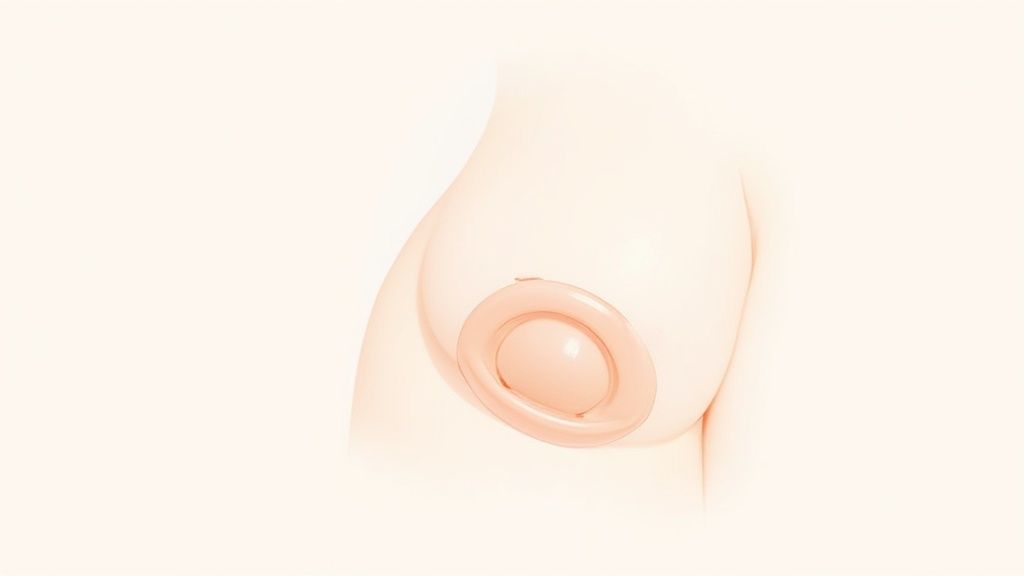

It’s helpful to think of a nipple shield like training wheels on a bicycle. It’s a tool that provides just enough support and structure to help your baby get the hang of things. The goal isn’t to use them forever, but to give your baby the confidence and coordination they need to eventually latch directly onto the breast without any help.
Backed by 200,000+ cups sold since 2020
Heal faster with silver nursing cups
Take $15 off at checkout, applied automatically when you shop through this link.
Shop with READER15 →Free US shipping over $100. Code applies automatically at checkout.
This simple device can bridge the gap between a frustrating feeding and a successful one. By creating a consistent shape and length, the shield makes contact with the roof of your baby's mouth, which triggers their powerful sucking reflex and helps them stay latched. This is a huge help for premature babies or infants who just have a weak suck to start.
Having a better grasp of nipple anatomy and its sensitivity can also shed light on why some of these latching challenges happen in the first place.
To put it simply, here’s a quick breakdown of what a nipple shield does.
Nipple Shield Functions at a Glance
| Primary Function | Who It Helps | Key Benefit |
|---|---|---|
| Provides a firmer target | Mothers with flat, inverted, or short nipples | Makes it easier for the baby to latch securely. |
| Maintains shape during feeding | Babies with a weak suck or uncoordinated latch | Helps the baby stay latched and draw out milk. |
| Stimulates the sucking reflex | Premature babies or those with oral ties | Encourages a stronger, more effective suck. |
Ultimately, a nipple shield is designed to be a short-term solution that keeps your breastfeeding journey moving forward while you address the root cause of the issue.
The Evolution of a Simple Tool
While the nipple shields we see today are made from soft, flexible silicone, they’ve actually been around for centuries. Early versions were crafted from all sorts of materials, including silver, wax, and even lead. Thankfully, we've come a long way. The shift to modern, ultra-thin silicone has made them much more comfortable and far better at allowing for good milk transfer and natural nipple stimulation.
A nipple shield isn’t a permanent fix but a temporary bridge. Its purpose is to solve an immediate problem—like a poor latch or pain—while giving you and your baby time to work on the underlying issue with the support of a lactation consultant.
It's important to remember that a shield is a tool for latching, not for healing. If your main concern is sore, cracked, or damaged nipples, you'll want to look at something designed for recovery. That's where products like Silverette nursing cups come in. Unlike shields, these silverettes are worn between feedings and use the natural antimicrobial and anti-inflammatory properties of silver to soothe irritation and help your skin heal.
Solving Latching Problems and Reducing Pain

Let's get straight to it: the two biggest reasons mothers turn to nipple shields are trouble with latching and painful nursing. For some, it’s an anatomical thing. For others, it’s about creating a temporary barrier that lets them heal so they can continue breastfeeding with less agony.
These hurdles can feel huge in the moment, but a nipple shield can be a practical, get-it-done tool. It helps turn a stressful situation into a more positive feeding experience while you and your little one are still figuring things out.
A Solution for Latching Difficulties
A good latch is everything in breastfeeding, but it's a skill that doesn't always come easily. This is where a nipple shield can be a total game-changer, especially in a few common scenarios where a baby just can't seem to connect.
Take mothers with flat or inverted nipples, for example. A shield can provide the structure and shape the baby needs to create proper suction. It gives them a firmer, more pronounced target that reaches the roof of their mouth and triggers that all-important sucking reflex.
A nipple shield gives your baby a consistent, easy-to-grasp shape to work with. This helps them build the muscle memory and coordination for a deep, effective latch, turning a frustrating attempt into a successful feed.
It's also a great help for babies born a bit early or those who have a weaker suck. The shield’s defined shape is easier to hold onto, so they can put their energy into drawing milk instead of just struggling to stay attached. If this sounds familiar, you might find it helpful to learn more about understanding and addressing latching difficulties in breastfeeding.
A shield can also be a useful bridge for a baby who needs to transition from a bottle back to the breast. The feel of the silicone is often more familiar to them than skin, which can ease them back into nursing directly.
A Barrier Against Pain
Let's be honest, intense nipple pain can make you dread the next feeding. When your nipples are sore, cracked, or even bleeding, a shield offers a desperately needed layer of protection.
It puts a physical buffer between your baby’s mouth and your very sensitive skin. That simple separation can dramatically cut down on the friction and pain during a feed, giving your nipples a window to heal without having to stop breastfeeding altogether.
But remember, a shield provides relief during the feed—it doesn't fix the underlying damage. For healing between feeds, many moms find incredible relief with Silverette nursing cups. These silverettes are made to soothe and repair sore nipples using the natural antimicrobial properties of 925 silver, making them a perfect partner to the temporary protection of a shield.
If latching issues or pain have you worried about how much milk your baby is getting, it's also a good time to look into practical tips for increasing milk supply.
Picks From This Story
Picks related to this guide, ready to ship from Moogco.

momjug breastfeeding water bottle
$49.99
Organic Nipple Butter™ - Double-Sided for Kids
$14.99
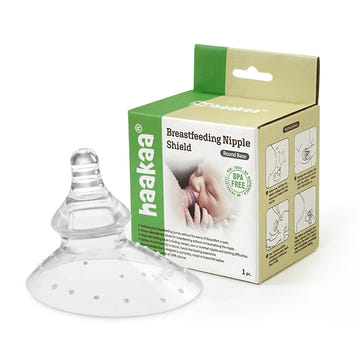
Haakaa Silicone Breastfeeding Nipple Shield, Round S...
$19.05
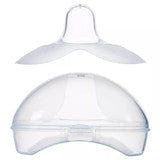
Cherry Shaped Nipple Shield-21mm (Large)
$14.00
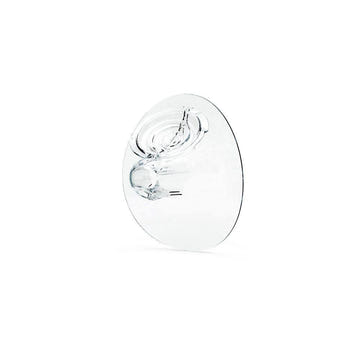
Elvie Pump Breast Shields 2 Pack
$29.99
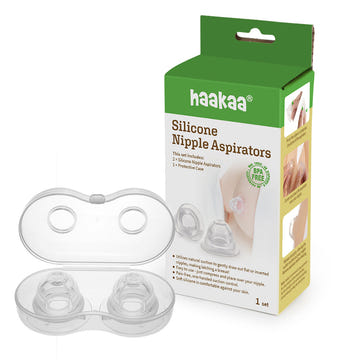
Haakaa Silicone Inverted Nipple Aspirators, 2 pk
$17.99
Understanding the Potential Downsides
While a nipple shield can feel like a lifesaver in the moment, it’s not a magic wand. Think of it as a temporary tool, not a permanent fix. To use it wisely, it's crucial to understand the potential drawbacks so you don't accidentally create a new set of problems while trying to solve the first one.
The biggest issue we see is the potential for reduced milk transfer. That thin layer of silicone, no matter how well-designed, creates a small barrier. It can sometimes keep your baby from efficiently draining the breast. It's a bit like trying to drink a thick milkshake through a very skinny straw—you’ll get it, but it takes more effort and slows everything down.
Impact on Milk Supply
When your breast isn’t emptied completely and efficiently, your body gets the message to slow down production. If this happens at feed after feed, it can cause your milk supply to dip. This is exactly why it’s so important to work with a lactation consultant if you’re using a shield; they can help you keep an eye on things and protect your supply.
Research backs this up. One study focusing on moms with nipple pain found that shield use was connected to low milk production in about one-third of cases. The same study also showed that milk transfer was slower with a shield, clocking in at around 4 mL/min compared to 7 mL/min without one. You can find more details on these outcomes in the 2021 study.
Preventing Dependency
Another real concern is that your baby might get a little too comfortable with the shield. They can get used to that firm, predictable silicone shape and then protest when you try to get them to latch onto your softer, more flexible bare breast.
To avoid this, you have to treat the shield as a temporary bridge—something to get you from point A to point B, not a final destination. The real goal is to fix the underlying problem, whether it’s a poor latch, nipple pain from an earlier issue, or an anatomical challenge, so you can eventually ditch the shield. Often, the main culprit for pain is an incorrect latch, which can stem from various causes of nipple sores and irritation.
A nipple shield is most effective when it’s just one part of a bigger breastfeeding strategy. It should be used alongside efforts to improve latch, closely monitor your baby’s weight, and create a plan to wean off it once the original problem is resolved.
If pain and healing are your main concerns, a shield might only be one piece of the puzzle. For promoting healing between feeds, Silverette nursing cups are a fantastic option designed specifically for recovery. These silverettes harness the natural antimicrobial and anti-inflammatory properties of 925 silver to soothe and heal sore nipples, tackling the pain at its source without getting in the way of latch practice.
How to Use and Care for Your Nipple Shield
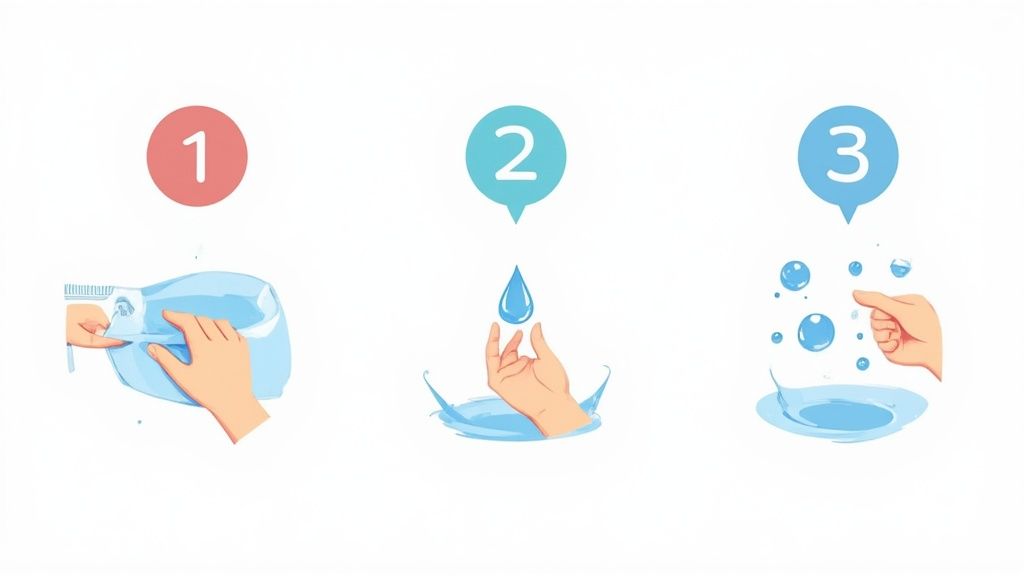
Making a nipple shield work for you is all about the details. A proper fit and the right application technique can be a game-changer, helping your baby feed effectively while keeping you comfortable. Just as important is knowing how to keep it clean for your little one’s safety.
Think of it like getting a suction cup to stick—you need a good seal. It has to fit snugly against your skin to stay put and do its job. Let’s walk through the simple steps for using and caring for your shield.
Applying Your Nipple Shield Step-by-Step
Getting the shield on just right can take a bit of practice, but you’ll have it down in no time. The main goal is to create a gentle vacuum that holds it securely to your breast and, in doing so, draws your nipple into the tip.
Here’s a simple process to get a secure and comfortable fit every time:
-
Moisten the Edges: A little warm water on the brim of the shield is all you need. This moisture helps it adhere to your skin.
-
Flip it Inside Out: Gently push the tip of the shield partway back on itself, almost like you’re turning a hat inside out. This little trick is key for getting a good suction.
-
Center and Apply: Place the shield directly over your nipple, making sure it’s perfectly centered. Then, smooth the moistened edges down onto your areola, pressing gently to create that seal. You should see your nipple get drawn right into the shield's tip.
When a shield is on correctly, it should feel secure but not tight or pinchy. When your baby latches, they need to take in a big mouthful of breast, including a good portion of the areola—not just the silicone tip. This ensures a deep, effective latch.
Cleaning and Storing Your Shield Safely
Because your nipple shield touches your baby’s mouth and your milk, keeping it impeccably clean is a must. Proper hygiene is your best defense against the buildup of bacteria and potential infections like thrush, which can affect both of you.
Your shield needs a thorough cleaning after every single feeding. No exceptions.
- Immediate Rinse: As soon as you're done feeding, rinse the shield under cool water to get rid of any leftover milk.
- Wash Thoroughly: Next, wash it in hot, soapy water. Pay special attention to the inside of the tip to scrub away all milk fats.
- Rinse and Air Dry: Give it a final rinse with hot water and let it air dry completely on a clean paper towel or drying rack before you put it away.
Daily sterilization is also really important for keeping things safe. You should aim to sterilize it at least once a day. The same methods work here, and you can find some great advice in our guide on easy methods for sterilizing baby bottles and pacifiers.
Once it's clean and totally dry, always store your shield in a dedicated, covered container to protect it from dust and germs.
And remember, while shields are a fantastic tool during feeds, for healing sore nipples between feeds, Silverette nursing cups offer a powerful, chemical-free alternative. The natural antimicrobial properties of silverettes can help soothe and repair your skin, making them a perfect partner in your breastfeeding toolkit.
Healing Your Nipples with Silverette Cups
While nipple shields can be a godsend for managing pain, their real job is to help with the mechanics of latching. But what if your main issue isn't how your baby latches, but the aftermath? If you're dealing with sore, cracked, or just plain unhappy nipples, you need a tool designed specifically for healing.
That’s where Silverette nursing cups come in, offering a powerful—and completely natural—alternative.
Unlike a shield you use during a feed, you wear these silverettes between nursing sessions. These beautifully simple cups are handcrafted from 925 silver, a metal that has been celebrated for centuries for its natural antimicrobial and anti-inflammatory properties. You just pop them on, and they create a protective dome over your nipples, shielding them from the constant friction of your bra or clothing.
How Silver Fosters Healing
The real genius of Silverette nursing cups is how they work with your body's own healing powers. A few drops of breast milk will naturally collect inside each cup, keeping your nipple moisturized. This moisture, combined with the power of silver, helps to calm inflammation and keep bacteria at bay. It creates the perfect little micro-environment for your skin to repair itself, fast.
People have trusted silver for its healing properties for generations. Silverette cups bring that ancient wisdom to modern breastfeeding, giving moms a simple, chemical-free way to soothe irritation and heal quickly—no creams or ointments needed.
This approach gets right to the root of the problem—damaged tissue—instead of just putting a band-aid on the pain during a feed. You can dive deeper into how silver nursing cups work to alleviate nipple pain and support your healing journey.
Nipple Shields vs. Silverette Cups
So, when should you reach for a shield versus a Silverette? Knowing the difference is key to getting the relief you need, right when you need it. One is a tool for mechanics, the other is a tool for recovery.
Let's break it down to make the choice crystal clear.
| Feature | Nipple Shield | Silverette Cups |
|---|---|---|
| Primary Use | To assist with latching issues (flat/inverted nipples, weak suck) | To heal sore, cracked, blistered, or painful nipples |
| When to Wear | Worn only during breastfeeding sessions | Worn between feedings to soothe and heal |
| Main Function | Provides a physical structure for the baby to latch onto | Creates an antimicrobial and anti-inflammatory healing environment |
| Material | Thin, flexible silicone | 925 sterling silver |
| Goal | A temporary bridge to achieve a successful latch | A healing aid to restore nipple health and comfort |
The bottom line is simple: if the issue is getting your baby to connect to the breast correctly, a nipple shield might be the temporary fix you need. But if the problem is pain, damage, and the need for some serious healing, silverettes are designed for exactly that.
More Related Picks
A few more favorites from the same collection.
Pregnancy Pillow - Dusty Olive
$219.00
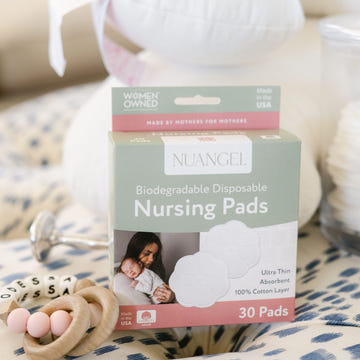
Plant-based Disposable Nursing Pads
$9.99
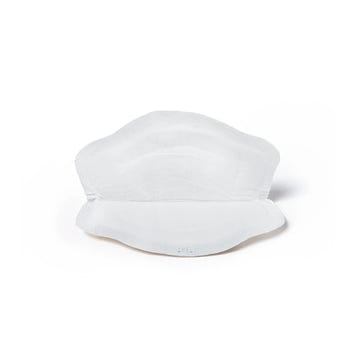
Nursing Pads
$2.99

Lounger Slip Cover - Organic Cotton Waterproof Jersey
$49.00
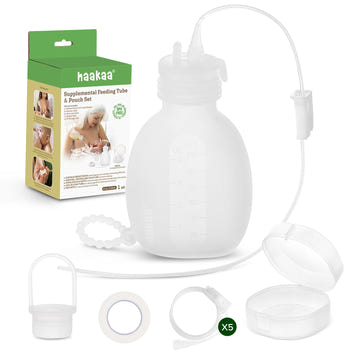
Haakaa Supplemental Feeding Tube & Pouch Set
$33.99

Dairy Duchess
$27.00
Knowing When to Wean from the Nipple Shield
Nipple shields are designed to be a temporary bridge, not a permanent fixture in your breastfeeding journey. The end goal is always to get back to nursing directly at the breast when you and your baby are ready. Think of it as a helpful tool to get you over a hump, not a long-term solution.
Knowing when to start that transition is key, but it should be a gentle and gradual process, not a race to the finish line.
https://www.youtube.com/embed/zk3vzBUenHg
This decision tree can help you figure out if a shield is the right tool for your specific issue, whether it's related to latching mechanics or nipple pain.
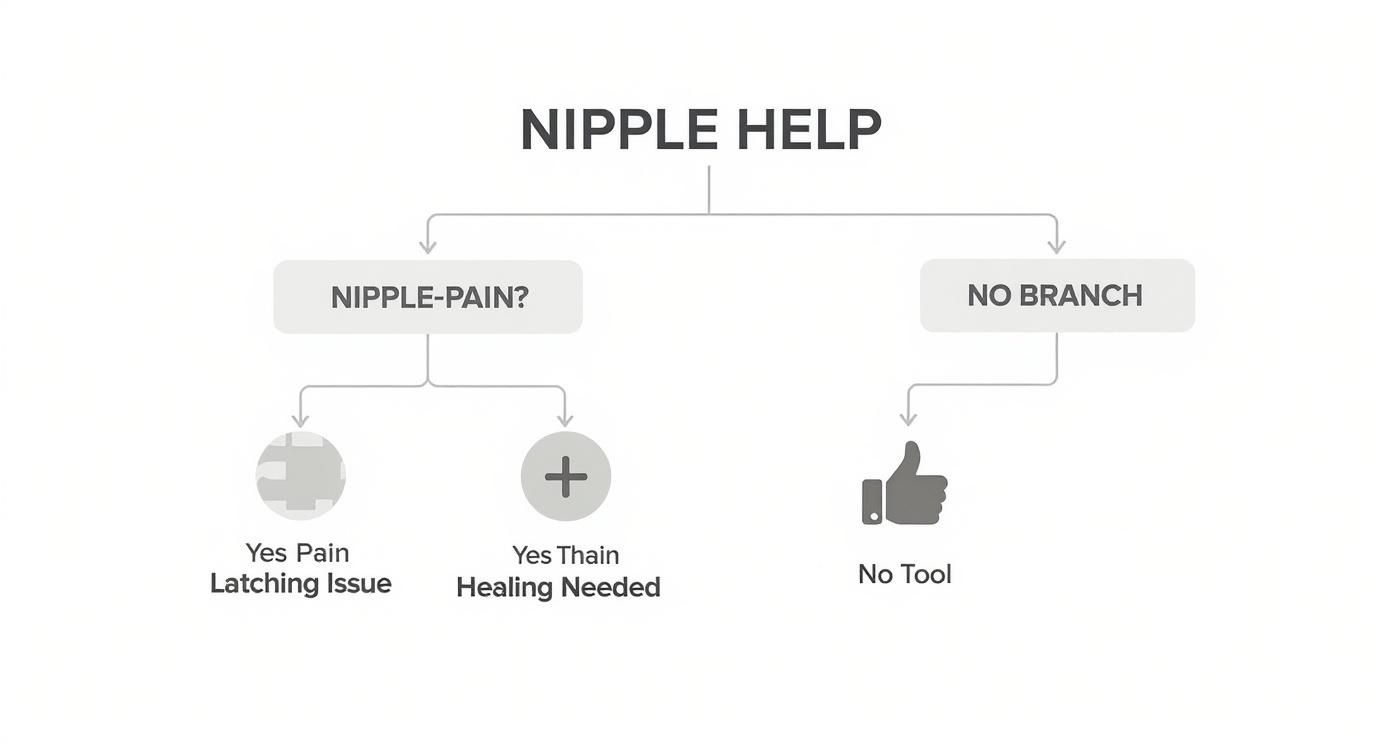
As the visual shows, identifying the root cause—a poor latch versus the need for healing—is the first step toward finding the right support.
Signs You and Your Baby Are Ready
Your baby is often the best guide for when it's time to ditch the shield. If you pay close attention, they’ll start dropping some pretty clear hints.
You might be ready to start weaning if you notice:
- A Stronger Suck: Your baby’s suck feels much more powerful and organized than it did in those first few weeks. They’ve built up their skill and strength.
- Your Nipples Have Healed: If pain was the reason you started using a shield, your nipples now feel healthy and comfortable during feeds. For ongoing protection and healing, many moms find that Silverette nursing cups are a huge help between nursing sessions.
- Baby Is Fussy with the Shield: Your little one might start getting frustrated, pulling the shield off mid-feed, or acting annoyed by it. This is a great sign they might be ready to latch without it.
A Gentle Weaning Process
Coming off a nipple shield doesn’t need to be a stressful, all-or-nothing situation. The trick is to go at a pace that feels comfortable for both of you, keeping feeding time a positive experience.
The most successful approach is almost always gentle and gradual. Think of it as reintroducing your baby to the breast. The goal here is progress, not perfection—celebrate the small victories.
Here are a few practical strategies to help make the transition a bit smoother:
- The Bait-and-Switch: Start your nursing session with the shield on. Once your milk lets down and your baby is relaxed and happily suckling, gently slide the shield off and guide them back to the bare breast.
- Offer the Bare Breast First: Try latching without the shield when your baby is calm and sleepy, not frantically hungry. If they get frustrated, that’s okay—you can always pop the shield on and try again next time.
- Prioritize Skin-to-Skin: Spending lots of time with your baby skin-to-skin encourages their natural rooting and latching instincts. It helps them get reacquainted with nursing without a barrier in between.
If you originally turned to a shield because of pain, making sure your nipples are fully healed is non-negotiable. Using silverettes between feeds can create the perfect environment for recovery and protect you from further irritation. You can learn more about how Silverette nursing cups heal sore nipples and support you on your weaning journey.
Your Top Nipple Shield Questions, Answered
Let's be honest, figuring out breastfeeding gadgets can feel overwhelming. You've got questions, and when it comes to nipple shields, getting the right answers on sizing, potential issues, and when to call in the pros can make or break your experience.
Here are some straightforward answers to the questions I hear most often from new moms.
How Do I Choose the Right Size?
Getting the right size is non-negotiable. It’s the key to your comfort and making sure your baby can actually get enough milk. Nipple shields are sized in millimeters, and it's all about the diameter of your nipple at the base—not your areola.
A good fit feels snug but never pinches or chafes. Think of it like a perfectly fitted shoe. While many brands have sizing charts, nothing beats getting a professional fitting from a lactation consultant to be absolutely sure. This simple step ensures the shield helps, not hinders.
When Should I See a Lactation Consultant?
Ideally, you should talk to a lactation consultant (IBCLC) before you even start using a shield. They are the detectives of the breastfeeding world and can get to the bottom of what’s really causing the trouble, whether it's a tricky latch or persistent pain.
An IBCLC won't just hand you a shield; they'll make sure it's the right size, show you exactly how to put it on, and—most importantly—map out a plan to eventually stop using it. Their goal is to make the shield a temporary bridge, not a permanent fixture.
If you’re dealing with a lot of pain, they might also recommend something to help you heal between feedings, like Silverette nursing cups. These use the natural antimicrobial power of silver to soothe and repair sore, cracked nipples. Pairing expert guidance with a healing tool like silverettes can be a game-changer.
For a safe, chemical-free way to soothe and heal sore nipples, check out the original silver nursing cups from MoogCo. See how the natural properties of 925 silver can bring you comfort on our official product page.
Bring this guide home with $15 off.
Use code READER15 for $15 off →
Featured pick from Moogco
MOOGCO Silver Nursing Cups 925k Silver - Protect Against Sore Breasts And Nipple Irritation
$45.90 $49.90
Shop this pick → Frequently Asked Questions
Can I use a nipple shield for every single feeding?
Technically yes, but it's not ideal long term. Shields are meant to be a temporary bridge while you and your baby work on the underlying latch issue. Using one for every feed can sometimes reduce milk transfer and may affect your supply over time, so it's best to work with a lactation consultant on a weaning plan once things improve.
Will my baby refuse to nurse without the shield once they get used to it?
It's possible, but not inevitable. Some babies do develop a preference for the firm, consistent shape of the silicone shield. The key is to start weaning off it gradually as soon as your latch issues improve, ideally with guidance from a lactation consultant who can help you transition smoothly back to skin-to-skin nursing.
How do I know if the shield is actually helping or hurting my milk supply?
Watch your baby's output and weight gain closely. If your baby is having plenty of wet and dirty diapers and gaining weight on track, the shield is likely working fine. If you notice fewer diapers, sluggish weight gain, or your breasts feel full even after feeds, reach out to a lactation consultant right away to assess milk transfer.
Do I need to sterilize my nipple shield after every use?
Not after every single feed, but you do need to keep it clean. Wash it with warm, soapy water after each use and let it air dry. Sterilize it once a day by boiling or using a sterilizer, especially in the early weeks when your baby's immune system is still developing.
Can I pump with a nipple shield on?
No, nipple shields are designed for direct breastfeeding, not pumping. If you're pumping to maintain supply while using a shield for feeds, remove the shield and pump directly. A properly fitted breast pump flange will give you much better milk removal than trying to pump through silicone.
Is it normal for milk to pool inside the shield during a feeding?
Yes, it's totally normal to see a little milk collect in the tip of the shield during a feed. That's just overflow and doesn't mean your baby isn't getting enough. As long as your baby is swallowing regularly and gaining weight well, that pooling is nothing to worry about.
How long does it usually take to wean off a nipple shield?
It varies widely from a few days to several weeks, depending on your baby and the original issue. Some babies transition off quickly once the latch improves, while others need a more gradual approach. Working with a lactation consultant can speed up the process and give you a personalized weaning plan that actually works for your situation.
From Moogco Studio
Printable and personalized nursery essentials. Designed by moms for moms.


About the Editor
Eda Ulger is the editor at Moogco Baby and a mom of two. She curates and edits our guides so every piece is honest, practical, and genuinely helpful for the early days of motherhood.
Shop This Story
Picks related to this guide, ready to ship from Moogco.
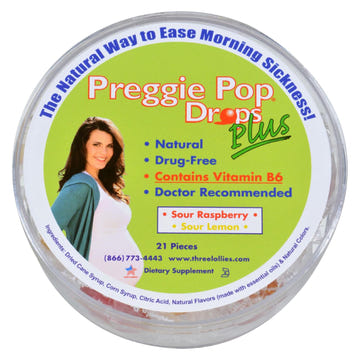
Preggie Drops Plus Morning Sickness Relief Lollies, ...
$10.98

Silicone Breast Milk Storage Bottles
$36.00
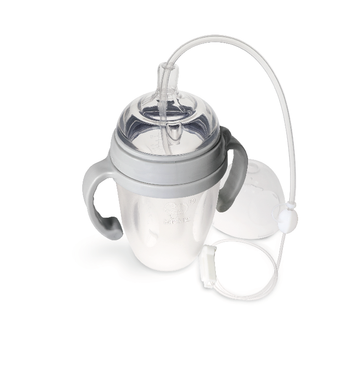
Haakaa Supplemental Feeding Combo
$32.99
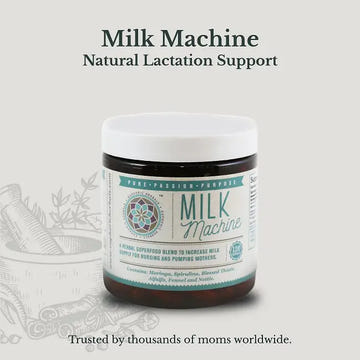
Milk Machine
$19.99
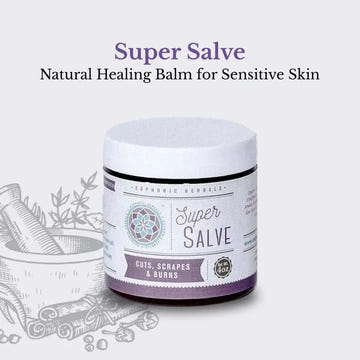
Super Salve
$10.00
Nursing Pillow
$45.00
Pregnancy Pillow - Stone
$219.00
Pregnancy Pillow - Seashell Beige
$219.00
Contoured Nursing Pads (1 Pair) or ( 3 Pair Pack)
$7.25
Muslin Nursing Cover
$19.99