


By the time your baby hits 10 months, you’ve probably found a bit of a groove. Most days will settle into a rhythm of three solid meals, a couple of snacks, and about four to five milk feeds. Your little one is becoming a much more confident eater now, exploring new foods while still relying on breast milk or formula for their core nutrition.
What Your 10 Month Old Needs Nutritionally
Feeding a 10-month-old is a whole new ballgame! This is a huge month for development. You’ll likely see them mastering the pincer grasp—that neat little trick of picking up small things with their thumb and forefinger. This skill makes it the perfect time to let them try self-feeding.

At this stage, their curiosity is really taking off. They're way more interested in different tastes and textures, opening the door for you to introduce a wider variety of foods.
Bottles, bowls, and baby-led picks
Mealtime, simplified
Take $15 off at checkout, applied automatically when you shop through this link.
Shop with READER15 →Free US shipping over $100. Code applies automatically at checkout.
The main challenge is balancing their growing love for solids with their ongoing need for milk. While real food is becoming a bigger player, breast milk or formula is still the MVP, delivering the essential fats, vitamins, and calories that fuel their incredible growth and brain development.
Big Changes in Their Eating Habits
Around ten months, your baby's day starts to look a lot more like a "real" mealtime schedule. They're moving beyond just having purees here and there and are now joining in for breakfast, lunch, and dinner. It's the ideal moment to introduce chunkier textures and let them get a little more hands-on in the high chair.
According to CDC nutrition data, most babies this age eat solids three times a day, with two or three snacks mixed in. Breast milk or formula feeds still happen about four to five times daily. If your baby is formula-fed, they'll probably be drinking somewhere between 24 and 32 ounces over a 24-hour period. You can find more details on these recommendations on The Bump.
A consistent schedule does more than just organize your day. It helps your baby learn to recognize when they're hungry and when they're full—a foundation for a healthy relationship with food for life.
Of course, these are just guidelines. Every baby is unique, so the best thing you can do is tune into their specific cues. Paying attention to their signals is key, and you can get better at it by understanding the feeding cues of your baby in our detailed guide. This ensures they’re getting exactly what they need, right when they need it.
Daily Nutrition Snapshot for a 10 Month Old
Here’s a quick-glance table to help you visualize what a typical day of eating looks like for a 10-month-old.
| Nutrient Source | Recommended Frequency | Typical Amount Per Day |
|---|---|---|
| Breast Milk or Formula | 4-5 times per day | 24–32 ounces |
| Solid Meals | 3 times per day | 3–4 tablespoons per meal |
| Snacks | 2-3 times per day | Small, finger-food portions |
| Water | Offered with meals | 4–8 ounces in a sippy cup |
Think of this as a flexible framework, not a rigid rulebook. Your baby’s appetite will naturally vary from day to day, and that's completely normal.
Sample Feeding Schedules You Can Actually Use
Let's move from theory to what a real day might look like. It's easy to get overwhelmed by schedules, but the secret is to stay flexible. Think of these as a starting point—a kind of blueprint you can adapt to your own life. Your baby’s personality, their unique hunger cues, and your family’s rhythm are what will ultimately shape the perfect 10 month feeding schedule.
I've laid out two examples below, one for a breastfed baby and another for a formula-fed baby. You'll notice they both follow a similar pattern: three core meals, a couple of snacks or milk feeds, and lots of room for adjustment. The biggest difference is simply how and when milk feeds fit into the day.
This timeline gives you a quick snapshot of how a typical day flows, spacing out meals and milk to keep your little one happy and well-fed from morning to night.
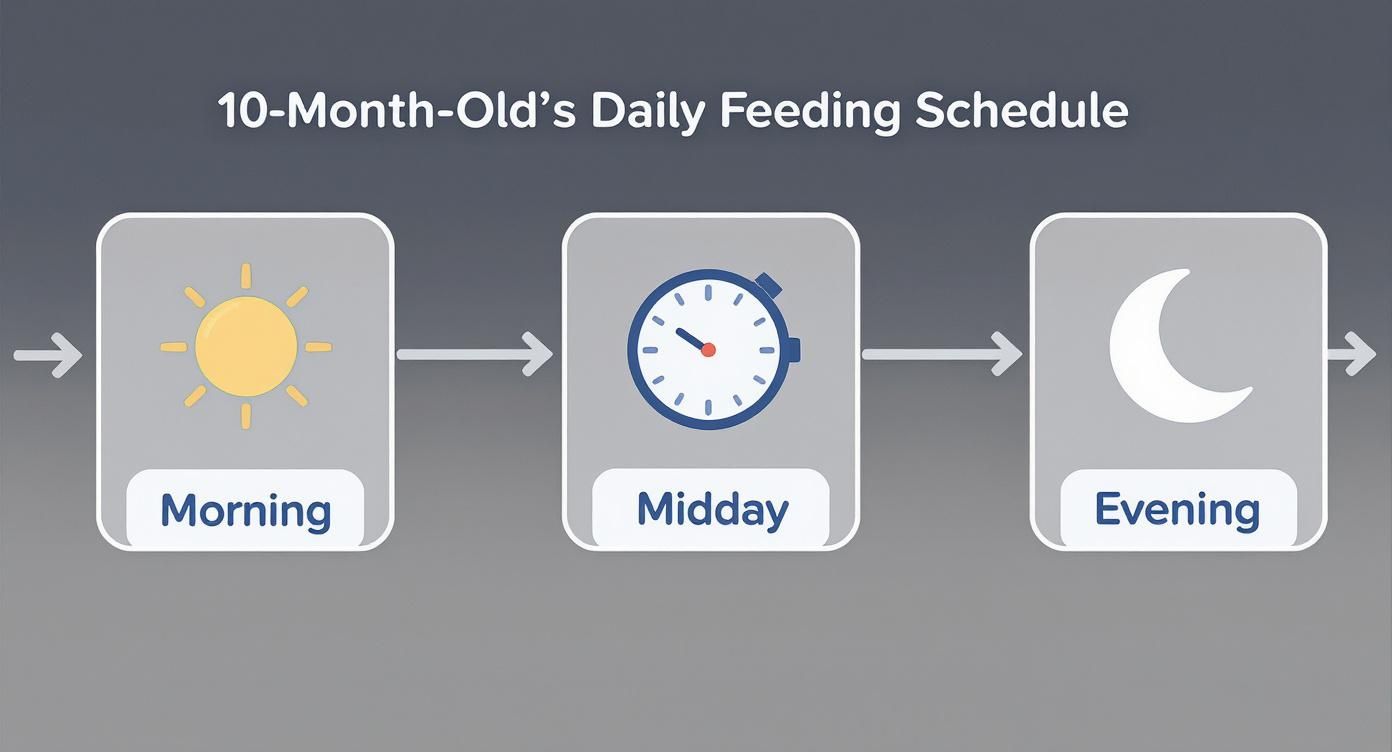
As you can see, it's all about balance—making sure they get plenty of nutrition from both solids and milk without one overpowering the other.
A Day in the Life for a Breastfed Baby
When you're breastfeeding, a great strategy is to nurse about 30-60 minutes before offering a solid meal. This ensures they get their primary source of nutrition from you first, but it doesn't fill their little tummy so much that they refuse the food you’ve prepared.
Here’s one way it could play out:
- 7:00 AM: Wake-up and nurse. A cozy start to the day.
- 8:00 AM: Breakfast. Think 2-4 tablespoons of iron-fortified oatmeal swirled with some mashed banana.
- 10:00 AM: A quick nursing session right before their morning nap.
- 12:30 PM: Lunchtime! Offer something like 1/4 cup of tender shredded chicken, soft-cooked carrot sticks, and a few chunks of ripe avocado.
- 2:30 PM: Nurse upon waking from their afternoon nap.
- 5:00 PM: Dinner. Try some flaky baked salmon with mashed sweet potato and steamed green beans cut into small, safe pieces.
- 6:45 PM: The final nursing session of the day, a key part of your wind-down routine before bed.
Don’t forget that every baby’s appetite is different day-to-day. If your little one seems hungry between meals, it's perfectly fine to offer a healthy finger food snack, like tiny pieces of soft cheese or some whole-milk yogurt melts.
This kind of rhythm helps maintain your milk supply while still giving your baby plenty of opportunities to explore new tastes and textures. If you're just starting this journey with a younger baby, it can feel like a big transition. For those early stages, you might find this guide on establishing a feeding schedule for newborn babies really helpful.
A Day in the Life for a Formula-Fed Baby
With formula, you know exactly how much your baby is drinking, which gives you a bit of a different approach. Some parents offer the bottle right with the meal, while others prefer to keep them separate. Here’s a common schedule where the bottle comes about an hour before solids.
- 7:00 AM: Wake-up call and a 6-8 ounce bottle.
- 8:15 AM: Breakfast is served. How about some fluffy scrambled eggs with small strips of whole-wheat toast topped with a thin layer of avocado?
- 11:30 AM: Pre-nap bottle (6-8 ounces).
- 1:00 PM: Lunch. You could serve some deconstructed mini turkey meatballs with soft-cooked pasta and a side of steamed peas.
- 3:30 PM: Afternoon bottle (4-6 ounces). This one might be a bit smaller, depending on how big lunch was.
- 5:30 PM: Dinner. A great option is mashed lentils mixed with soft-cooked quinoa and roasted zucchini spears for easy grabbing.
- 7:00 PM: The final 6-8 ounce bottle to get them ready for a good night's sleep.
Remember, these schedules are meant to be bent and adapted. A teething baby might lean heavily on their milk one day, while a baby hitting a growth spurt might seem like a bottomless pit for both food and milk. The best thing you can do is follow their lead while providing a comforting, predictable, and nutritious routine.
Getting Creative with Your Baby's Meals
Once you've settled into a good 10 month feeding schedule, the real fun begins. Mealtimes can now become a sensory playground, and you get to watch your little one explore all sorts of new flavors and textures. It's so rewarding!
At this age, many babies are itching for more independence and are ready to move past simple purées. The goal now is to offer a variety of soft chunks and finger foods that encourage self-feeding. This isn't just about nutrition; it's about building their fine motor skills and helping them learn to chew properly.
Taking Textures to the Next Level
Ten months is a huge milestone for textures. While you don't have to ditch purées entirely, the focus can really shift to foods they can grasp, mash with their gums, and move around in their mouths.
An easy first step is to simply mash foods with a fork instead of blending them, which leaves some nice, soft lumps. From there, you can start dicing soft-cooked foods into pea-sized pieces. This is perfect for practicing that pincer grasp they've been working so hard on.
Here are a few ideas to get you started:
- Fruits: Super ripe, soft fruits are your best friend. Think small chunks of banana, avocado, and mango. Steamed and diced pears or apples are also fantastic, as are quartered blueberries or raspberries.
- Vegetables: I always found steaming or roasting veggies until they're fork-tender was the way to go. Sweet potato spears, broccoli florets, diced carrots, and zucchini sticks are usually big hits.
- Proteins: Finely shredded chicken or turkey, flaky baked salmon, and scrambled eggs are all great options. Don't forget plant-based proteins like mashed lentils or beans—they’re soft and easy for little ones to handle.
- Grains: It's time to think beyond baby cereal! Offer little pieces of whole-wheat toast with a thin layer of avocado, well-cooked pasta spirals, or soft, clumpy quinoa.
Making this leap from smooth purées to more solid foods is a pretty big deal in their development. If you're looking for more guidance, our guide on introducing solid foods to your baby has some extra tips.
Easy Meal and Snack Ideas for Your 10 Month Old
Keeping mealtimes interesting doesn't mean you have to become a gourmet chef overnight. Honestly, some of the biggest successes come from simple, deconstructed meals.
To give you a little inspiration, I've put together a few easy-to-prepare ideas that are both nutritious and baby-approved.
| Mealtime | Option 1 | Option 2 | Option 3 |
|---|---|---|---|
| Breakfast | Scrambled eggs with small avocado cubes | Iron-fortified oatmeal with mashed berries | Whole-milk Greek yogurt with soft peach chunks |
| Lunch | Shredded chicken with steamed carrot sticks | Deconstructed mini turkey meatballs with pasta | Mashed chickpeas with roasted zucchini spears |
| Dinner | Flaky baked salmon with mashed sweet potato | Lentil and quinoa mash with soft broccoli | Tofu cubes sautéed in a little olive oil |
| Snacks | Small pieces of soft cheese | Whole-milk yogurt melts or puffs | Very ripe pear spears or banana slices |
Just mix and match these ideas based on what you have on hand. The key is variety!
A quick but important reminder: solid food is still complementing their main source of nutrition. The World Health Organization (WHO) makes it clear that breast milk or formula should still provide at least half of your baby's energy needs between 6 and 12 months. This balance is so important.
By offering a diverse menu, you’re doing more than just filling their tummy; you're setting the stage for a lifetime of healthy eating habits. The best advice I can give is to keep it fun and low-pressure. Celebrate every little taste and texture they're willing to try.
Balancing Milk Feeds with Solid Foods
Even as your 10-month-old gets more adventurous in their high chair, remember that breast milk or formula is still their main source of nutrition. Think of solids as the exciting opening act, but milk is the headliner—providing the crucial fats, vitamins, and hydration they need to thrive.
The trick is finding a rhythm where solids complement milk, rather than compete with it. A great rule of thumb I always share with parents is to offer a milk feed about 30 to 60 minutes before a solid meal. This ensures your little one gets their most important nutrition first but still has enough of an appetite to be curious about the food on their tray.
How Much Milk Do They Really Need?
It's the question on every parent's mind: is my baby getting enough milk now that they're eating more solids? At ten months, most babies do well with around 24 to 32 ounces of formula or breast milk over a 24-hour period. For nursing moms, that usually works out to about four or five good breastfeeding sessions a day.
This isn't just guesswork; research backs it up. One study showed that babies in this age range consumed an average of 25 to 26 ounces of breast milk daily, highlighting just how vital it still is. If you're nursing and just getting into the groove with solids, our step-by-step guide to starting solid foods while breastfeeding can help you navigate this transition smoothly.
You've probably heard the saying, "Food before one is just for fun." There's a lot of truth to that! While solids are definitely providing some nutrition, their main job right now is to teach chewing, build motor skills, and introduce your baby to a whole new world of tastes and textures.
Many moms find joy in nursing well beyond the first year. If that's your path, it can be helpful to learn more about the unique journey of breastfeeding a toddler.
Transitioning Away from Night Feeds
By ten months, most healthy babies who are getting enough calories during the day are physically ready to sleep through the night without a feeding. If you're ready to get some uninterrupted sleep back, now is a fantastic time to gently start weaning those middle-of-the-night wake-up calls.
So, how do you know if your baby is ready? Look for these signs:
- They're a great daytime eater: Your baby is consistently eating three solid meals a day on top of their regular milk feeds.
- Waking seems like a habit: They stir at the same time every night, have a quick "snack," and fall right back to sleep. This is often more about comfort than true hunger.
- Daytime feeds are rushed: They seem too distracted by the world around them to settle in for a full milk feed during the day.
When you're ready to start, the key is to go slow. You can gradually reduce the amount in their nighttime bottle or shorten your nursing session by a minute or two every few nights. A gentle, gradual approach is always the kindest way to make a change.
Solving Common Feeding Challenges
Even with a perfect 10 month feeding schedule, you're bound to hit a few bumps in the road. It happens to all of us. One day your baby can't get enough avocado, and the next, they're looking at it like you've offered them poison. This is all part of the journey as they discover their own little personality and preferences.
The best thing you can do is stay calm and try not to let mealtime become a power struggle. If your baby refuses a food, just calmly take it away without making a fuss. You can always try again in a few days. Trust me, adding pressure usually just makes things worse and can create some not-so-great feelings about food down the line.
Instead, try to make meals a positive, relaxed time. Sit down and eat with your baby as often as you can—they learn so much by watching you enjoy your food. This picky phase is almost always temporary. If you're running out of ideas, you might find some good inspiration in these healthy snack ideas for picky eaters.
Understanding Gagging Versus Choking
Okay, let's talk about one of the scariest parts of introducing solids: the fear of choking. It’s so important to know the difference between gagging, which is totally normal, and actual choking, which is a real emergency.
- Gagging is noisy. You’ll hear your baby coughing, sputtering, or making retching sounds. Their little face might get red and their eyes may water, but they are actively trying to move the food around. It’s their body’s natural defense mechanism kicking in.
- Choking is silent. This is the scary one. A baby who is choking can't make noise because their airway is blocked. They might look panicked and their skin could start to change color.
Gagging is actually a good sign! It means their gag reflex is doing its job, protecting them as they learn to handle new textures and bigger pieces of food. When it happens, your best move is to stay calm and give them a second to work it out themselves.
Managing Digestive Troubles Like Constipation
As more solids get added to the menu, you’ll probably notice some changes in the diaper department. Constipation is pretty common while their digestive system gets used to the new workload.
If you see your baby straining or notice their poops are hard and pellet-like, a few simple tweaks to their diet can make a world of difference.
Don’t get discouraged if your feeding journey has a few hiccups. Every baby moves at their own pace, and figuring out what works is all about trial and error. Your best tools are patience and a positive attitude.
Try introducing more "P" fruits into their meals. Think prunes, pears, peaches, and plums—they're fantastic natural laxatives. Offering a little water in a sippy cup with their meals can also help get things moving. Of course, if the constipation doesn't get better, it’s always a good idea to give your pediatrician a call.
And if you're facing other hurdles, like a sudden strike against the bottle, you can get more tips on how to handle it by reading about navigating bottle refusal.
Your Top Questions Answered
Just when you feel like you've finally mastered your baby's feeding routine, they hit a new stage and everything changes. It's totally normal to have questions pop up as you navigate the 10 month feeding schedule. Here are some of the most common concerns I hear from parents, along with straightforward, practical advice.
How Much Water Does My 10-Month-Old Need?
At this age, you can start offering around 4 to 6 ounces of water a day. The perfect time to do this is during their solid food meals.
Serving water in a sippy cup or an open cup not only helps with hydration but also gets them practicing important new motor skills. It can be a real game-changer for keeping constipation at bay, too.
Just remember, water is a supplement, not a replacement. Breast milk or formula should still be their main drink for nutrition and hydration. It's also best to skip the juice—it’s full of sugar and doesn't offer the same benefits as actual fruit.
My Baby's Appetite Is All Over the Place. Is That Normal?
Yes, absolutely! It's completely normal for a 10-month-old's appetite to go up and down. One day they might seem like a bottomless pit, and the next, they'll barely touch their food. There are so many reasons for this:
- Growth spurts: They can get ravenously hungry seemingly overnight.
- Teething: Painful gums can make anyone picky. They might prefer the comfort of milk over chewing solids.
- Big developments: When they're focused on learning to crawl or pull themselves up, food can seem like a boring distraction.
- Feeling under the weather: Even a small sniffle can put them off their food for a day or two.
Try not to stress about a single meal or even a single day's intake. Look at the big picture over a full week. If your baby is happy, active, and growing well, those daily fluctuations are just part of the journey.
When Is the Right Time to Introduce Allergenic Foods?
If you haven't started already, now is an excellent time. Current pediatric advice encourages introducing common allergens like eggs, peanuts, fish, and soy soon after your baby starts solids.
The key is to do it slowly and carefully. Introduce only one new allergen at a time, and make sure it’s in a form they can handle safely. Think a tiny bit of scrambled egg or a very thin layer of smooth peanut butter mixed into a puree they already love.
Then, wait 3 to 5 days before trying another new one. This pause gives you time to watch for any potential reactions, like hives, a rash, or an upset stomach. It’s always a good idea to chat with your pediatrician before starting, especially if food allergies run in your family.
At MoogCo, we know that feeding your baby is a journey, and for breastfeeding moms, that journey should be comfortable. If you're dealing with soreness, our Original Silver Nursing Cups provide a natural, chemical-free way to soothe and protect your nipples. Find relief and get back to confident, comfortable nursing. Check out our trusted nursing cups here: https://www.amazon.com/Nipple-Shields-Nursing-Newborn-Essentials/dp/B08VKRMXGZ
Bring this guide home with $15 off.
Use code READER15 for $15 off →
Frequently Asked Questions
Should I Give Solids Before or After Milk at This Age?
At 10 months, many parents find success offering milk 30 to 60 minutes before solid meals. This ensures your baby gets their primary nutrition from breast milk or formula first, but leaves them interested enough to explore solid foods. Some families prefer offering bottle and solids together, so feel free to experiment and see what works best for your little one's appetite and routine.
Can My 10-Month-Old Eat Three Full Meals a Day?
Absolutely! Most 10-month-olds are ready for a breakfast, lunch, and dinner routine, just like the rest of the family. Each meal might be small, around 3 to 4 tablespoons, but the consistency helps them develop healthy eating patterns. Remember that milk is still their main source of nutrition, so solids are complementary at this stage.
What If My Baby Refuses Breakfast in the Morning?
Some babies just aren't morning eaters, and that's completely okay. Try offering a milk feed first thing, then wait 30 to 60 minutes before presenting breakfast. If they're still not interested, don't stress about it. You can offer a mid-morning snack instead and adjust the rest of the day's meals accordingly.
How Do I Know When My Baby Is Ready for Chunkier Foods?
Watch for signs like your baby moving food around in their mouth, making chewing motions, and showing interest in what you're eating. If they're handling mashed foods well and can pick up small pieces with their pincer grasp, they're likely ready for soft chunks. Start with fork-mashed textures and gradually work up to pea-sized soft pieces.
Is It Normal for My Baby to Want to Feed Themselves at Every Meal?
Yes, this is a wonderful sign of growing independence! At 10 months, many babies want total control over what goes in their mouths. Embrace the mess and let them practice self-feeding with safe finger foods. You can always offer a loaded spoon alongside finger foods if you want to ensure they're getting enough nutrition while they're learning.
Should I Drop a Milk Feed Now That Solids Are Increasing?
Not yet. At 10 months, your baby still needs about four to five milk feeds per day, totaling 24 to 32 ounces if formula-feeding. Milk remains their primary source of nutrition, so keep those feeds consistent even as solids become more interesting. Most babies naturally drop a feed closer to 12 months.
What Are Good Snack Ideas for a 10-Month-Old?
Great snack options include small pieces of soft cheese, whole-milk yogurt, ripe banana slices, steamed apple wedges, or whole-grain crackers. Keep portions small and focus on nutrient-dense foods that complement their meals. Snacks should fill the gaps between meals without replacing milk feeds or taking away their appetite for lunch or dinner.
Can I Start Using a Sippy Cup for Milk at This Age?
You can introduce a sippy cup or open cup for water at meals, but most experts recommend keeping breast milk or formula in a bottle or nursing until closer to 12 months. This helps ensure your baby gets enough of their primary nutrition. Once they hit their first birthday, you can transition milk to a cup and introduce whole cow's milk if your pediatrician agrees.
From Moogco Studio
Printable and personalized nursery essentials. Designed by moms for moms.


About the Editor
Eda Ulger is the editor at Moogco Baby and a mom of two. She curates and edits our guides so every piece is honest, practical, and genuinely helpful for the early days of motherhood.














































































































