


A baby carrier is a wearable piece of fabric or structured gear that holds your baby close to your body, keeping your hands free while supporting healthy hip and spine positioning. Babywearing soothes fussy babies, makes everyday tasks easier, and supports bonding, but the right carrier depends on your baby's age, your body, and how you plan to use it.
This guide breaks down the main types of carriers, how to choose by age, and the safety rules every parent should know, with picks from our Baby Carriers & Wraps collection.
Why parents love babywearing
- Calmer babies. The closeness, warmth, and gentle motion mimic the womb and often reduce crying and fussiness.
- Hands-free parenting. Cook, shop, or chase a toddler while your baby naps on you.
- Bonding and breastfeeding. Skin-to-skin closeness supports bonding and can make discreet nursing easier.
- Healthy development. A good carrier supports the natural M-position for healthy hips.
Picks From This Story
Picks related to this guide, ready to ship from Moogco.
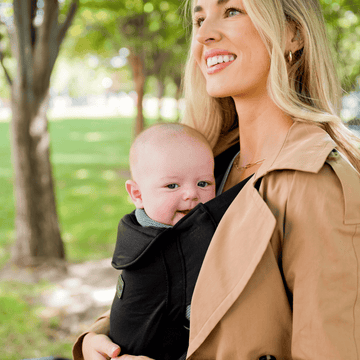
The Pearl Wrap Carrier
$55.00
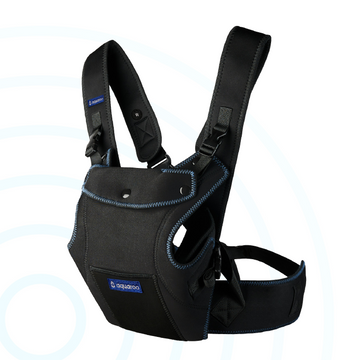
Aquaroo Baby Carrier Water Baby Carrier 12-30 lb
$175.00
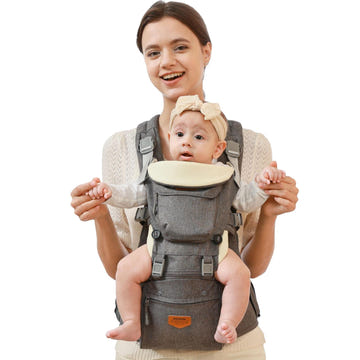
SUNVENO Ergonomic Baby Carrier 3-in-1 Hip Seat
$79.99
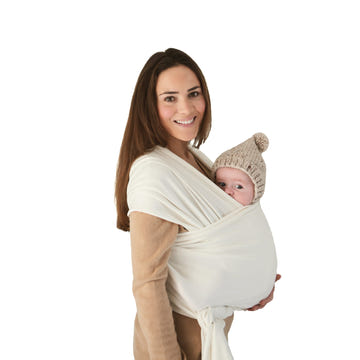
Mushie Baby Wrap organic cotton universal fit with p...
$49.99
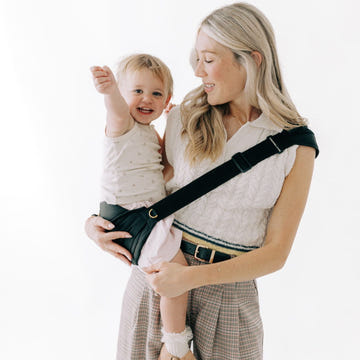
Tushbaby Liftoff Toddler Sling
$72.00
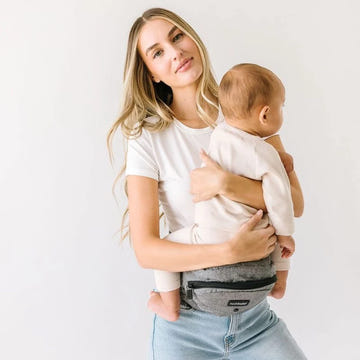
The Tushbaby Hip Carrier
$75.00
The main types of baby carriers
| Type | Best for | Pros | Learning curve |
|---|---|---|---|
| Stretchy wrap | Newborns, snug naps | Soft, womb-like, fully adjustable | Medium |
| Ring sling | Quick ups and downs, hip carry | Fast, one-shoulder, packs small | Low to medium |
| Soft structured carrier | Longer outings, bigger babies | Buckles on fast, padded support | Low |
| Hip seat | Older babies and toddlers | Eases back strain, quick on and off | Very low |
How to choose a carrier by age
Newborn (0 to 4 months): wraps and slings
Newborns do best in something soft that hugs their whole body. A stretchy Baby Wrap by Mushie ($49.99) molds to your little one and supports the head and neck, while the WildBird Aerial Carrier ($178) works as an airy wrap-style sling for warm days.

3 to 12 months: soft structured carriers
Once your baby has head control, a buckle carrier is fast and supportive. The SUNVENO Ergonomic 3-in-1 Carrier ($79.99) offers multiple positions, and the Baby K'tan Breeze ($60.95) gives wrap comfort with no tying.
Toddlers: hip seats
For heavier little ones who want up and down constantly, the Tushbaby Hip Carrier ($75) takes the strain off your arms and back.

More Related Picks
A few more favorites from the same collection.
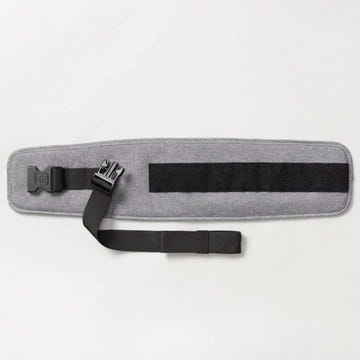
The Waistband Extender
$4.99
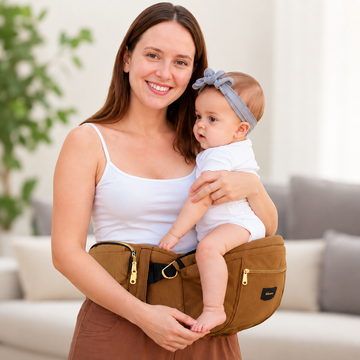
SUNVENO Easy Hold Baby Hipseat Carrier 0-36 months C...
$49.99
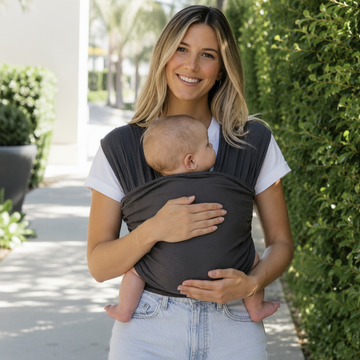
Baby K'tan Breeze Baby Carrier Charcoal cotton mesh ...
$64.95
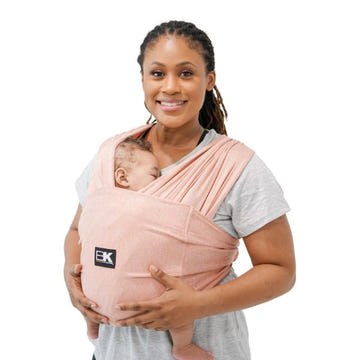
Baby K'tan Active Yoga Baby Carrier Heather Coral
$49.99
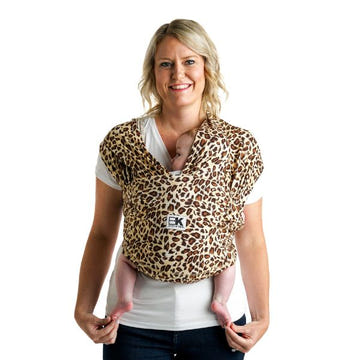
Baby K'tan Print Baby Carrier Leopard Love ready-to-...
$39.99
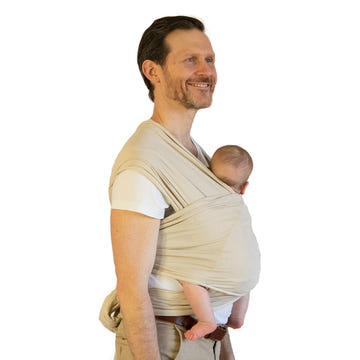
Organic Cotton Baby Wrap
$60.00
Babywearing safety: the T.I.C.K.S. rule
Follow these five checks every time you wear your baby:
- Tight: the carrier hugs your baby close, with no slack that lets them slump.
- In view: you can always see your baby's face.
- Close enough to kiss: their head is near your chin.
- Keep chin off chest: there is a finger's width under the chin so the airway stays open.
- Supported back: their back is supported in its natural position, knees higher than the bottom.
Quick buying checklist
- Does it fit your baby's current weight and age?
- Does it support the M-position (knees above bottom)?
- Is it comfortable for the wearer's shoulders and back?
- Is it easy to put on without help?
- Is the fabric breathable for your climate?
Frequently asked questions
What is the best type of baby carrier for a newborn?
For newborns, a stretchy wrap or a ring sling is usually best because it molds closely to a small body and supports the head and neck. Most stretchy wraps and slings work from birth (around 7 to 8 lbs). Soft structured carriers are great too once they have a newborn insert or an adjustable panel.
Is babywearing safe for my baby's hips?
Yes, when the carrier holds your baby in the M-position, with knees higher than the bottom and thighs supported. The International Hip Dysplasia Institute recommends carriers that allow this natural seated spread-squat position. Avoid carriers that leave the legs dangling straight down.
How long can I wear my baby in a carrier?
There is no strict time limit as long as your baby is positioned safely, breathing freely, and is not overheating. Check in regularly, follow the T.I.C.K.S. rule (Tight, In view, Close enough to kiss, Keep chin off chest, Supported back), and take breaks as you both need them.
What is the difference between a wrap, a sling, and a structured carrier?
A wrap is a long piece of fabric you tie on for a custom, snug fit. A ring sling is worn over one shoulder and adjusts with two rings for quick ups and downs. A soft structured carrier has buckles and padded straps for fast, supportive wearing, often best for longer outings and bigger babies.
When can my baby face forward in a carrier?
Most babies are ready to face outward around 5 to 6 months, once they have strong, steady head and neck control. Before that, keep them facing in toward your chest.
For Moogco Mamas
Take 15% off your first order
Use code MAMA15 at checkout. Free US shipping on orders $100+.
Shop Baby CarriersThe bottom line
For newborns, start with a stretchy wrap or sling. As your baby grows, a soft structured carrier or hip seat will carry you through the toddler years. Browse the full range in our Baby Carriers & Wraps collection and find the fit that feels right for your family.
Shop This Story
Picks related to this guide, ready to ship from Moogco.
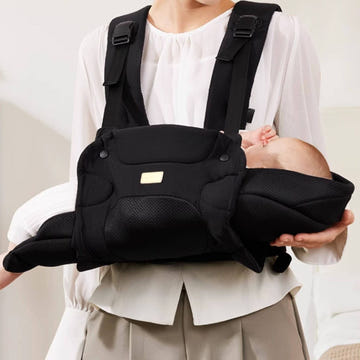
Front-carry Baby Carrier For Newborns
$255.09
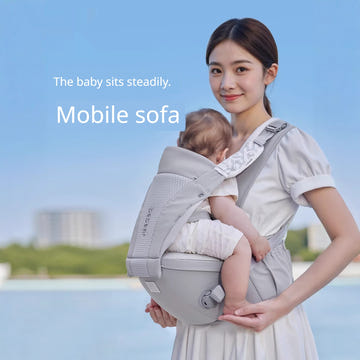
New Baby Waist Stool Lightweight Carrier
$225.61
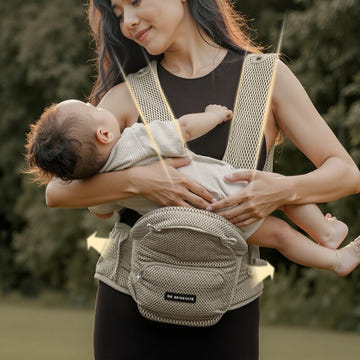
Lightweight And Breathable 3-in-1 Baby Carrier
$372.02
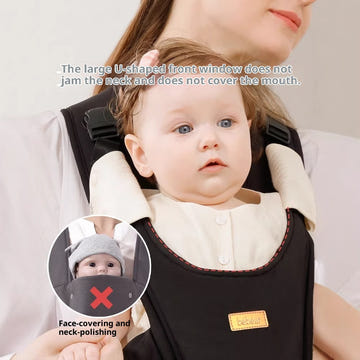
Lightweight Baby Carrier And Waist Stool
$177.98
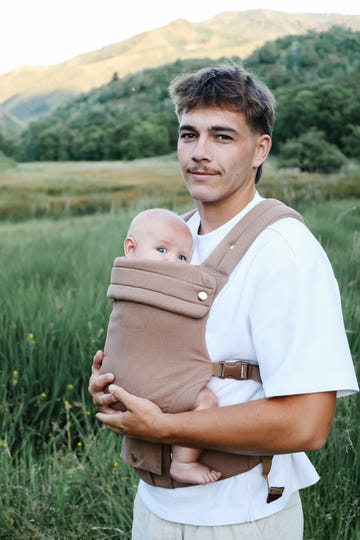
Coco Carriers Coco Desert Baby Carrier with Pocket 7...
$165.00
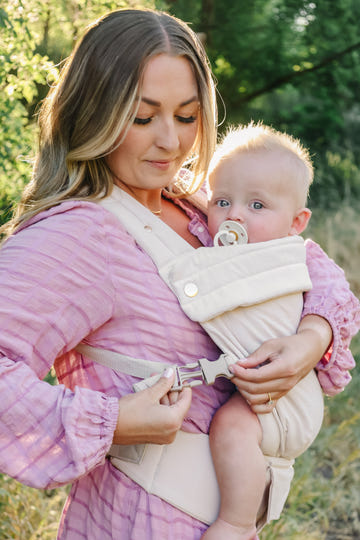
Coco Carriers Archive Coco Cream Baby Carrier 63.5-i...
$165.00
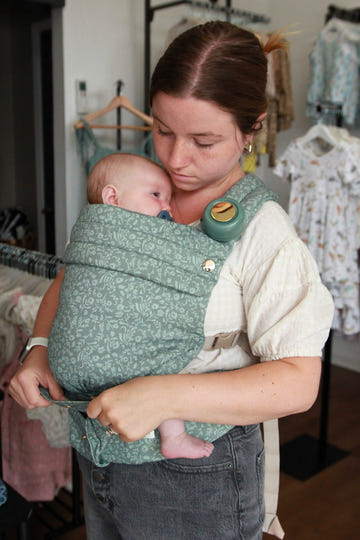
Coco Carriers Coco Bloom Baby Carrier With Pocket 63...
$168.00
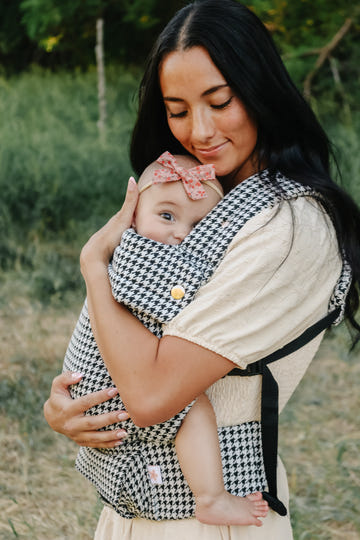
Coco Carriers Archive Coco Houndstooth Carrier 7-35l...
$165.00

Finn + Emma Macrame Baby Swing Organic Cotton Boho 4...
$99.00
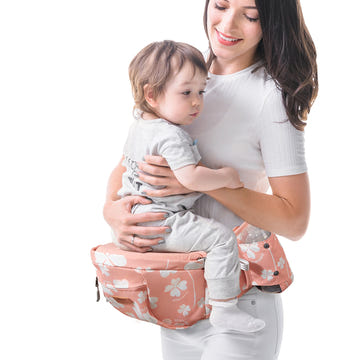
SUNVENO Ergonomic Hipseat 3 to 36 Months Up to 30 lbs
$42.99