


Your Legal Right to Pump at Work: The PUMP Act Explained in Plain English (2026)
Quick Answer: Under the PUMP Act, most U.S. employees have the federal legal right to reasonable break time and a private, non-bathroom space to pump breast milk at work for up to one year after their baby is born. The law covers the vast majority of workers, including many salaried and exempt employees who were previously left out. Employers with fewer than 50 employees may claim a hardship exemption, but they must prove it. Many states offer even stronger protections. This article is legal information, not legal advice. For advice specific to your situation, please consult a licensed employment attorney.
If you are heading back to work and wondering exactly what your pump act breastfeeding rights at work look like in practice, you are in the right place. We are moms too, and we know how overwhelming it can feel to navigate HR conversations while also figuring out feeding schedules, storage bags, and everything else that comes with a new baby. Let us walk through this together, step by step.
What Is the PUMP Act and Why Does It Matter for Breastfeeding Rights at Work?
The PUMP for Nursing Mothers Act (Providing Urgent Maternal Protections) was signed into law in December 2022 and significantly expanded existing federal breastfeeding workplace protections that had been on the books since 2010. Before the PUMP Act, millions of workers, including teachers, nurses, farmworkers, and many salaried employees, fell through the cracks of the original Break Time for Nursing Mothers law because they were classified as exempt under the Fair Labor Standards Act.
The PUMP Act closed that gap. As of 2026, it remains the foundational federal law protecting your pump act breastfeeding rights at work, and it applies across all 50 states as a minimum floor of protection.
According to the U.S. Department of Labor, approximately 9 million additional workers gained coverage when the PUMP Act passed. That is a significant number of mothers who previously had no federal protection at all.
What Rights Does the PUMP Act Give You at Work?
The law gives you two core rights. Both matter equally, and your employer must provide both.
1. Reasonable Break Time
Your employer must provide reasonable break time each time you need to express breast milk. The law does not define a set number of minutes per break, because every mother and every pumping session is different. In practice, most lactation and workplace experts suggest that 15 to 30 minutes per session, plus travel time to and from the pumping space, is considered reasonable.
These breaks are required for up to one year after your child is born. There is no minimum number of breaks per day specified in the federal law, but the standard expectation is that most nursing mothers need two to three breaks during an eight-hour shift in the early months, tapering off as the baby grows.
One important detail: your employer is not required under federal law to pay you for these breaks if they are distinct from your regular paid rest periods. However, if your employer provides paid breaks to other employees and you use one of those breaks to pump, that time must be paid. Many state laws go further on pay, so check your state rules below.
2. A Private, Non-Bathroom Space
Your employer must provide a space that is shielded from view and free from intrusion by coworkers and the public. Critically, a bathroom does not qualify. A toilet stall, even a private single-occupancy bathroom, does not meet the legal standard. The space must be functional for pumping, meaning it needs to be a place where you can reasonably set up, pump, and store your milk without interruption.
The space does not have to be permanent or dedicated solely to pumping. A conference room that is made available to you consistently, a private office, or a converted storage room with a lock can all qualify, as long as the space is reliably accessible when you need it.
Try Moogco Silver Nursing Cups - natural breastfeeding comfort
Shop NowPicks From This Story
Picks related to this guide, ready to ship from Moogco.

Healthy Horizons Elvie Stride Diaphragms 2 Pack
$21.99
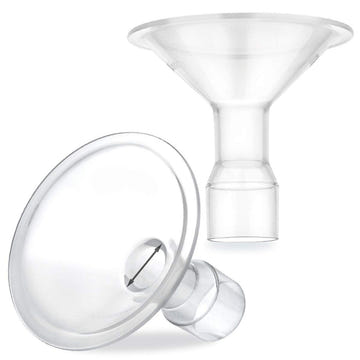
Bae & Bee Boutique Maymom Narrow Neck Flange compati...
$15.00
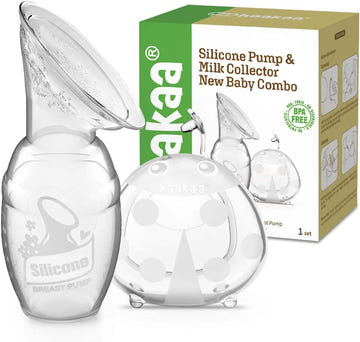
Haakaa Silicone Pump and Ladybug Milk Collector Comb...
$30.32
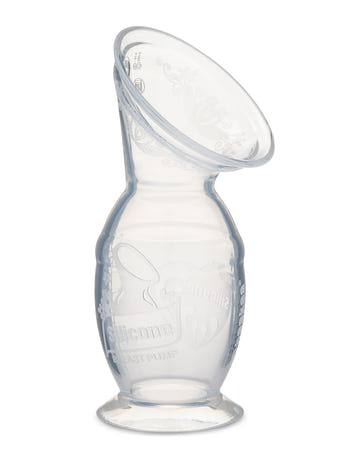
Haakaa Generation 2 Silicone Breast Pump 5 oz Suctio...
$20.99
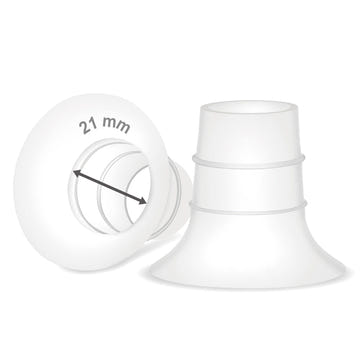
Bae & Bee Boutique Maymom Silicone Medela Flange Ins...
$6.00
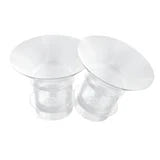
Bae & Bee Boutique Silicone Flange Inserts 10-21mm
$16.00
Who Is Covered Under the PUMP Act?
This is where the 2022 update made the biggest difference. Here is a clear breakdown of coverage as it stands in 2026.
| Worker Type | Covered Under PUMP Act? |
|---|---|
| Hourly (non-exempt) employees | Yes |
| Salaried (exempt) employees | Yes, added by PUMP Act |
| Nurses and healthcare workers | Yes, added by PUMP Act |
| Teachers (public school) | Yes, added by PUMP Act |
| Farmworkers | Yes, added by PUMP Act |
| Airline cabin crew | Yes, added by PUMP Act |
| Remote workers | Yes, applies to home workspace |
| Federal government employees | Covered under separate federal policy |
The law applies to employers covered by the Fair Labor Standards Act, which is the vast majority of U.S. businesses. If you are unsure whether your employer qualifies, the U.S. Department of Labor Wage and Hour Division is the enforcement agency and can help you find out.
For a deeper look at how to set up your entire pumping-at-work routine, including schedules, storage, and what to pack, check out our complete pumping at work guide.
The Under-50-Employees Hardship Exemption
This is the most misunderstood part of the law, so let us be very clear about what it does and does not mean.
Employers with fewer than 50 employees are not automatically exempt. They can claim an exemption only if they can demonstrate that providing the required break time and space would impose an undue hardship. The burden of proof is on the employer, not on you.
What counts as undue hardship? The law considers factors like the size of the business, the nature of the work, the structure of the workplace, and the financial resources of the company. A small employer would need to show that the disruption or expense is significant and not just inconvenient.
In practice, most small employers can accommodate pumping mothers with minimal effort. Letting you use a private office for 20 minutes three times a day rarely constitutes undue hardship. If a small employer tells you they are exempt without any discussion or documentation, it is worth asking them to put that determination in writing and consulting with an employment attorney or your state labor board.
Also worth noting: even if a small employer successfully claims a federal hardship exemption, your state law may still protect you fully. More on that below.
Save 15% on breastfeeding essentials trusted by 200,000+ moms.
Use code PUMP15 at checkoutMany States Go Further Than Federal Law
Federal law is the floor, not the ceiling. As of 2026, more than 30 states have enacted breastfeeding workplace protection laws that go beyond what the PUMP Act requires. Here are some of the ways state laws frequently expand your rights:
- Longer duration: Some states require break time and space beyond the federal one-year limit, with some extending to 18 months or two years post-birth.
- Paid break time: Several states require that pumping breaks be paid, regardless of whether they overlap with standard rest periods.
- No small-employer exemption: States like California, New York, and Illinois apply their laws to all employers, with no size threshold for exemption.
- Anti-retaliation provisions: Some state laws include stronger anti-retaliation language and faster enforcement timelines than the federal law.
- Written accommodation policies: Certain states require employers to have a written lactation accommodation policy and to provide it to new employees proactively.
To find your state's specific rules, visit your state department of labor website or search for your state name plus lactation accommodation law. The National Conference of State Legislatures also maintains an updated summary of state breastfeeding laws.
More Related Picks
A few more favorites from the same collection.
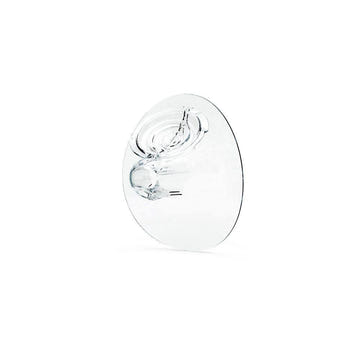
Healthy Horizons Elvie Pump Breast Shields 2 Pack 21...
$29.99
Bae & Bee Boutique Duckbill Valve Pink Replacement F...
$14.00
Healthy Horizons Elvie Pump Seals 2 Pack Spare Diaph...
$16.99
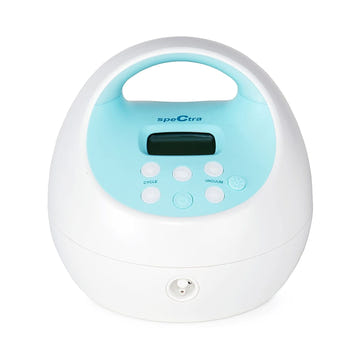
LL Medico Spectra S1 Plus Rechargeable Double Electr...
$216.00
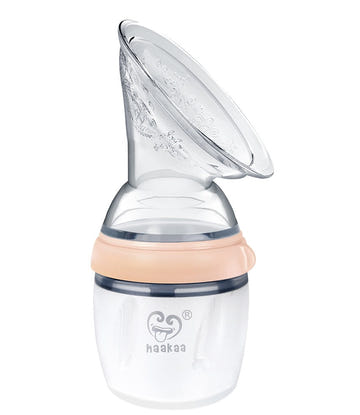
Haakaa Silicone Breast Pump Generation 3 160ml 250ml
$28.99
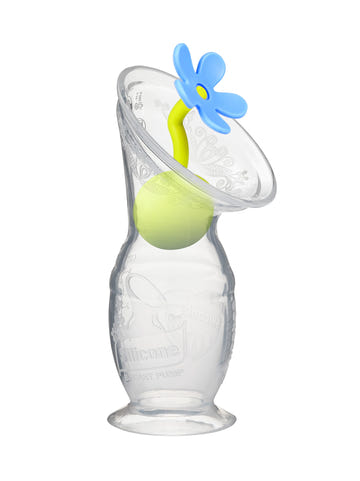
Haakaa Gen 2 Silicone Breast Pump 4 oz with Suction ...
$26.99
Copy-Paste Email Template to Request Pumping Accommodations
You do not have to write this email from scratch. Here is a simple, professional template you can customize. Sending a written request creates a record and often prompts a faster, more formal response from HR.
Subject: Lactation Accommodation Request
Dear [HR Contact Name or HR Department],
I am writing to formally request lactation accommodations as I prepare to return to work on [your return date]. My baby was born on [birth date], and I plan to continue breastfeeding.
Under the federal PUMP for Nursing Mothers Act, I am entitled to reasonable break time and a private, non-bathroom space to express breast milk for up to one year after my child's birth. I understand that [State] law may also apply and may provide additional protections.
Specifically, I am requesting:
1. Reasonable break time approximately [2 to 3] times during my shift to express breast milk, each lasting approximately [15 to 20] minutes plus travel time to and from the space.
2. A private, non-bathroom space that is shielded from view, free from intrusion, and consistently available when I need it.
I am happy to discuss the details of my schedule and work together to find a solution that works for both of us. Please let me know when we can connect, or feel free to reply in writing.
Thank you for your support.
Sincerely,
[Your Full Name]
[Your Job Title]
[Your Department]
[Your Contact Information]
Save a copy of this email and any responses you receive. If you ever need to file a complaint, documentation is extremely helpful.
Try Moogco Silver Nursing Cups - natural breastfeeding comfort
Shop NowOne more thing: if regular pumping sessions at work are leaving you dealing with soreness or skin irritation, our guide on sore nipples from pumping has practical, gentle solutions that many moms find helpful during those first weeks back.
What to Do If Your Employer Refuses Your Pumping Accommodation Request
First, take a breath. You have options, and you are not alone in this. Here is a step-by-step approach.
Step 1: Document Everything
Write down dates, times, and what was said or denied. Save all emails and texts. If you have a verbal conversation, follow up with an email summarizing what was discussed so there is a written record.
Step 2: Escalate Internally
If your direct manager is the problem, go to HR. If HR is unresponsive, escalate to senior leadership or your company's legal or compliance department. Sometimes a formal written request triggers a different response than a casual conversation.
Step 3: File a Complaint with the Department of Labor
The U.S. Department of Labor Wage and Hour Division enforces the PUMP Act. You can file a complaint online at dol.gov or by calling 1-866-4-US-WAGE. You have two years to file a complaint for non-willful violations and three years for willful violations.
Under the PUMP Act, if your employer refuses, you may be entitled to back pay, compensatory damages, and in some cases punitive damages plus attorney fees. The law also has strong anti-retaliation provisions, meaning your employer cannot fire you, demote you, or otherwise penalize you for asserting your rights.
Step 4: Contact Your State Labor Board
If your state has its own breastfeeding accommodation law, your state labor board or attorney general's office may offer a parallel or faster path to resolution.
Step 5: Consult an Employment Attorney
Many employment attorneys offer free initial consultations and take lactation discrimination cases on contingency, meaning you pay nothing unless you win. Organizations like A Better Balance provide free legal help specifically for working parents navigating these issues.
Remember: this article provides legal information only, not legal advice. Every situation is different. Please consult a licensed employment attorney for guidance specific to your circumstances.
Frequently Asked Questions About PUMP Act Breastfeeding Rights at Work
Does the PUMP Act apply to salaried employees?
Yes. One of the most important changes the PUMP Act made in 2022 was extending coverage to salaried, exempt employees. Before the PUMP Act, only non-exempt (typically hourly) workers had federal pumping protections. Now, teachers, managers, nurses, and other salaried workers are covered as long as their employer falls under the Fair Labor Standards Act.
Does my employer have to pay me for pumping breaks?
Under federal law, pumping breaks do not have to be separately paid unless they coincide with your employer's regular paid rest periods. However, if your employer provides paid short breaks to all employees and you use one to pump, that break must be paid. Many states go further and require all pumping breaks to be compensated, so check your state law for the stronger standard.
What counts as a private space for pumping under the PUMP Act?
A private space must be shielded from view and free from intrusion. A bathroom or toilet stall does not qualify under the law, even if it is a single-occupancy bathroom. The space can be a conference room, private office, converted storage room, or another area, as long as it has a lock or reliable privacy, is functional for pumping, and is consistently accessible when you need it.
How long do PUMP Act protections last?
Federal PUMP Act protections last for one year after your child's birth. This means your employer must provide break time and a private space for up to 12 months from your baby's birthday, regardless of whether you are still breastfeeding exclusively, pumping part-time, or supplementing. Some state laws extend this period, so check your local rules.
Can my employer retaliate against me for requesting pumping accommodations?
No. The PUMP Act explicitly prohibits retaliation. Your employer cannot fire you, demote you, cut your hours, or otherwise penalize you for requesting or using your legal pumping accommodations. If you experience retaliation, document everything and file a complaint with the U.S. Department of Labor Wage and Hour Division. You may also have additional protections under state law or Title VII of the Civil Rights Act.
You Know Your Rights. Now Go Use Them.
Understanding your pump act breastfeeding rights at work is one of the most practical things you can do to protect your breastfeeding journey once you return to work. The PUMP Act gives you a strong federal foundation, your state may give you even more, and you have real options if an employer pushes back.
We are moms too, and we know that the logistical side of pumping at work can feel like a lot on top of everything else. That is exactly why we built tools and resources to help you focus on what matters most: your baby, your body, and your peace of mind.
For everything you need to know about setting up a sustainable pumping routine once you are back at the office, bookmark our complete pumping at work guide. And if soreness is making sessions harder than they need to be, our guide on sore nipples from pumping is full of gentle, effective advice.
You have got this. Less worry. More wonder.
Try Moogco Silver Nursing Cups - natural breastfeeding comfort
Shop NowDisclaimer: This article is intended to provide general legal information about the PUMP for Nursing Mothers Act and related workplace protections. It is not legal advice and does not create an attorney-client relationship. Laws change and vary by location. Please consult a licensed employment attorney for guidance specific to your individual situation.
About the Editor
Eda Ulger is the editor at Moogco Baby and a mom of two. She curates and edits our guides so every piece is honest, practical, and genuinely helpful for the early days of motherhood.
Shop This Story
Picks related to this guide, ready to ship from Moogco.
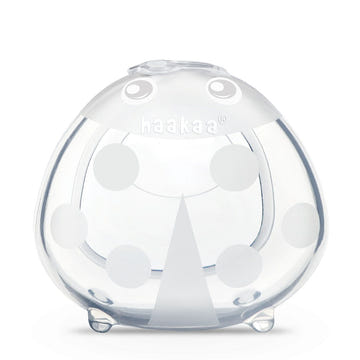
Haakaa Ladybug Silicone Milk Collector 2.5 oz 75 ml
$17.99
Cimilre Breast Shields set of two 21mm 24mm 28mm 32mm
$19.99
Bae & Bee Boutique Maymom Elvie Flange Inserts Semi-...
$6.00
Bae & Bee Boutique 4pc Maymom Silicone Membrane for ...
$10.00
Healthy Horizons Breastfeeding Centers Elvie Pump Sp...
$16.99
Healthy Horizons Maymom Flange Short Inserts 2 Pack ...
$14.99
Healthy Horizons Elvie Stride wearable hands-free br...
$189.99
Healthy Horizons Elvie Double Electric Wearable Brea...
$549.99
Spectra Wide Neck Breast Flange Kit
$15.99
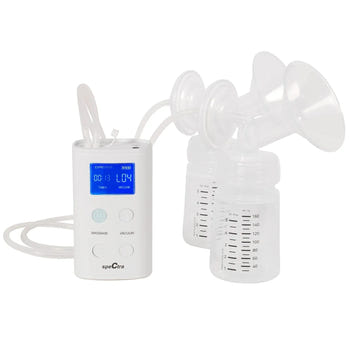
LL Medico Spectra 9 Plus Premier Portable Rechargeab...
$194.00