


Side-Lying Breastfeeding: How to Nurse Lying Down Safely (2026)
The short answer
Side-lying breastfeeding is a nursing position where you and your baby lie on your sides facing each other, chest to chest, so you can feed while your body rests. It is safe for full-term, healthy newborns when you feed on a firm mattress with no loose bedding, pillows, or blankets near the baby, and when the baby is moved back to their own flat, firm sleep surface afterward. It is especially useful after a C-section, during night feeds, and when a forceful letdown is overwhelming your baby.
Somewhere around week three, most of us hit the same wall. Your back aches from hunching over a nursing pillow, the baby wants to feed every ninety minutes, and sitting upright at 3 a.m. under a lamp starts to feel genuinely unsustainable. That is usually the moment a friend, a nurse, or a lactation consultant says the four words that change everything: "have you tried lying down?"
We are moms too, and we remember how strange side-lying breastfeeding felt the first few times. It seemed like something that surely could not be allowed. It is allowed, it is taught in hospitals, and once your body learns it, it gives you something no other position can: rest while you feed.
This guide walks through the setup step by step, the safety rules that actually matter, how to fix a shallow latch when gravity is not helping you, and what to do when it just is not clicking yet.
1. What Side-Lying Breastfeeding Actually Is
About one in three US births is a cesarean, according to CDC birth data, and side-lying is the nursing position lactation consultants recommend most after one, because your baby's weight never rests on the incision.
In the side-lying position, you lie on one side. Your baby lies on their side too, directly facing you, tummy to tummy, with their nose level with your nipple. Nobody is sitting up. Nobody is holding the full weight of a baby with a tired arm.
The important distinction, and the one that gets blurred in a lot of online advice: side-lying is a feeding position, not a sleeping arrangement. You are lying down to nurse. When the feed ends, the baby goes back to their own flat, firm sleep surface. Those two things stay separate, and the rest of this guide takes that seriously.
It is one of the five positions taught by lactation professionals worldwide, alongside the cradle hold, the cross-cradle, the football or clutch hold, and laid-back or biological nurturing. La Leche League International, the Australian Breastfeeding Association, and the USDA WIC breastfeeding program all publish side-lying instructions, so if it feels like something you invented in the dark, you did not. It is standard practice.
2. Why Moms Switch to Nursing Lying Down
The appeal is not just comfort. Side-lying solves several specific problems at once.
You actually rest during the feed
A newborn feeds eight to twelve times in twenty-four hours. If every one of those feeds requires you to sit upright, stack pillows, and hold a posture for twenty to forty minutes, that is hours a day of physical effort on a body that is still healing. Lying down turns feeding into something closer to rest. Your shoulders drop, your back is supported by the mattress, and your arms are free.
It takes pressure off a healing body
If you had a C-section, a baby resting on your incision line is genuinely painful. Side-lying keeps all of the baby's weight off your abdomen. If you had a vaginal birth with stitches or hemorrhoids, sitting is its own kind of misery, and lying on your side sidesteps that entirely.
It slows a forceful letdown
When you sit upright, gravity is working with your milk flow. When you lie on your side, it is not. For moms with oversupply or a fast letdown, that difference is meaningful. A baby who gulps, coughs, pulls off, and cries at the breast in an upright position often handles the flow much better lying down, because extra milk can simply dribble out of the corner of their mouth instead of flooding their throat.
Night feeds stop feeling like a night shift
There is a real difference between getting up, turning on a light, sitting in a chair, and then trying to fall back asleep, versus rolling toward your baby's bassinet, feeding, and settling them back down. Over weeks of broken sleep, that difference compounds.
Some babies simply latch better this way
Babies with reflux, a shallow latch, low tone, or a strong preference for one side sometimes do noticeably better in the side-lying position. It is worth trying before you conclude that a baby "will not latch."
3. Is Side-Lying Breastfeeding Safe for a Newborn?
Yes, for a healthy, full-term baby, when the environment is set up correctly. The position itself is not the risk. The surface you do it on is.
The American Academy of Pediatrics is direct about this in its infant safe sleep guidance: feeding a baby in bed is common and expected, and the safest version of it is a firm, flat adult mattress cleared of pillows, blankets, and soft bedding, with the baby returned to their own sleep space when the feed is over. The danger comes from soft, sinking surfaces and from soft objects near a baby's face.
Never side-lying nurse on these surfaces
- A couch or armchair. This is the single most important rule. Cushion gaps and crevices are where babies get wedged. If you are so tired that you might drift off, a bed cleared of soft bedding is safer than a sofa, every time.
- A recliner. Same reason. The angle and the gaps are the problem.
- A waterbed, air mattress, memory foam topper, or any surface that sinks. A baby's face can press into it.
- A bed with a duvet, throw pillows, or loose blankets near the baby. Push them all to the far side or the floor before you start.
The setup checklist, every time
- Firm mattress, flat, no soft topper
- No pillows, blankets, or stuffed items anywhere near the baby's head
- Baby on their back on their own flat surface before and after the feed, on their side only during the feed and only while you are awake and facing them
- Nothing that can trap the baby between the mattress and a wall, headboard, or bed frame
- Long hair tied back, no drawstrings, no loose robe ties
- No feeding in this position if you have been drinking, are taking medication that makes you drowsy, or smoke, since all three change how easily you would wake
Two other things worth knowing. Baby wearing on a stuffed nursing pillow is not part of this setup. Pillows are for supporting your body, never for propping the baby. And side-lying is generally suggested for full-term, healthy babies. If your baby was premature, has low tone, or has a medical condition, ask your pediatrician or an IBCLC to watch you do it once before you make it your default.
Picks From This Story
Picks related to this guide, ready to ship from Moogco.

momjug breastfeeding water bottle 50oz double-wall s...
$49.99

Organic Nipple Butter™ - Double-Sided for Kids
$14.99
Bae & Bee Boutique LactTube 5FR Pediatric Feeding Tu...
$3.00
Bae & Bee Boutique Cherry Shaped Nipple Shield 21mm ...
$14.00
Haakaa Silicone Breastfeeding Nipple Shield Round Sh...
$19.05
Healthy Horizons Elvie Pump Breast Shields 2 Pack 21...
$29.99
4. How to Breastfeed Lying Down, Step by Step
Do this the first time in daylight, awake, with someone else in the room if you can. Learning a new position at 2 a.m. when you are half conscious is the hard way.
Step 1: Clear the bed first
Before the baby is anywhere near it. Duvet to the foot of the bed, spare pillows on the floor, phone and water bottle within reach so you are not stretching mid-feed.
Step 2: Get yourself comfortable first, not the baby
Lie on your side with one pillow under your head only, not under your shoulder. Bend your knees slightly and put a pillow between them if it helps your hips or your pelvic floor. Your bottom arm goes either straight up above your head or tucked under your own pillow. Do not curl it around the baby, which is a habit that leads to overheating and a cramped shoulder.
Step 3: Lay the baby down facing you
Baby on their side, chest against your chest, knees tucked toward your body. Their ear, shoulder, and hip should form a straight line. If their head is turned to reach the breast while their body faces the ceiling, they will struggle to swallow. Straight line, every time.
Step 4: Set the height
This is the step most people skip and it is why it does not work for them. Your baby's nose, not their mouth, should be level with your nipple. Nose to nipple. If the baby is too low, slide them up. If your bottom breast sits lower than you expected, roll slightly further back or place a small folded flannel under your own ribcage to lift yourself, never under the baby.
Step 5: Support their back, not their head
Use your top hand along your baby's back and shoulders to keep them tucked in close. Do not push on the back of their head. Babies push back against head pressure and it causes them to break the latch or arch away.
Step 6: Let them tip their head back and take the breast
With the nose at nipple level, the baby will naturally tip their head back and open wide, and the nipple ends up pointing toward the roof of their mouth. That is exactly what you want. Bring the baby to the breast, not your breast to the baby.
Step 7: Settle in and check yourself
Once they are feeding, do a quick scan. Is your neck twisted? Is your shoulder crunched? Is anything soft near the baby's face? Fix it now, because you may be here for half an hour.
Switching sides without sitting up: you do not need to get up and reposition everything. Keep the baby against your chest, hold them firmly, and roll together onto your other side so they end up on top of you, then lower them down to the mattress on that side. It takes practice and it saves you a full reset every feed.
5. Getting the Latch Right on Your Side
A good latch is a good latch in any position, but lying down changes two things: you have less visibility, and gravity is not helping you shape the breast.
Signs the latch is deep and working:
- Their mouth is wide open with lips flanged outward, not pursed
- More of the areola is visible above their top lip than below their bottom lip
- Their chin is pressed into the breast and their nose is clear or just barely touching
- You hear swallowing, a soft "kuh" sound, after the first minute or two
- You feel a strong tug, but not pain past the first few seconds
Signs to break the latch and start over:
- Sharp, pinching, or ongoing pain
- Clicking or smacking sounds, which usually mean they are losing suction
- Dimpled cheeks pulling inward with each suck
- Your nipple comes out flattened, creased, wedge-shaped, or white at the tip
To break a latch safely, slide a clean finger into the corner of their mouth to release the suction first. Never pull the baby off. That is how nipples crack.
If you want a fuller breakdown, our guide to a good latch versus a bad latch covers what to look and listen for in every position.
When the learning curve leaves you sore
Here is the honest part. While you are learning a new position, latches get shallow, and shallow latches make nipples sore. That is not a sign you are doing it wrong, it is a sign you are doing something new. What matters is what you do between feeds so the soreness does not turn into cracking.
Moogco Silver Nursing Cups are made from 999 fine silver, the highest purity available. Silver at that purity has natural antimicrobial and anti-inflammatory properties, which is why mothers have used silver cups for generations. You wear them inside your bra between feeds, and they hold a small amount of your own milk against the skin in a moist, protected environment that supports healing. No cream to wipe off before the next feed, nothing for your baby to taste, no daily cost. Over 200,000+ cups sold have used them.

If your nipples are already cracked and painful, do not wait it out. Our guide on how to heal cracked nipples fast walks through what actually works and how quickly to expect relief.
6. Side-Lying After a C-Section
For a lot of C-section moms, this position is not a preference. It is the only one that does not hurt.
The incision sits low across the abdomen, exactly where a baby would rest in a cradle hold or on a nursing pillow. Side-lying moves the baby entirely off that line. In the first days, when standing up straight is hard and coughing is worse, being able to feed without engaging your core is a real relief.
A few practical notes for the early weeks:
- Ask a nurse or partner to hand you the baby for the first several days rather than lifting and turning yourself
- A pillow between your knees takes strain off your lower back and pelvis while you are healing
- Some moms are more comfortable on one specific side at first. That is normal, and it evens out.
- The football hold is the other C-section friendly option, and it is worth having both in your rotation so you are not stuck if one stops working
For the rest of the recovery picture, our C-section recovery guide covers scar care, healing timelines, and what to expect week by week.
7. Night Feeds Without the Risky Habits
This is where side-lying earns its reputation, and it is also where the safety rules get quietly abandoned. So let us be practical about it.
The realistic goal is not "never fall asleep." Exhausted parents fall asleep. The goal is to make the surface you are on safe enough that if you do drift off for a few minutes, the situation is not dangerous, and to build a routine that gets your baby back to their own space.
Set the room up before bed, not at 3 a.m.
- Bassinet or crib directly beside the bed, at mattress height if it is a bedside sleeper, so the transfer is a few inches instead of a walk
- Duvet folded down to your hip level for the night, or swap it for a lighter, well-tucked blanket that stays below your waist
- Your own pillow, and only one, near your head
- A dim, warm nightlight instead of an overhead lamp, so nobody fully wakes up
- Water and a burp cloth on the nightstand
The transfer that actually works
Wait until the baby's sucking slows into a light flutter and their arms go loose. Then break the suction with your finger, keep them tucked against you for a minute so the change is gradual, and lower them onto their back in their own space, bottom first, then head. Keep a hand on their chest for a few seconds before you let go. Rushing the last two inches is what wakes them.
Burping is worth a mention here. Most side-lying feeds produce less swallowed air than upright ones, so a lot of babies genuinely do not need a big burp session. If yours does, lift them upright against your chest for a minute or two before you put them down.
Take 15% off breastfeeding essentials at Moogco Baby, plus free US shipping over $100.
Use code NURSE15 at checkoutTwo things make night feeds in this position dramatically more comfortable: silver nursing cups worn between feeds if your nipples are sore, and a good set of overnight nursing pads so a letdown on the free side does not soak the sheets. If you rely on a nipple shield, keep it on your nightstand; our complete nipple shield guide covers night use.
More Related Picks
A few more favorites from the same collection.

Mila's Keeper Silicone Breast Milk Bottle 6 oz Stand...
$36.00
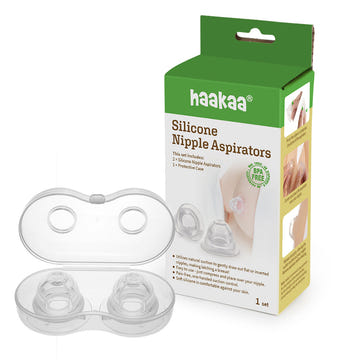
Haakaa Silicone Inverted Nipple Aspirators 2 pk
$17.99
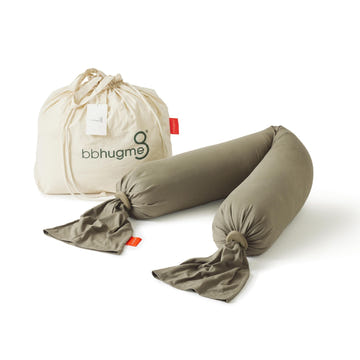
bbhugme Pregnancy Pillow Dusty Olive Adjustable Firm...
$219.00
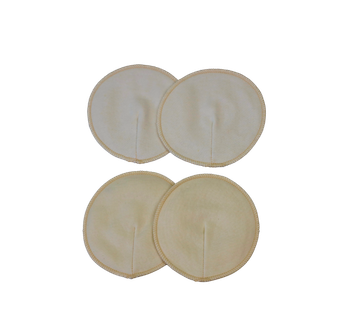
Babee Greens Contoured Nursing Pads 1 Pair Organic C...
$7.25
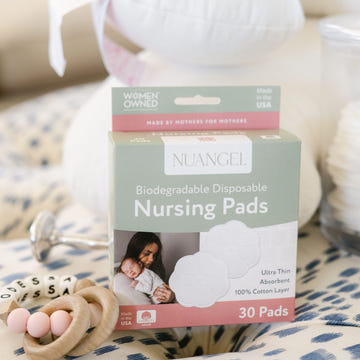
NuAngel Plant-based Disposable Nursing Pads individu...
$9.99
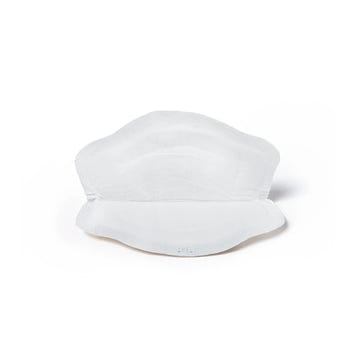
Zomee Breast Pumps Nursing Pads 100 or 200 count
$2.99
8. Larger Breasts, Smaller Breasts, and Body Variations
Most side-lying instructions are written as if every body is the same. They are not, and the adjustments matter.
If you have larger or softer breasts
The most common problem is that the breast falls forward and covers the baby's nose, or the nipple sits lower than the baby's mouth. Two fixes. First, roll yourself slightly further back so the breast rests naturally rather than dropping. Second, place a small rolled cloth or your own hand under the breast to lift and support it, keeping your fingers well back from the areola so you are not interfering with the latch. Some moms also find it easier to start the baby slightly lower on the bed and bring them up into the breast.
If you have smaller or firmer breasts
You may need to lift yourself instead. A small folded flannel under your ribcage, on your side, raises the whole chest a little and brings the nipple down to the baby's level. Again, the padding goes under you, not under the baby.
If you have flat or inverted nipples
Hand express or use a pump for a minute before you lie down to draw the nipple out, then latch. Gravity is not helping in this position, so a little prep makes a real difference.
If you had a C-section or pelvic pain
A pillow between the knees is not optional for most moms in this category. It keeps your hips stacked and stops your lower back from twisting during a long feed.
A pillow that supports you, not the baby
A compact, firm nursing pillow used behind your back or between your knees makes long side-lying feeds much more sustainable. To be clear about the rule: it supports your body. It never goes under or around the baby.

9. Problems Side-Lying Quietly Solves
Beyond comfort, there are specific situations where this position is the practical answer.
| Situation | Why side-lying helps | Better alternative if it does not |
|---|---|---|
| Forceful letdown or oversupply | Gravity no longer speeds the flow, and extra milk can escape the corner of the mouth instead of flooding the throat. | Laid-back or reclined nursing. |
| C-section or perineal pain | No weight on the incision, no pressure from sitting. | Football or clutch hold. |
| Night feeds and total exhaustion | You stay horizontal, the room stays dark, and both of you resettle faster. | A bedside sleeper plus a brief upright feed. |
| A plugged duct near the outer edge | Changing position changes which ducts drain most, and side-lying reaches areas an upright hold does not. | The dangle feed, plus warmth before the feed. |
| A baby with reflux | Some babies swallow less air and settle better lying down. | Upright feeding with a longer hold afterward. Ask your pediatrician. |
| Twins | One at a time in a calm, low-effort position between tandem sessions. | Double football hold for simultaneous feeds. |
One honest caveat about ear infections, since it comes up constantly. The concern people repeat comes from research on bottle-feeding while flat, where milk can pool. In side-lying breastfeeding the baby is on their side rather than flat on their back, and they control the flow themselves. There is no good evidence that side-lying breastfeeding causes ear infections, and breastfeeding overall is associated with fewer of them.
10. Common Mistakes and Fast Fixes
| What is going wrong | The fix |
|---|---|
| Baby's head is turned toward you but their body faces up | Roll their whole body onto its side. Ear, shoulder, and hip in one line. |
| Mouth is level with the nipple instead of the nose | Slide the baby down a little so the nose lines up. The head tips back and the latch deepens. |
| Pillows tucked around or under the baby | Remove all of them. Padding supports you only. |
| Pushing on the back of the baby's head | Support between the shoulder blades instead. Head pressure makes babies pull away. |
| Learning it for the first time in the middle of the night | Practice awake, in daylight, for the first several tries. |
| Feeding this way on a sofa or recliner | Move to a firm, cleared bed. This is the rule that matters most. |
| Bottom arm curled around the baby | Move it above your head or under your own pillow. Less heat, fewer cramps. |
| Pushing through sharp pain hoping it settles | Break the suction with a finger, reposition, and relatch. Repeated shallow latches crack nipples. |
11. Key Takeaways
- Side-lying is a feeding position, not a sleep plan. Baby goes back to their own flat, firm surface afterward.
- Firm mattress, cleared of everything soft. Never a couch, recliner, waterbed, or sinking topper.
- Nose to nipple, not mouth to nipple. This one detail fixes most failed attempts.
- Ear, shoulder, hip in a straight line. A twisted neck makes swallowing hard.
- Support the back, never the back of the head.
- Padding goes under you, never under the baby.
- It is the go-to position after a C-section and for taming a forceful letdown.
- Learn it in daylight, awake, before you rely on it at 3 a.m.
- Protect your nipples while you learn. Silver nursing cups between feeds keep normal soreness from becoming cracking.
Frequently Asked Questions
What if I fall asleep while breastfeeding lying down?
Plan for it instead of pretending it will not happen, because drowsiness during night feeds is close to universal. Before you start a lying down feed, clear the bed the way safe sleep guidance describes: firm mattress, no loose pillows or heavy blankets near the baby, no gap between mattress and wall, and no other children or pets in the bed. That way an accidental doze happens in the lowest risk setup possible, and you move your baby back to their own sleep surface when you wake. Never choose a couch or recliner for a sleepy feed; falling asleep there is far more dangerous than a prepared bed.
Is side-lying breastfeeding safe for a newborn?
Yes, for a healthy full-term baby, when you do it on a firm, flat mattress cleared of pillows, blankets, and soft bedding, and you return the baby to their own flat sleep surface afterward. The risk is not the position itself but the surface: never side-lying nurse on a couch, recliner, waterbed, or memory foam topper. If your baby was premature or has a medical condition, ask your pediatrician or an IBCLC to observe you once before making it your default position.
When can I start side-lying breastfeeding with my baby?
You can start as soon as you and your baby are latching reliably in an upright position, which for many moms is somewhere in the first two to four weeks. Some hospitals teach it in the first days, especially after a C-section. There is no minimum age requirement, but it is easier once your baby has good head control at the breast and a consistent latch, because you have less visibility lying down.
What if I fall asleep while nursing lying down?
It happens to most breastfeeding parents at some point, which is exactly why the setup matters more than willpower. Prepare the bed before every night feed as if you might fall asleep: firm mattress, no pillows or blankets near the baby, no gaps against a wall or headboard. That way an accidental doze is not a dangerous situation. Do not nurse lying down on a sofa or recliner, where falling asleep is genuinely hazardous, and avoid the position entirely if you have been drinking, smoke, or are taking anything sedating.
Does side-lying breastfeeding cause ear infections?
No. That worry traces back to research on bottle-feeding a baby lying flat on their back, where milk can pool near the eustachian tubes. In side-lying breastfeeding, the baby is on their side rather than flat, and they control the milk flow themselves rather than having it drip in. Breastfeeding overall is associated with a lower rate of ear infections, not a higher one.
How do I side-lying breastfeed with large breasts?
Roll yourself slightly further back so the breast rests naturally instead of falling forward over the baby's nose, and use your top hand or a small rolled cloth under the breast to lift and support it, keeping your fingers well back from the areola. Some moms find it easier to start the baby a little lower on the mattress and bring them up into the breast. Never place padding under the baby to raise them, only under your own body.
Do I need to burp my baby after a side-lying feed?
Often less than after an upright feed, because babies tend to swallow less air in this position. Watch your baby rather than the clock. If they seem settled and sleepy, you can lay them down without a long burping session. If they squirm, arch, or seem uncomfortable, hold them upright against your chest for a minute or two before you transfer them to their own sleep space.
Can I use a nursing pillow for side-lying breastfeeding?
Only to support your own body, never the baby. A firm, compact pillow behind your back or between your knees makes long feeds much more sustainable, especially while you are recovering from a C-section or dealing with pelvic pain. What you should not do is prop the baby on a pillow or tuck soft padding around them, since soft objects near a baby's face are the actual safety risk in bed.
Why does my baby keep unlatching when we lie down?
The most common cause is height: the baby's mouth is level with your nipple instead of their nose being level with it, so they cannot tip their head back and take a deep latch. Slide them slightly down the bed and try again. The second most common cause is body position, with the head turned toward you while the torso faces the ceiling, which makes swallowing awkward. Line up their ear, shoulder, and hip. Clicking sounds or dimpled cheeks mean they are losing suction, so break the latch with a clean finger and start over.
Is side-lying better than the cradle hold?
Neither one is better across the board, and most moms end up using several positions depending on the moment. Side-lying wins for night feeds, C-section recovery, perineal pain, and taming a forceful letdown. The cradle and cross-cradle holds give you more visibility and control, which is why they are usually easier for the very first latches and for a baby who is still learning. Having two or three positions you can do confidently means you are never stuck when one stops working.
You Have Got This
Side-lying breastfeeding feels awkward for about a week and then it feels like something you have always known how to do. Give yourself a few daylight attempts before you count on it at night, keep the bed cleared, and remember that the nose-to-nipple detail solves most of what goes wrong.
And be kind to your body while it learns. Sore nipples during a position change are normal, but they do not have to escalate. Trusted by over 200,000+ cups sold, Moogco Baby exists to take a little of the friction out of these weeks. Less worry. More wonder.
Next, take a look at our guides to breastfeeding positions for maximum comfort and a good latch versus a bad latch.
This article is for general education and is not medical advice. If you have concerns about your baby's feeding, weight gain, or your own pain, speak with your pediatrician or an IBCLC lactation consultant.
Moogco Silver Nursing Cups, 999 fine silver, for comfort between every feed
Shop NowAbout the Editor
Eda Ulger is the editor at Moogco Baby and a mom of two. She curates and edits our guides so every piece is honest, practical, and genuinely helpful for the early days of motherhood.
Shop This Story
Picks related to this guide, ready to ship from Moogco.

Holistic Lactation Advanced Lactation Formula 30 Ser...
$34.99
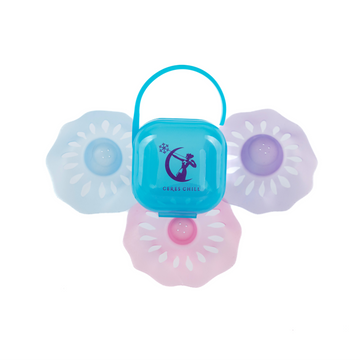
Ceres Chill Shield Maiden Nipple Shields 2pc or 3pc ...
$14.50

WishGarden Herbs Milk Rich Supply Booster pump top b...
$26.99

Wendy Anne Lounger Slip Cover Organic Cotton Waterpr...
$49.00
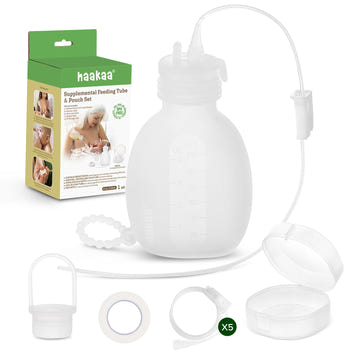
Haakaa Supplemental Feeding Tube and Pouch Set Size ...
$33.99

Milky Mama Dairy Duchess Raspberry Breastfeeding Sup...
$27.00

Preggie Drops Plus Morning Sickness Relief Lollies, ...
$13.75
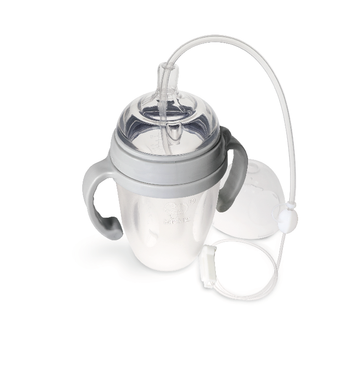
Haakaa Supplemental Feeding Combo 250ml Bottle with ...
$32.99

Euphoric Herbals Milk Machine lactation supplement 2...
$19.99

Euphoric Herbals Super Salve Nursing Salve no essent...
$10.00